Trialoog editor

Estonia needs more engineers, yet many students struggle with advanced mathematics. At a TalTech Engineering Academy conference, participants discussed how to help future engineers cope with mathematics without compromising educational quality.
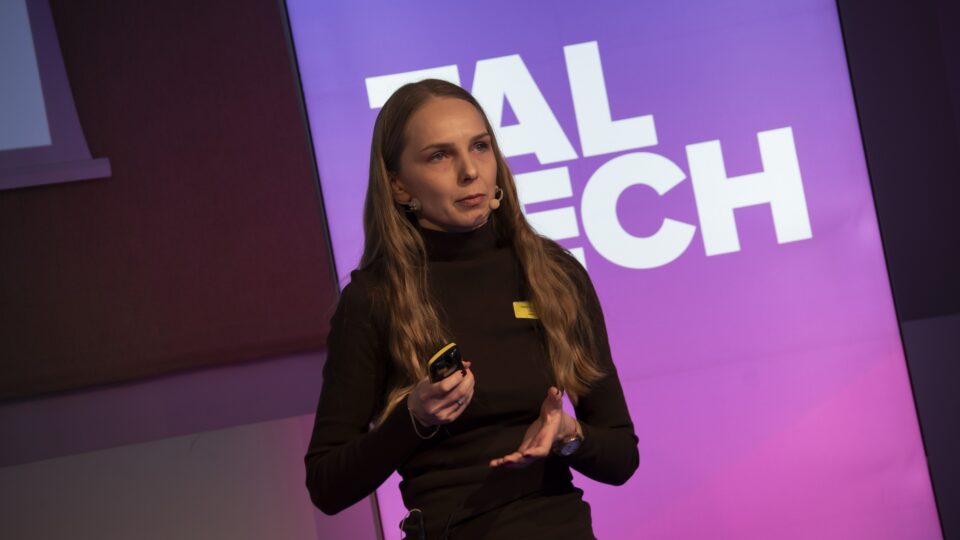
“I memorised the steps to solve problems like poems,” recalled panel moderator, TalTech alumna and Engineer of the Year Cathy-Liis Põlluveer of her first mathematical analysis course, which she found challenging even though mathematics had always been one of her strengths at school. According to Põlluveer, many first-year students struggle with advanced mathematics and not all pass the course on their first attempt. This raises the question of how to support young people entering engineering education so that mathematics does not become a stumbling block in their studies.
An upper secondary diploma versus actual knowledge
Andrus Salupere, Dean of the TalTech School of Science, has taught at university since 1986. In his experience, students’ mathematical preparation has gradually weakened over the decades. “Those who assume that a student with an upper secondary school diploma knows this, that and the other are mistaken,” Salupere said. To help students with gaps in their prior knowledge cope with their studies, they could be required to take university bridging courses where needed.
Helle Hallik, Chief Expert in Curriculum at the Ministry of Education and Research, said the average results of basic school final examinations and upper secondary state examinations do not show a consistently steep decline. A clearer setback occurred after the coronavirus pandemic, when distance learning began to have a strong effect on weaker pupils. Hallik stressed that in mathematics each new topic builds on what has already been learned. If gaps develop and a pupil does not receive help in time, the shortcomings can deepen. It is therefore important to identify learning difficulties early and support pupils before university.
Cutting theory undermines the whole
According to Juhan Aru, Professor of Mathematics at the Swiss Federal Institute of Technology Lausanne, everyone studying mathematics eventually reaches a point where they no longer understand something. The difference is whether they know how to move past that obstacle. A first-year student may not yet have the experience or confidence to do so. Aru recommended involving more senior students and alumni in first-year teaching: their experience could show how knowledge that initially seems abstract becomes useful in practice.
Could engineering students be taught less theory and more practical mathematics? Aru believes both are necessary. Real-life problems help students understand why what they learn matters, but theory cannot be set aside because the different topics form a coherent whole: “Mathematics becomes simple when the individual things are connected.” Without understanding the whole picture, learning can be reduced to cramming formulae.
“Mathematics becomes simple when the individual things are connected.”
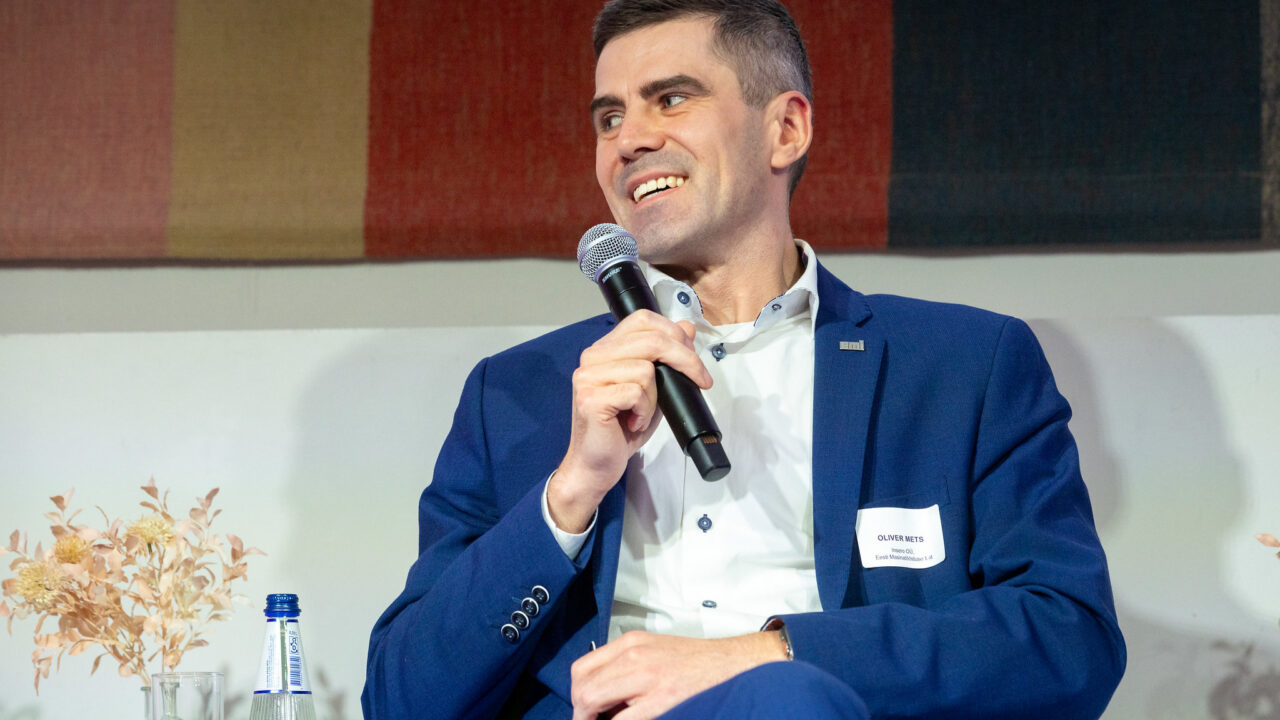
Oliver Mets, engineering entrepreneur and chairman of the council of the Federation of Estonian Engineering Industry, believes advanced mathematics develops the thinking and problem-solving skills engineers need. Photo: Jürgen Randma.
Advanced mathematics as training for thinking
Oliver Mets, engineering entrepreneur and chairman of the council of the Federation of Estonian Engineering Industry, believes advanced mathematics is more than learning formulae: it develops the thinking and problem-solving skills engineers need. “Having completed advanced mathematics at bachelor’s level gives an employer at least some assurance that a student is capable of learning.” In his experience, young engineers often regard mathematics as one of the hardest subjects, although that does not mean they dislike it. He therefore sees no reason to make it easier. “I certainly would not lower the standard,” he stressed. Universities should, however, keep up with technological change faster and introduce AI into teaching in the same way calculators were once introduced.
Hallik believes mathematics teaching should connect theory to real-life problems. At the same time, she emphasised that solving practical problems also requires an understanding of the mathematical theory behind them. Salupere added that theory can be connected to practice more easily in small groups than in large lectures. Engineers cannot manage without mathematics: even textbooks in their field, Salupere said, are written in the language of mathematics.
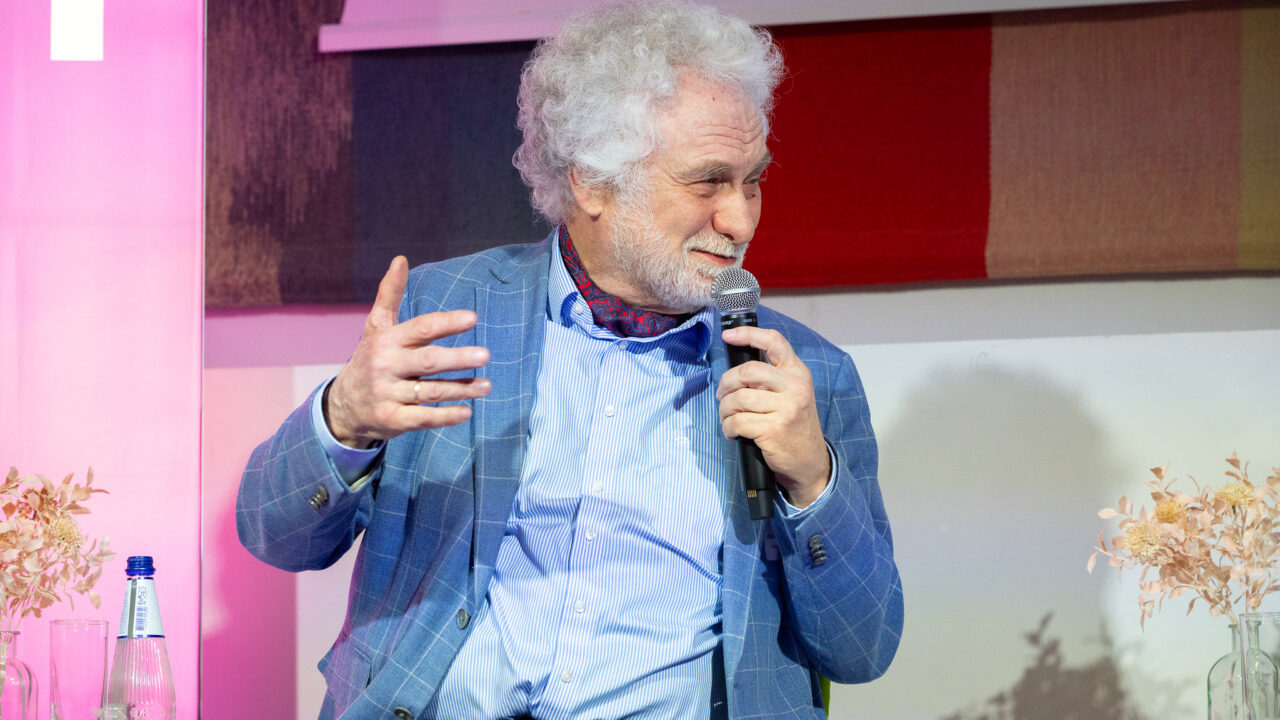
Andrus Salupere would challenge the widespread belief that mathematics is impossibly difficult and unnecessary in everyday life. In his view, it is immensely interesting. Photo: Jürgen Randma.
Fear of mathematics starts before university
At the end of the discussion, Põlluveer asked the panellists what they would change in mathematics education tomorrow if they could. Mets would involve more entrepreneurs in teaching to demonstrate, through examples from working life, why engineers need mathematics. Hallik would prefer smaller study groups and teamwork, allowing students to solve practical problems together.
Aru would focus on basic and upper secondary school, where he believes fear of mathematics often begins. He would also try to train teachers who enjoy mathematics themselves and can spark pupils’ interest through their own emotional connection to it. Textbooks also need updating, with examples and explanations that speak to each new generation.
Salupere would above all change the widespread attitude that mathematics is impossibly difficult and unnecessary in everyday life: “Mathematics is not from the devil; it isn’t difficult, it’s terribly interesting!” The discussion made clear that there is no single universal magic wand to help future engineers cope better with mathematics. What matters is identifying learning difficulties as early as possible, supporting learners and connecting theory with practical problems so young people understand why they will need mathematics in their future work.
“Mathematics is not from the devil; it isn’t difficult, it’s terribly interesting!”
The panel discussion took place on 4 November at the Engineering Academy successes at TalTech conference, which reviewed progress in advancing engineering education and shared international experience.