Trialoog editor
Europe is falling behind the United States and China in several key technological fields, while a shortage of workers with the right skills has become a major obstacle to competitiveness. Speaking at TalTech, Riin Saluveer, Economic Adviser at the European Commission Representation in Estonia, explained why Europe needs more engineers, which skills will be valued in the future and how universities can contribute to economic development.
“We do not have a crystal ball,” Saluveer acknowledged when discussing future workforce needs. Technology is advancing rapidly, and it is difficult to predict exactly which skills will be needed in ten years’ time. This makes strong foundational knowledge, systems thinking and a willingness to keep learning increasingly important.
Europe’s competitiveness increasingly depends on skills
Strengthening the competitiveness of Europe’s economy is one of the European Commission’s main objectives. Saluveer referred to the report by former European Central Bank President Mario Draghi, which highlighted several weaknesses in the European economy.
Europe lags behind the United States and China in developing digital technologies and artificial intelligence and in fostering start-ups. A shortage of venture capital, bureaucracy and dependence on third countries are among the factors holding back progress.
Europe also has strengths: a large single market, substantial savings, a vibrant industrial sector and internationally competitive companies. To make better use of these advantages, the European Commission published its Competitiveness Compass in 2025, recommending that Europe promote innovation, turn a cleaner economy into a competitive advantage and reduce strategic dependencies.
People and their skills are crucial to achieving all these objectives, Saluveer said: “Without investing in people and developing their skills, it is simply impossible to move forward.”
Four out of five businesses struggle to find workers
Europe faces a worsening labour shortage. According to data cited in Saluveer’s presentation, almost four out of five European small and medium-sized enterprises have difficulty finding suitable employees. Specialists in science, technology, engineering and mathematics – STEM – are needed particularly urgently.
An ageing population compounds the problem. Forecasts cited by Saluveer suggest that the number of people participating in the European Union’s labour market will fall by around one million each year. At the same time, rapid technological change is increasing demand for new skills.
Studying a STEM subject offers promising prospects. According to Saluveer, around 40 per cent of graduates in these fields were among the European Union’s highest-paid workers in 2022.
Estonia is actually in a fairly strong position compared with the European average. Saluveer said the proportion of STEM students in Estonia’s vocational education system has already exceeded the EU’s target for 2030, while higher education is very close to the corresponding goal.
Nevertheless, demand for engineers continues to outstrip supply. It is therefore important to keep attracting new students and support them through to graduation. Saluveer drew attention to high dropout rates and identified the need for many Estonian students to work alongside their studies as one of the problems.
The European Commission wants to increase the proportion of young people studying STEM subjects in both vocational and higher education. Attention is also being paid to involving more girls and women and developing flexible learning opportunities.
“Without investing in people and developing their skills, it is simply impossible to move forward.”
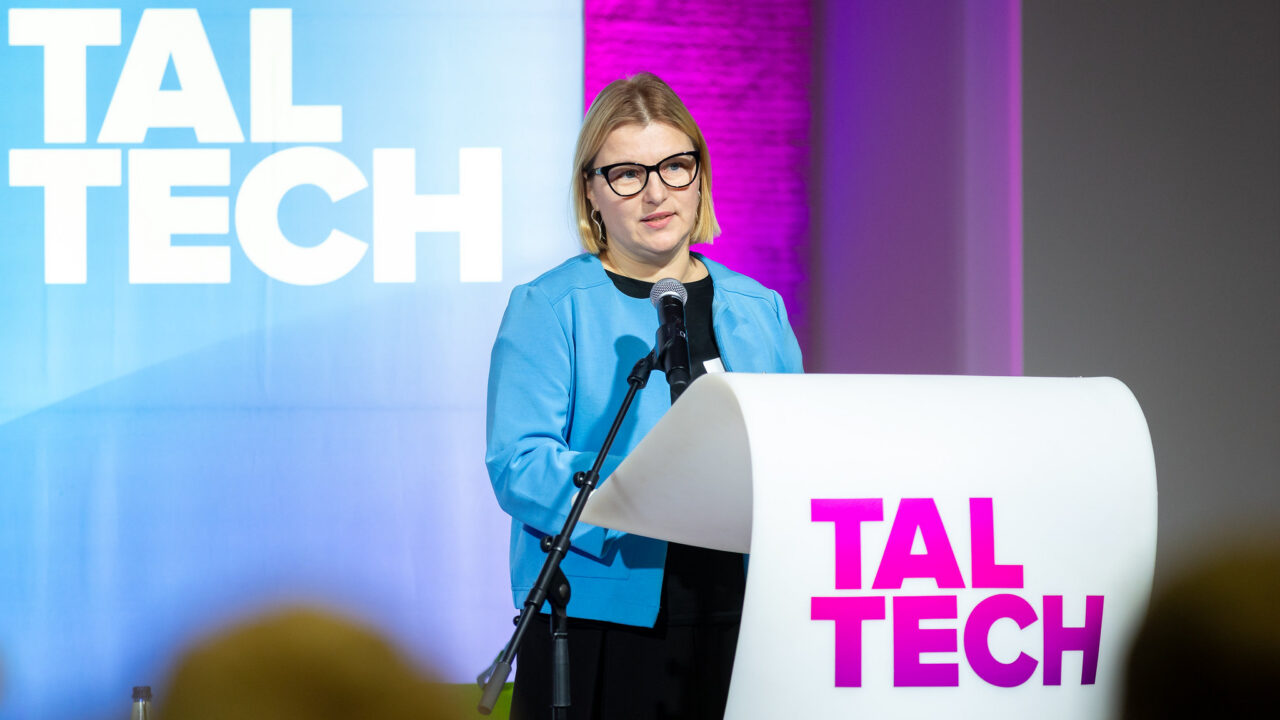
Saluveer highlighted that demand for engineers in Europe is growing particularly in automation, artificial intelligence, energy and climate technologies and the defence industry. Engineering skills are also becoming increasingly important in healthcare and the creative industries. Photo: Jürgen Randma
The need for engineering skills is expanding
What kinds of engineers will Europe need in the future? Drawing on analyses by the European Commission and the OECD, Saluveer highlighted several areas where demand for technical skills is growing.
These include manufacturing automation, artificial intelligence, energy and climate technologies, the defence industry and emerging technologies. Engineering skills are also becoming increasingly important in healthcare and the creative industries.
Europe faces two tasks, Saluveer said: training specialists who can develop new technologies and replacing experienced workers who are leaving the labour market.
Since future needs are difficult to predict, engineering education must provide knowledge and skills that remain useful even as technologies and job responsibilities change. “Foundational skills, adaptability and systems thinking will remain important in future studies and working life.”
Saluveer believes universities could move further towards skills-based learning. This means taking greater account of labour market needs and technological developments when designing curricula.
At the end of her presentation, she was asked to give universities and educators one recommendation. Her answer focused on communication and cooperation. “We could all do a better job of breaking down silos,” she said. By silos, she meant situations in which different fields, departments or organisations operate separately and fail to share enough knowledge and experience.
Entrepreneurs, employers and students should have a greater role in shaping the future of education, Saluveer said. Broader cooperation helps universities better understand which skills are needed and prepare young people more effectively for a rapidly changing labour market.
“Foundational skills, adaptability and systems thinking will remain important in future studies and working life.”
Riin Saluveer, Economic Adviser at the European Commission Representation in Estonia, spoke at the conference “Engineering Academy successes at TalTech” on 4 November. The event reviewed progress in advancing engineering education and shared international experience.