“It felt as if my toys had been taken away!” AI is shaking up mathematics

15.11.2026
“It felt as if my toys had been taken away!” AI is shaking up mathematics. 15.11.2026. “It felt as if my toys had been taken away,” Aru said, describing his reaction when AI began solving problems to which mathematicians had devoted years of work. He shared the thought with his young daughter, who at that moment was far more concerned that her father had put honey on her bread the wrong way. This humorous episode reflects the situation mathematicians now face. AI opens up new opportunities for researchers, while also forcing them to ask what work they will be able to do in the future. Science and mathematics as a public good Only a few years ago, an AI model’s ability to solve mathematics olympiad problems was considered a major achievement. This year, Aru said, the systems’ capabilities have advanced dramatically: models have begun solving research problems that mathematicians have worked on for decades. In the autumn, a possible solution was even found to one of mathematics’ seven famous Millennium Prize Problems, for which a million-dollar prize is offered. At the time of the presentation, the result was still awaiting final verification. AI has unexpectedly brought solutions to problems that some mathematicians have spent decades researching. “What is there left for mathematicians to do now?” Aru asked, summing up the question that has emerged in the research community. He believes advances in AI raise two important questions. First, how reliable are the solutions proposed by machines? Second, could the ability to solve problems quickly reduce the need for fundamental mathematical research in the future? To address the first question, mathematicians have established an initiative called First Proof. Researchers give AI models previously unsolved problems and then check whether their answers are correct. This makes it possible to assess the models’ actual capabilities rather than relying solely on technology companies’ claims. Aru also raised the question of openness in science, because “science and mathematics have, in a sense, been a public good.” Researchers have been free to use mathematical knowledge, but the most capable AI models currently belong to private companies. Research institutions are therefore developing open models to help keep the tools needed for research accessible to everyone. An even more fundamental question concerns the value of mathematics if AI can arrive at practical solutions without decades of research. “Science and mathematics have, in a sense, been a public good.” Why do we still need fundamental research in the age of AI? Mathematicians have always been able to work in the belief that even the most abstract discoveries may one day produce something useful for humanity, Aru said. “I have always felt very privileged because I have the opportunity to love mathematics. It is beautiful because I can do mathematics as an art, while always being confident that somewhere far down the line it will have some practical benefit.” Yet the rapid development of AI raises the question of whether this beautiful principle will continue to hold. To explain this, Aru used the example of GPS, which people use every day in their phones and cars. Satellite navigation was preceded by centuries of research. It required geometry, accurate clocks, quantum physics and Einstein’s theory of relativity. These discoveries initially arose from a desire to understand the world better, and only later came to have a major influence on practical technology. Aru proposed a thought experiment: if powerful AI had already existed in the 17th century, could it have developed modern GPS using the knowledge available at the time? Perhaps the machine would have arrived at a working solution. But would humanity then have discovered quantum physics and the theory of relativity? Which subsequent scientific achievements might we have missed if events had unfolded that way? Aru believes this is why it is difficult to assess the value of fundamental research solely by the practical problem it can solve at a particular moment. A single discovery may open up possibilities that researchers could not have foreseen without it. He illustrated the same point with an example from medicine. Magnetic resonance imaging, or MRI, allows doctors to examine the inside of the human body, but producing an image requires a large amount of measurement data. Mathematicians developed a method for reconstructing signals from fewer measurements. In MRI examinations, Aru said, this improved measurement efficiency by around 30–40 per cent. The same mathematical approach was also applied in radar systems and radio telescopes. A single theoretical discovery thus made it possible to improve several entirely different technologies. Mathematics also helps assess the reliability of solutions. “Isn’t it wonderful when we can be certain why things work and what the margins of error are?” Aru asked. This is particularly important in medicine, where it is essential to know when a technology’s results can be trusted and when it may be wrong. This distinction is precisely why he considers fundamental mathematical research important even in the age of AI. Rapid advances in AI are forcing a rethink of both mathematics education and research. Aru considers it possible that one day AI will understand mathematics better than humans do. Knowledge will nevertheless remain important to people. It helps us understand the world, assess the reliability of technology and make informed decisions. This also directly concerns engineering education. If AI can perform calculations and propose solutions, it becomes increasingly important to understand why a solution works and what consequences a particular approach may have. “The opportunity to discover, learn and apply what we have learnt has always been associated with freedom, but also with responsibility towards both ourselves and future generations,” Aru concluded. “I have always felt very privileged because I have the opportunity to love mathematics. It is beautiful because I can do mathematics as an art, while always being confident that somewhere far down the line it will have some practical benefit.” Juhan Aru, Professor of Mathematics at the Swiss Federal Institute of Technology Lausanne, spoke at the conference “Engineering Academy successes at TalTech” on 4 November. The event reviewed progress in advancing engineering education and shared international experience.
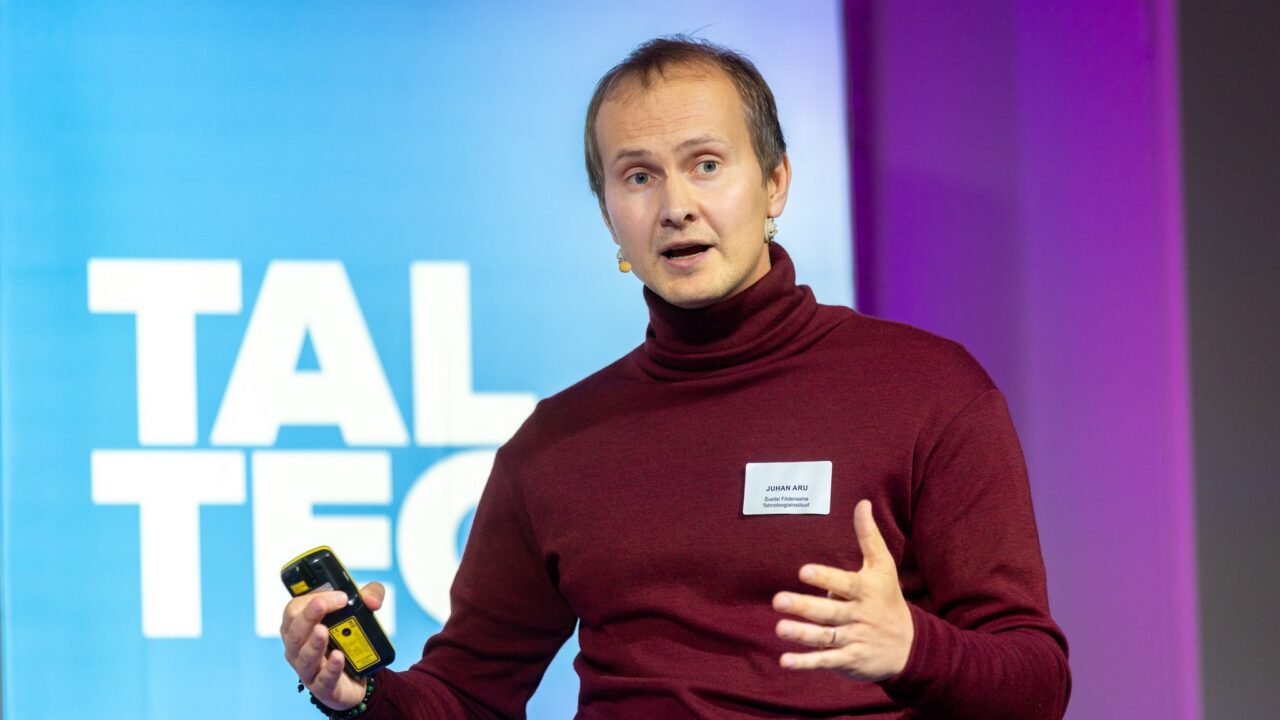
Juhan Aru, Professor of Mathematics at the Swiss Federal Institute of Technology Lausanne, emphasises that fundamental research remains important in the age of AI. Mathematical discoveries may lead to solutions whose practical value only becomes apparent decades later. Photo: Jürgen Randma

Juhan Aru, Professor of Mathematics at the Swiss Federal Institute of Technology Lausanne, emphasises that fundamental research remains important in the age of AI. Mathematical discoveries may lead to solutions whose practical value only becomes apparent decades later. Photo: Jürgen Randma

Today’s AI can solve mathematical problems that researchers have wrestled with for decades. According to Juhan Aru, Professor of Mathematics at the Swiss Federal Institute of Technology Lausanne, this has sparked both excitement and uncertainty among researchers. At the Engineering Academy conference, he explored the future role of mathematics and humans in a world where machines can tackle increasingly complex problems.

“It felt as if my toys had been taken away,” Aru said, describing his reaction when AI began solving problems to which mathematicians had devoted years of work. He shared the thought with his young daughter, who at that moment was far more concerned that her father had put honey on her bread the wrong way.

This humorous episode reflects the situation mathematicians now face. AI opens up new opportunities for researchers, while also forcing them to ask what work they will be able to do in the future.

Science and mathematics as a public good

Only a few years ago, an AI model’s ability to solve mathematics olympiad problems was considered a major achievement. This year, Aru said, the systems’ capabilities have advanced dramatically: models have begun solving research problems that mathematicians have worked on for decades.

In the autumn, a possible solution was even found to one of mathematics’ seven famous Millennium Prize Problems, for which a million-dollar prize is offered. At the time of the presentation, the result was still awaiting final verification.

AI has unexpectedly brought solutions to problems that some mathematicians have spent decades researching. “What is there left for mathematicians to do now?” Aru asked, summing up the question that has emerged in the research community.

He believes advances in AI raise two important questions. First, how reliable are the solutions proposed by machines? Second, could the ability to solve problems quickly reduce the need for fundamental mathematical research in the future?

To address the first question, mathematicians have established an initiative called First Proof. Researchers give AI models previously unsolved problems and then check whether their answers are correct. This makes it possible to assess the models’ actual capabilities rather than relying solely on technology companies’ claims.

Aru also raised the question of openness in science, because “science and mathematics have, in a sense, been a public good.”

Researchers have been free to use mathematical knowledge, but the most capable AI models currently belong to private companies. Research institutions are therefore developing open models to help keep the tools needed for research accessible to everyone.

An even more fundamental question concerns the value of mathematics if AI can arrive at practical solutions without decades of research.

“Science and mathematics have, in a sense, been a public good.”

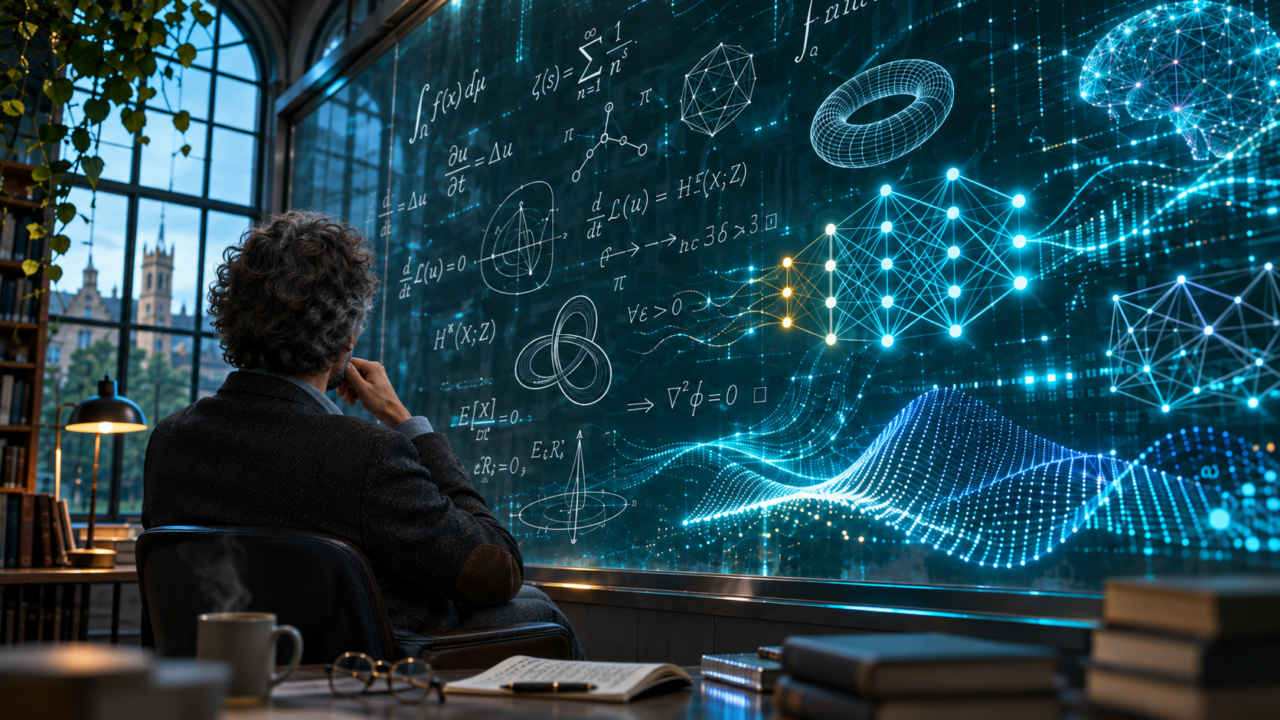
Rapid advances in AI are changing mathematicians’ work and opening up new opportunities for science. They also raise the question of what role remains for humans when machines can solve problems that have remained unsolved for decades. Photo: ChatGPT

Rapid advances in AI are changing mathematicians’ work and opening up new opportunities for science. They also raise the question of what role remains for humans when machines can solve problems that have remained unsolved for decades. Photo: ChatGPT

Why do we still need fundamental research in the age of AI?

Mathematicians have always been able to work in the belief that even the most abstract discoveries may one day produce something useful for humanity, Aru said. “I have always felt very privileged because I have the opportunity to love mathematics. It is beautiful because I can do mathematics as an art, while always being confident that somewhere far down the line it will have some practical benefit.”

Yet the rapid development of AI raises the question of whether this beautiful principle will continue to hold. To explain this, Aru used the example of GPS, which people use every day in their phones and cars.

Satellite navigation was preceded by centuries of research. It required geometry, accurate clocks, quantum physics and Einstein’s theory of relativity. These discoveries initially arose from a desire to understand the world better, and only later came to have a major influence on practical technology.

Aru proposed a thought experiment: if powerful AI had already existed in the 17th century, could it have developed modern GPS using the knowledge available at the time?

Perhaps the machine would have arrived at a working solution. But would humanity then have discovered quantum physics and the theory of relativity? Which subsequent scientific achievements might we have missed if events had unfolded that way?

Aru believes this is why it is difficult to assess the value of fundamental research solely by the practical problem it can solve at a particular moment. A single discovery may open up possibilities that researchers could not have foreseen without it.

He illustrated the same point with an example from medicine. Magnetic resonance imaging, or MRI, allows doctors to examine the inside of the human body, but producing an image requires a large amount of measurement data.

Mathematicians developed a method for reconstructing signals from fewer measurements. In MRI examinations, Aru said, this improved measurement efficiency by around 30–40 per cent.

The same mathematical approach was also applied in radar systems and radio telescopes. A single theoretical discovery thus made it possible to improve several entirely different technologies.

Mathematics also helps assess the reliability of solutions. “Isn’t it wonderful when we can be certain why things work and what the margins of error are?” Aru asked. This is particularly important in medicine, where it is essential to know when a technology’s results can be trusted and when it may be wrong. This distinction is precisely why he considers fundamental mathematical research important even in the age of AI.

Rapid advances in AI are forcing a rethink of both mathematics education and research. Aru considers it possible that one day AI will understand mathematics better than humans do.

Knowledge will nevertheless remain important to people. It helps us understand the world, assess the reliability of technology and make informed decisions.

This also directly concerns engineering education. If AI can perform calculations and propose solutions, it becomes increasingly important to understand why a solution works and what consequences a particular approach may have. “The opportunity to discover, learn and apply what we have learnt has always been associated with freedom, but also with responsibility towards both ourselves and future generations,” Aru concluded.

“I have always felt very privileged because I have the opportunity to love mathematics. It is beautiful because I can do mathematics as an art, while always being confident that somewhere far down the line it will have some practical benefit.”

Juhan Aru, Professor of Mathematics at the Swiss Federal Institute of Technology Lausanne, spoke at the conference “Engineering Academy successes at TalTech” on 4 November. The event reviewed progress in advancing engineering education and shared international experience.