Editor of Trialoog
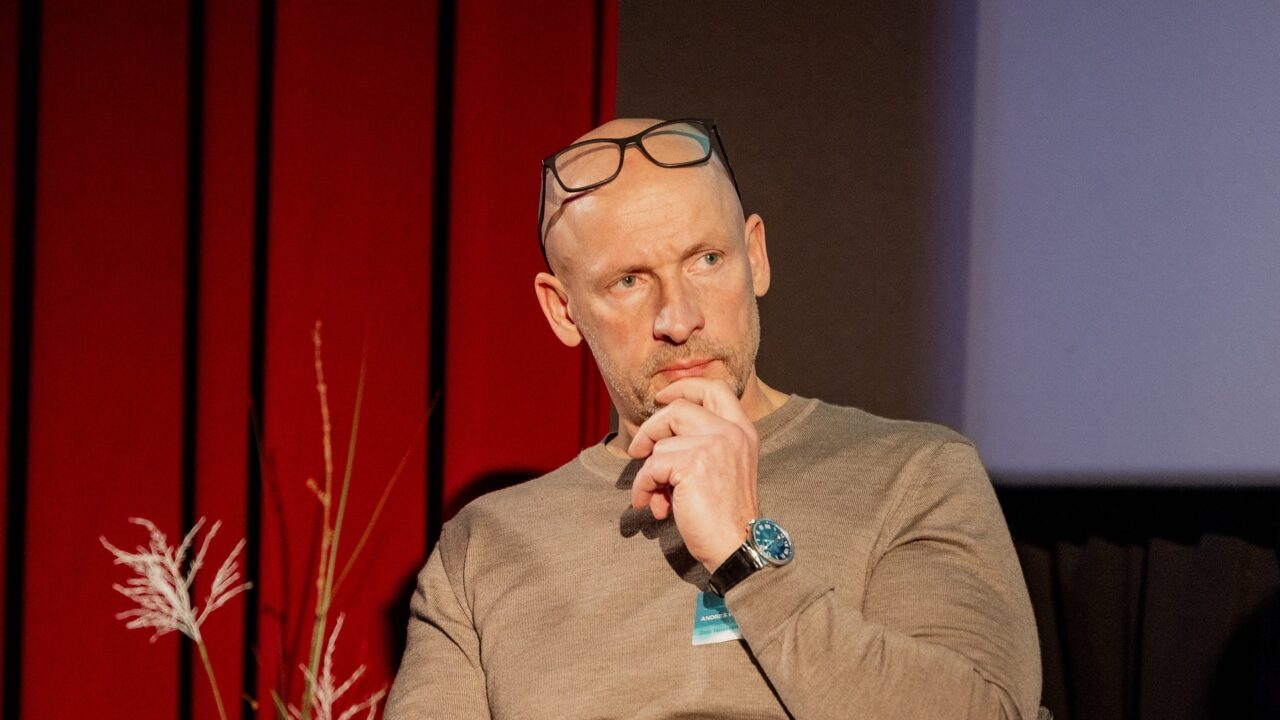
“Our country has let several decades slip by,” says Andres Veske, head of Energiasalv Pakri, of the development of Estonia’s energy sector. Having worked in the field for decades, Veske believes that although the changes in energy have been substantial, many necessary decisions have taken too long.
Veske began his career in oil shale energy and has since headed companies including VKG Energia, VKG Soojus, Silpower and Utilitas. Over the decades, he has seen changes in technology, the fuels used and the reputation of the entire energy sector.
Veske recalls school trips to the Kohtla-Järve combined heat and power plant, where the dusty, smoky industrial environment made him wonder whether such visits sparked young people’s interest in energy or put them off. Today, the picture is very different: energy production has become cleaner and more technologically advanced, control systems have been digitalised, and the share of renewable energy has grown considerably.
Despite these rapid changes, Veske is critical of the pace of development in Estonia’s energy sector. He says the Nordic countries began the transition to renewable energy earlier, while in recent years Lithuania, too, has made more decisive progress than Estonia.
Meanwhile, several major energy projects in Estonia have been delayed or stalled. There are several reasons: opposition from local residents, a lack of investors and uncertainty about the energy policy the country should pursue in the longer term. “Our development has been fast, but not fast enough. Our country has let several decades slip by and, in a sense, has been resting on its laurels.”
Batteries alone are not enough
Veske took the helm at Energiasalv Pakri in March 2026, but had already been working on large-scale energy storage. He chairs the supervisory board of Rohetiiger (Green Tiger), an organisation bringing together nearly a hundred Estonian companies and associations to find ways to make the economy more environmentally sustainable and accelerate the green transition, including in energy.
Veske says that while developing Rohetiiger’s energy roadmaps, business leaders concluded that rapid growth in renewable energy must be accompanied by large-scale storage: “We could already see then that renewable energy cannot develop without large-scale energy storage.”
The more electricity generation depends on wind and solar power, the more important storage becomes. When wind and sunshine are plentiful, more electricity is available and prices stay lower; in calm, cloudy weather, the situation can quickly reverse.
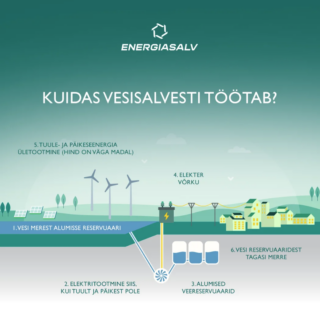 Veske considers the lithium-ion battery storage parks built in Estonia in recent years essential, but their role differs from that of the pumped hydro storage facility planned for Paldiski. Batteries mainly help balance the electricity system over a few hours, whereas large-scale pumped hydro storage would keep energy flows stable over a longer period. Veske says lithium-ion batteries and pumped hydro storage will complement, rather than compete with, one another.
The plant planned for Paldiski would have a capacity of 500 megawatts and a storage capacity of 15 gigawatt-hours. An underground reservoir and power plant would be built near the sea at a depth of around 700 metres. When electricity prices were high, seawater would be released into the reservoir to generate electricity. When electricity was cheap, the water would be pumped back into the sea.
Veske believes the facility would help reduce sharp fluctuations in electricity prices, but its role would go beyond pricing. The plant could provide reserve capacity, increase the flexibility of the electricity system and, if necessary, help restart the grid after a major outage. “It is hard to think of anything more resilient in a crisis than pumped hydro storage. All generation takes place underground and is well protected.”
“Our development has been fast, but not fast enough. Our country has let several decades slip by and, in a sense, has been resting on its laurels.”
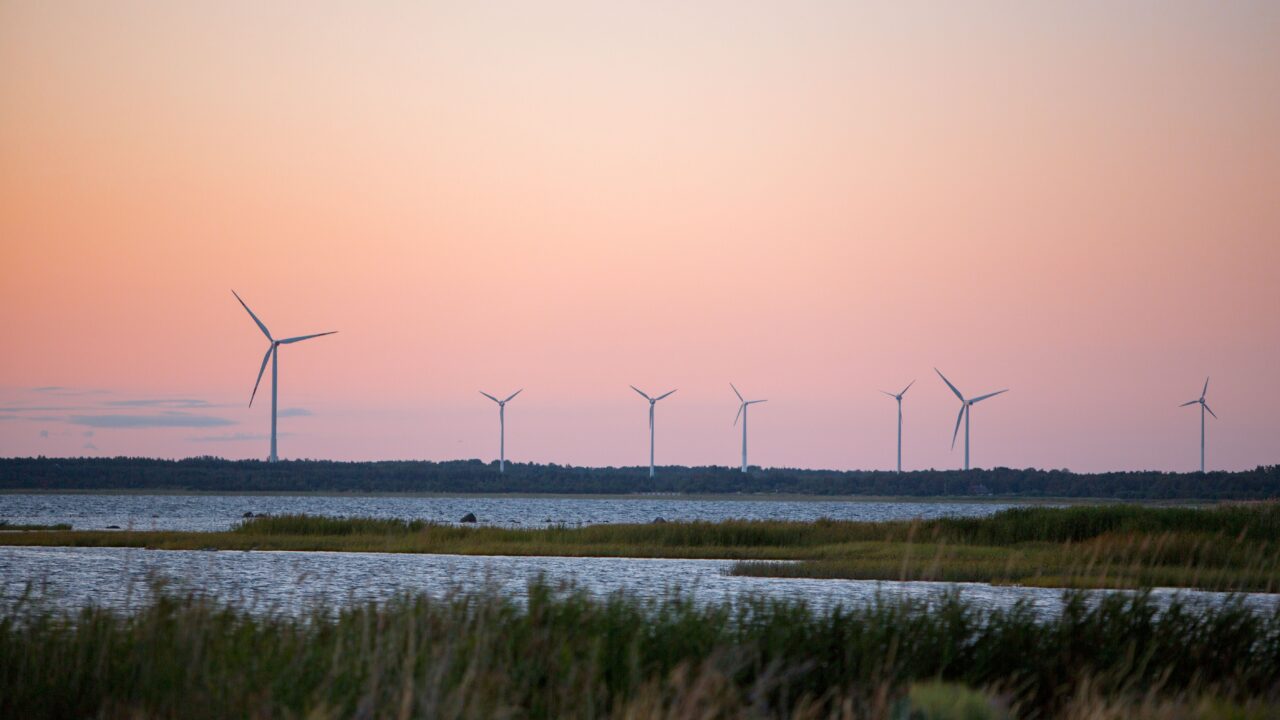
Despite rapid changes, Veske is critical of the pace of development in Estonia’s energy sector. He says the Nordic countries began the transition to renewable energy earlier, while in recent years Lithuania, too, has made more decisive progress than Estonia. Photo: Pexels
The biggest obstacle is trust, not technology
The Paldiski pumped hydro storage project has been discussed for years, but construction has yet to begin. Financing is the biggest obstacle. “It is very difficult to find a European or American investor willing to come to our small Estonia and invest a billion euros here. The project may be profitable, but Estonia is a border state, and investors want long-term certainty.”
Veske believes that the lack of a long-term plan and inconsistent decisions tend to undermine Estonia’s energy policy. For major infrastructure projects, an investment appearing economically viable is not enough. Investors want to know that the country will maintain its chosen direction after the next election and that the rules will not be rewritten a few years later.
Veske cites the national target of covering all electricity consumption with renewable electricity by 2030. If the state first sets a long-term target in law but later suggests it may not be met, he says, this reduces the likelihood of further investment. “Investors need credibility: the certainty that once we have chosen a path, we will stick to it.”
Nevertheless, Veske says the Paldiski project has made substantial technical progress. Numerous studies have been carried out, the environmental impact assessment is in its final stages, and a building permit is already in place for six gigawatt-hours of storage capacity. The next steps are crucial: securing financing and making an investment decision. If successful, the full-scale plant could begin operating in 2035.
“It is very difficult to find a European or American investor willing to come to our small Estonia and invest a billion euros here. The project may be profitable, but Estonia is a border state, and investors want long-term certainty.”
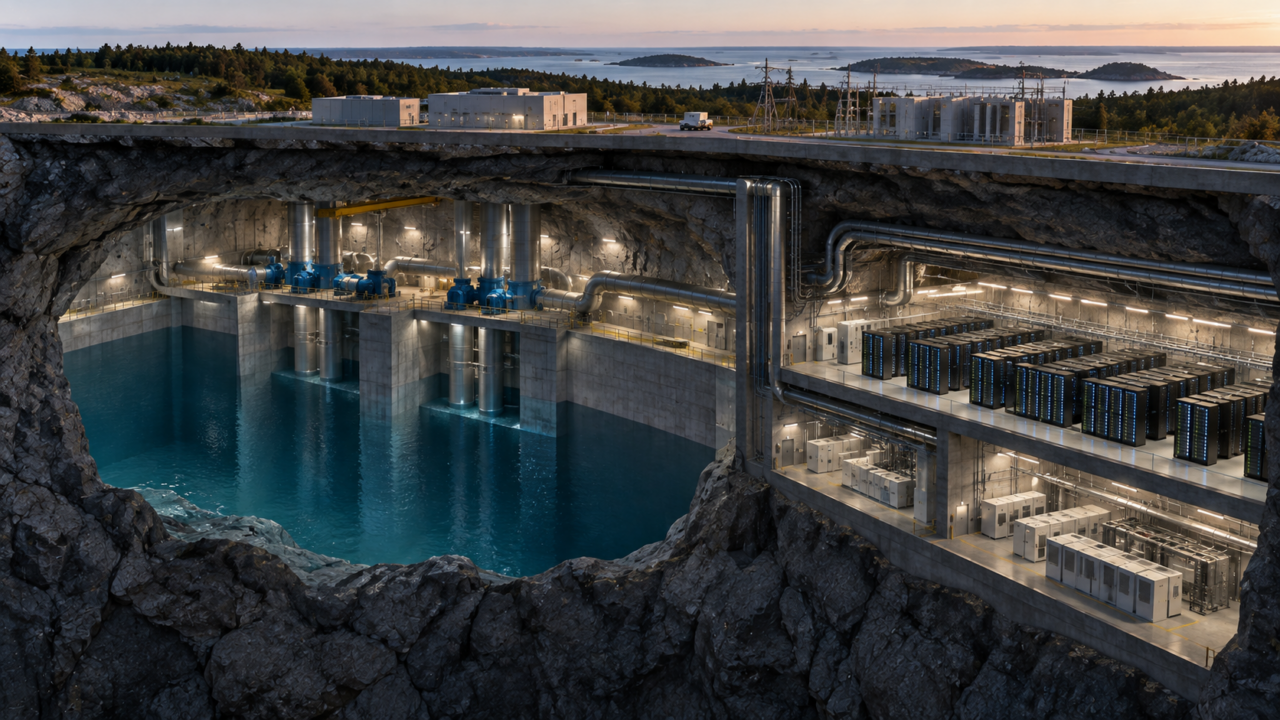
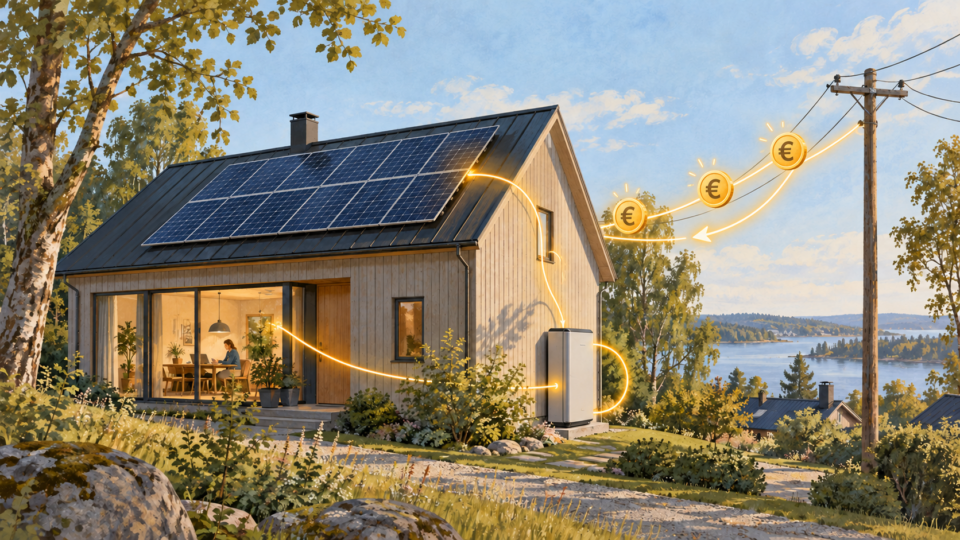
Veske believes that underground infrastructure on this scale could be used for more than energy storage. He sees underground data centres as a particularly promising option, as their depth would offer stronger physical protection than usual. Photo: Chat GPT
Underground infrastructure could strengthen security
Veske believes that if underground infrastructure on this scale is built, it could be used for more than energy storage. He sees underground data centres as a particularly promising option, as their depth would offer stronger physical protection than usual. “It could also house data centres storing information for which security and reliability are especially important.”
Veske believes the same principle could be applied to the energy sector’s own critical control systems, which underground infrastructure could help protect more effectively.
From a security perspective, Veske highlights the lessons of the war in Ukraine. He says energy production should be as decentralised as possible, because a single large power plant is an easier target for an enemy than generating units spread across different locations.
Veske also believes Estonia should not base its energy system on imported fuels. Even if the fuel does not come from Russia, its availability in a crisis may not always be certain: sea routes may be disrupted, and deliveries of gas or other fuels cannot be guaranteed in every situation.
At the same time, Veske stresses that Estonia’s energy sector has several notable successes. “We have done well in developing solar energy, biogas production makes very good sense, and the switch to renewable fuels in district heating can also be considered a real success story.”
Veske believes the next steps are to generate more domestic renewable energy, add both short- and long-duration storage capacity, and strengthen security of supply. There is no shortage of technology or entrepreneurs, he says, but Estonia needs a long-term, credible energy policy that investors, too, can trust to endure.
“We have done well in developing solar energy, biogas production makes very good sense, and the switch to renewable fuels in district heating can also be considered a real success story.”