Editor of Trialoog

Estonia is establishing a nuclear regulator and looking for a potential plant site, although no decision to build a nuclear power plant has been made. A Trialoog debate highlighted several questions that must be answered first: how much small reactors will cost, the price of their electricity, the risk the state would assume, and whether Estonia has enough expertise and people to operate and oversee a plant safely.
A Trialoog debate explored the opportunities and risks of nuclear energy with Jaanus Uiga, Deputy Secretary General for Energy and Mineral Resources at the Ministry of Climate; Professor Argo Rosin of TalTech’s Department of Electrical Power Engineering and Mechatronics; University of Tartu Associate Professor and nuclear energy researcher Alan Tkaczyk; Fermi Energia CEO Kalev Kallemets; and Madis Vasser, senior expert on small nuclear reactors at the Estonian Green Movement. Trialoog Editor-in-Chief Silver Tambur moderated.
Estonia has already made preparations to make a future nuclear plant possible. In June, the Riigikogu adopted the Nuclear Energy and Safety Act, and a nuclear regulator is due to begin operating within the Consumer Protection and Technical Regulatory Authority in early 2027, taking responsibility for nuclear safety and security licensing and oversight.
This does not mean a decision to build has been made. “There is not enough information at present to make a final decision,” Uiga said. The state is preparing for a possible plant while simultaneously gathering information about new small reactors. Rather than waiting until conclusions can be drawn from other countries’ operating experience, Estonia intends to have completed the necessary groundwork by the time a decision is due.
Nuclear and renewable energy need not compete
Before a construction decision, Estonia must establish which problem a nuclear plant would solve in its electricity system.
Rosin rejects the premise that Estonia must choose between nuclear and renewable energy. “In my view, it is completely wrong to pit renewable and nuclear energy against one another,” he said.
He believes they should complement each other. Alongside wind and solar power, the electricity system needs dispatchable generation, while a nuclear plant’s large rotating synchronous generator would provide natural inertia. This helps stabilise the grid and could support a larger share of renewables.
Comparing the price per megawatt-hour of different generation technologies is insufficient, Rosin says. The entire electricity system’s costs must be considered: networks, balancing, storage and dispatchable generation needed when wind or sunshine is scarce.
Kallemets, whose company plans a small modular reactor in Estonia, made the same point. Nuclear energy’s merits also depend on network and balancing costs under different solutions, the amount of electricity that must be imported and the opportunities stable generation creates for industry.
Rosin believes decisions should not be based solely on current electricity consumption. Data centres, AI, electrification and energy-intensive industry could significantly increase demand. He would therefore not limit discussions to small modular reactors: a larger nuclear plant might also be considered within the closely interconnected Baltic and Nordic electricity system.
Nuclear energy should not be expected to provide a quick solution, however. Rosin believes an Estonian plant may not be completed before 2040.
Vasser countered by asking whether Estonia needs a nuclear plant at all. State-commissioned scenarios show that an electricity system can be built without nuclear energy, he said. “Does Estonia need to take on all this complexity at all when the state has said alternatives exist?” he asked.
Vasser also questioned the economic viability and schedules of small modular reactors, noting that completion dates for several projects elsewhere have already been postponed.
“Does Estonia need to take on all this complexity at all when the state has said alternatives exist?”

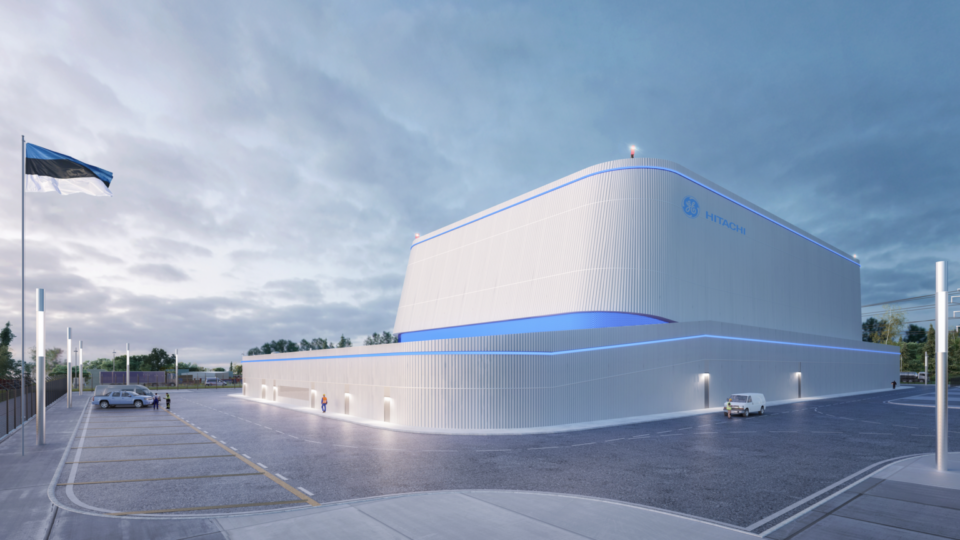
If Estonia decides to build a nuclear power plant, Fermi Energia has proposed GE Hitachi’s BWRX-300 small modular reactor as one possible option. Rendering: GE Hitachi
The billions required must be debated first
Uiga said one advantage of small modular reactors is lower financial risk, because they require less capital at once than a large nuclear plant. The sums remain very substantial for Estonia: Kallemets estimated that one reactor would cost around €2 billion to build, while a two-reactor project could total €4.5–4.6 billion.
Uiga stressed that even more important than construction costs are the price at which the plant would generate electricity and the share the state would have to finance. “These figures must be established and debated at the outset so that we know whether we are ready,” he said.
Rosin noted that much also depends on the project’s structure and allocation of risk. “If we procure a nuclear plant the way we procure artillery shells, we would be better off not procuring it,” he said. Estonia should not bear all the risks of cost increases, delays and financing, but should involve partners and share responsibility.
“If we procure a nuclear plant the way we procure artillery shells, we would be better off not procuring it.”
A safe nuclear plant starts with people
Kallemets said a nuclear power plant often looks more exciting and dangerous from the outside than its daily operations actually are. Plants follow standard procedures, and many tasks are technical and clearly regulated. They need automation specialists, electrical engineers, maintenance engineers, water chemistry specialists and radiologists, among others. “It may sound banal, but it is not rocket science,” he said.
Waste must be approached just as systematically: spent fuel management and its funding must be planned from the outset. Finland collects funds during electricity generation for both decommissioning and final disposal of spent fuel.
Tkaczyk, an Associate Professor and nuclear safety researcher at the University of Tartu, stressed that the reactor design alone does not guarantee safety. He compared nuclear energy to aviation: Airbus and Boeing aircraft may be widely used and reliable, but actual safety depends on maintenance, staff training and oversight. “The safety of a potential plant depends not on the Americans or Japanese who build it, but on us,” he said.
Estonia must therefore build its own knowledge and independent expertise before constructing a plant. TalTech and the University of Tartu planned a joint nuclear energy study programme around fifteen years ago, but it never launched. Nuclear-related courses are currently taught at different universities, but there is no comprehensive programme. Tkaczyk called for closer cooperation between the state and universities, arguing that a safe nuclear programme cannot be established without domestic training, research and independent specialists.
Specialists will be needed not only at the plant but also in the regulator, universities and waste management. Tkaczyk sees this as fundamental to the programme’s credibility. “A nuclear programme cannot be launched responsibly without enough trained people in the country.”
“A nuclear programme cannot be launched responsibly without enough trained people in the country.”
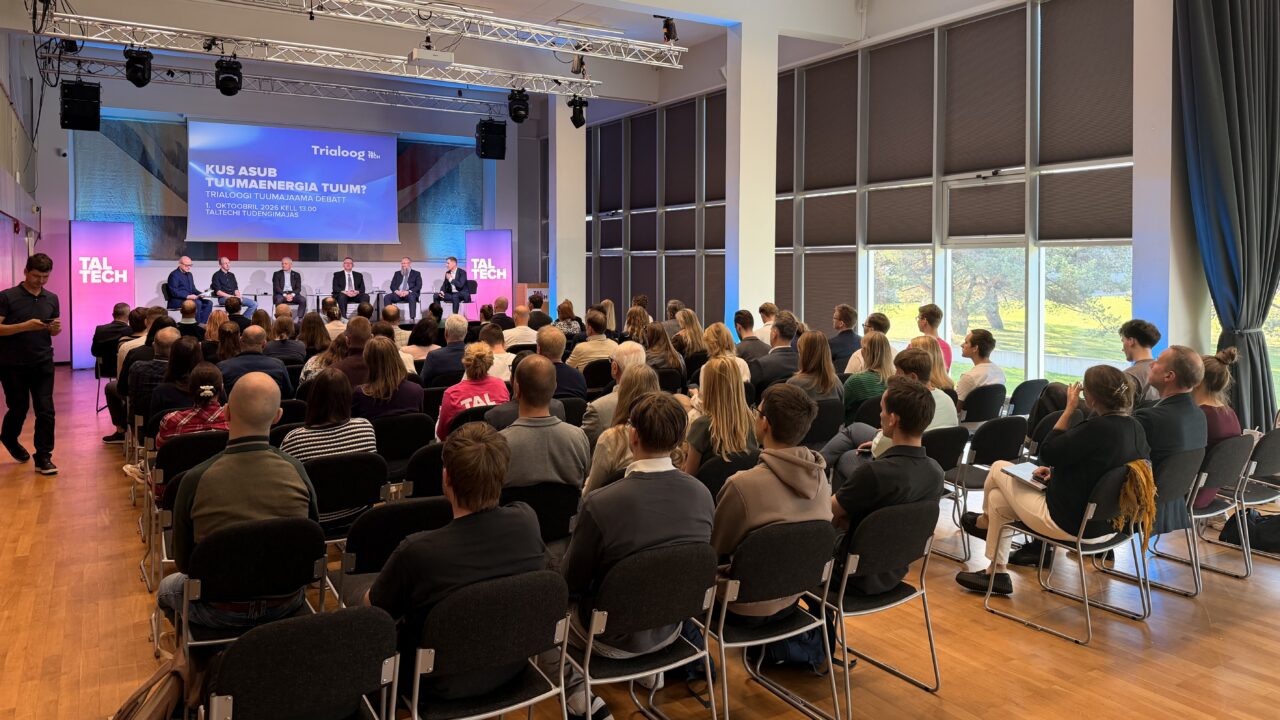
Trialoog’s nuclear energy debate drew a large audience to TalTech’s Student House, demonstrating strong public interest in the future of nuclear energy in Estonia. Photo: Eveliis Vaaks
“I want Estonia to be strong”
Smaller reactors are considered the most realistic option for Estonia, but it remains unclear whether their promised reliability can be delivered within current schedules and budgets. Vasser argued that Estonia should not build its future energy plan on the assumption that a nuclear plant will definitely materialise. If the project is delayed or cancelled, the country needs a viable alternative. “These critical questions must be asked here and now: is what we are being promised real? And if it is not, we must consider which solutions actually work,” he said.
Kallemets responded with the debate’s most emotional contribution. For him, nuclear energy also raises the question of whether Estonia sees itself as capable of mastering complex technologies. “I want Estonia to be strong. We should not be some helpless weakling incapable of doing anything,” he said.
A small country should not assume that complex solutions must always be bought in from elsewhere, he argued. “The only way a small nation can survive is by using modern technology intelligently, safely and responsibly. This is our opportunity to show that Estonians are capable.”
Estonia remains in the preparatory phase of nuclear energy development. The coming years must show whether the chosen technology, price and financing model suit Estonian circumstances, and whether the country can establish the necessary oversight and knowledge base. Only then can a decision be made on turning the plans into an actual nuclear power plant.
“I want Estonia to be strong. We should not be some helpless weakling incapable of doing anything.”