Innovation and Technology Manager at Mapri Ehitus
The knowledge accumulated within a construction company is often scattered across people’s memories, emails and project folders. Kristin Kivimäe, Innovation and Technology Manager at Mapri Ehitus, believes artificial intelligence could help bring this knowledge together and make it accessible, so that lessons from earlier projects can inform decisions on the next ones.
If you ask a construction company which subcontractor is considered reliable, the answer might be: “One of the project managers knows that.” One person remembers which solution worked at a biogas plant; another knows what to bear in mind when requesting quotes for smoke vents. A company may have a wealth of experience, but if it is scattered across people’s memories, it may never reach the next project or inform the next decision.
This question has been a constant companion in my role as Innovation and Technology Manager at Mapri Ehitus. I came into construction from telecommunications, where I worked on machine learning solutions. At Mapri, I was given a free hand, and during my first year I learnt a great deal and asked plenty of questions.
We have knowledgeable, experienced people. Now we need to find a way to get their knowledge to the places where it is most useful, at the right time.
A company’s memory should not stay in people’s heads
People were building foundations, walls and roofs a hundred years ago too. Yet we should not be working in the same way as they did then. Innovation begins by thinking through what we do, why we do it and what we could stop doing.
Experienced people have solved thousands of problems, learnt from mistakes and accumulated knowledge that cannot be found in manuals. But when they finish their involvement in a project, its documents go into the archive and the lessons often remain scattered across people’s memories, rather than becoming part of the company’s collective memory.
A construction company’s greatest opportunity for innovation may therefore lie not necessarily in new equipment or software, but in making existing knowledge available to people when they need it.
First, understand the problem
Is this where artificial intelligence comes in? Yes and no. In recent years, it has sometimes seemed as though AI is expected to solve almost every problem. But if a workflow functions poorly, AI will not improve it. It may simply make a bad process run faster.
Effective work therefore starts with the right people and the right questions. Recently, we mapped a procurement process together with project managers and estimators. Instead of starting with tools, we began by investigating what actually gets in the way of their everyday work.
At Mapri, we are currently observing different workflows and testing tools to establish how, and to what extent, technology can make work easier, and whether it is the process or the data that needs to change first. Only once we understand the bottlenecks can we assess whether AI is the right tool for overcoming them and where to focus our efforts.
AI can help with cost estimating, for example. Imagine one subcontractor sending a quote as an Excel spreadsheet and another as a PDF, leaving the estimator to transfer the data manually into a comparison table. AI can help put the quotes into a common format.
The real value, however, lies in more than producing a table faster. When estimators no longer have to spend time transferring data, they can ask better questions: why does one bidder’s price differ from the others? Is the partner offering the better quote suitable? The cheapest quote may not be the best, because the same partner may, for example, have missed deadlines in the past.
AI does not replace the estimator: a person still makes the decision. Yet its benefits go beyond saving time, extending to better risk management and fewer repeated mistakes.
People were building foundations, walls and roofs a hundred years ago too. Yet we should not be working in the same way as they did then. Innovation begins by thinking through what we do, why we do it and what we could stop doing.
2_2.000000_4273.990_4274.940_2685.720_2691.220_-0.347_0.183_89.759_0.000000_0.000000_0.000000_0.17392279_2.07924414_-3.25558281_-0.00137561_0.00039484_10752_5376_113_2.000000_4292.860_4293.490_8073.710_2687.660_0.568_0.020_90.173_-0.001678_0.000109_-0.031862_0.19092542_2.04221749_-3.22735119_-0.00006218_-0.00397495_10752_5376_113_197632 -0.007812_-0.003906_0.022461_0.000000_-0.001065_0.003196
Data becomes knowledge only when it helps us make decisions
A company already holds almost all the information it needs to operate: in emails, contracts and Excel spreadsheets. The problem is that this information sits in different places and fails to inform subsequent decisions.
Data alone does not make a company smarter. A comparison table can help an experienced manager test a judgement based on experience, but an Excel price comparison is simply a document. It becomes knowledge when, later on, we can see why a particular partner was chosen and what consequences that decision had. More important than collecting data, then, is being able to use it at the moment a decision needs to be made.
We have tried to make it possible to compare the actual construction costs of different sites quickly. We used AI to write a script for this, although it soon became clear that the projects could not be compared because they had been structured differently. Innovation often means less conspicuous work: improving data quality and creating shared taxonomies.
Rapid prototypes and small solutions built with AI have an important role here. They make an idea tangible quickly. Before trying a tool, it can be difficult to describe the workflow or solution that is actually needed. Once people can try it and discuss it with others, they can develop a clearer understanding of its purpose.
A rapid prototype is not yet a finished solution
A prototype makes an idea visible, but visibility does not establish fitness for use. A working solution must be maintainable and secure, and someone must be responsible for it. Otherwise, a new kind of fragmentation emerges within the company: everyone has their own tool, their own logic and their own truth.
More dangerous than a single wrong answer, however, may be a situation in which we imperceptibly hand our thinking over to a system whose workings we do not understand. If people become accustomed merely to checking ready-made answers, the judgement built on their experience, which is so valuable in construction, may gradually weaken.
Data requires particular attention. If a company gives AI access to contracts, emails or internal documents, it must think carefully about which data to use and how to protect it.
More dangerous than a single wrong answer, however, may be a situation in which we imperceptibly hand our thinking over to a system whose workings we do not understand.

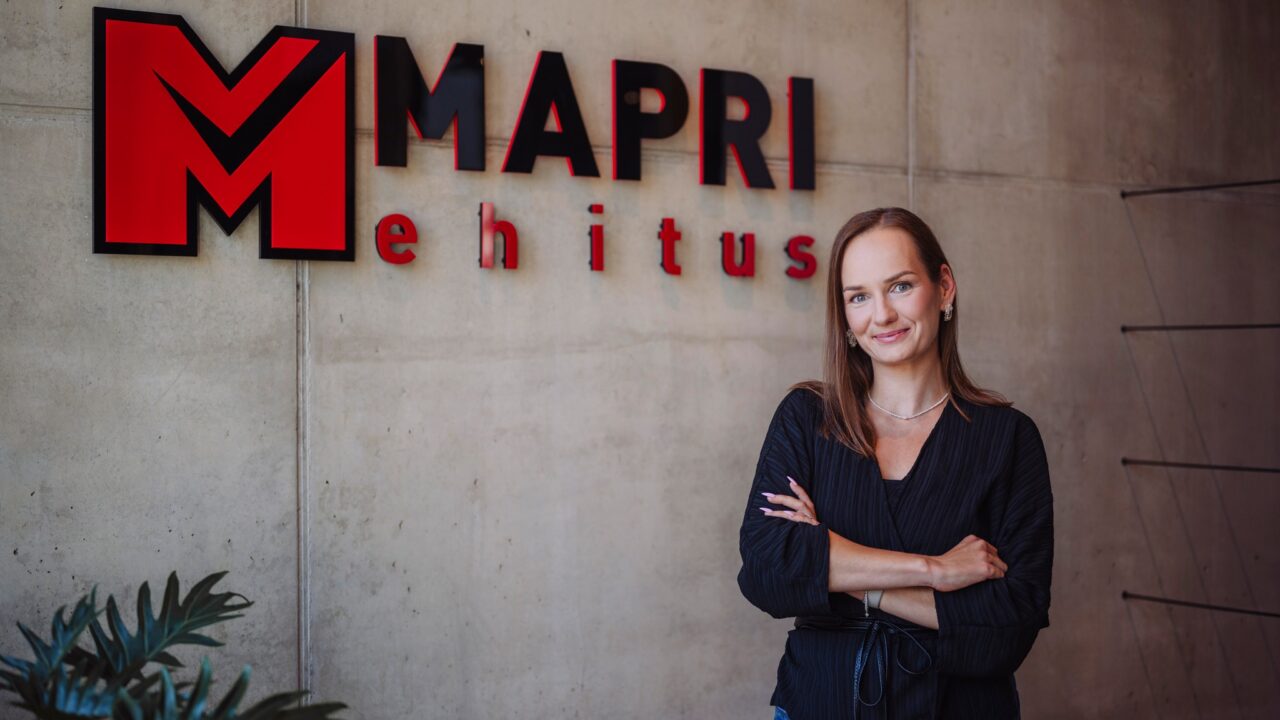
Kristin Kivimäe usub, et inimese roll ei kao kuhugi. Ehitusvaldkonnas on iga objekt erinev, tagasiside saabub viivitusega ja sama otsus võib eri tingimustes anda erineva tulemuse. Sellises keskkonnas ei suuda masin kogemusega inimest asendada, vaid see vajab hoopis inimese abi. Foto: Mapri Ehitus
We do not need to predict the future precisely
The pace of technological change is accelerating, and no one can say with certainty what a construction company will look like in five or ten years. We do not know which AI models will dominate, which platforms will remain relevant, how regulation will change or what new ways of working will emerge.
We therefore do not need to try to predict the future precisely. We should create freedom of choice: design our architecture, data and processes so that we can change direction without rebuilding everything from scratch.
This means clean, accessible data, systems that communicate with one another, clear responsibility and application programming interfaces, or APIs. Data should not be locked away in one department or in one person’s head. Processes must be widely understood and adaptable so that they can be automated when necessary.
In the future, people will probably spend less time obtaining information and reacting to it, and more time making decisions. If systems are designed to serve both machines and people, AI can take increasingly independent steps: preparing comparisons, finding lessons from earlier experience, drawing up budgets and highlighting risks.
This is precisely why today’s “boring” work matters so much. A company that has put its data and processes in order and made them machine-readable can move quickly when new technology arrives. A company that has failed to lay this foundation will be unable to speed up its work even with the most powerful tool.
The human role is not going away. In construction, every site is different, feedback arrives with a delay and the same decision can produce different results under different conditions. In such an environment, a machine cannot replace an experienced person: it needs human help.
Three ideas to start with
- Experience must carry over from one decision to the next. Construction has no shortage of experience, but it often remains in people’s heads or project archives and does not help the next project succeed.
- Start with people and the right question. AI cannot fix a bad process. First, work with the people doing the job to understand what is really holding them back.
- Lay the foundation today to keep the future open. Well-organised data, clear rules and precisely defined responsibility help us move quickly when new technology arrives.
The human role is not going away. In construction, every site is different, feedback arrives with a delay and the same decision can produce different results under different conditions. In such an environment, a machine cannot replace an experienced person: it needs human help.