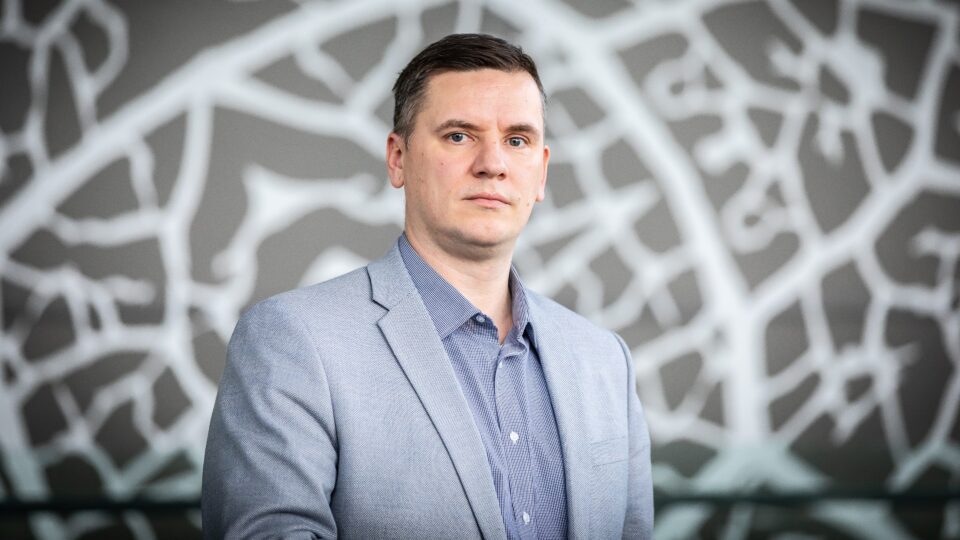
President of the International Society for Engineering Pedagogy (IGIP), Head of the Estonian Centre for Engineering Pedagogy

Over a quarter of a century, the Estonian Centre for Engineering Pedagogy has helped establish an understanding that engineering education is, at its heart, much more than passing on knowledge. The question is no longer how many formulae or technologies learners know. What matters is how they think, which problems they can solve and what impact their work has on society.
Just a few decades ago, engineers were seen primarily as narrow specialists in their field. Today’s world expects considerably more of them. The energy transition, artificial intelligence, digitalisation, climate change, resource efficiency and security pose challenges whose solutions must draw on different disciplines.
Tomorrow’s engineers must be able to think in systems, learn, collaborate and innovate. They need to work in interdisciplinary teams, connect technological, economic and social aspects, and learn to assess the long-term impact of their decisions.
This is precisely why engineering education must change too.
From T-shaped engineers to π-shaped and M-shaped professionals
For a long time, we have spoken of T-shaped engineers, who combine deep specialist knowledge with broad collaboration and communication skills. This model has served the needs of industrial society and the knowledge-based economy well.
Today’s challenges, however, call for the next step.
Increasingly, we speak of π-shaped professionals with two strong pillars of competence: engineering and AI, for example, engineering and entrepreneurship, or engineering and educational science. Such specialists can combine knowledge from different fields to create new solutions to complex problems.
The M-shaped professional model goes further still. Such people have deep expertise in several areas and can move flexibly between technology, data science, management, innovation, sustainability and social processes. These are precisely the people needed in a world of ever more closely interconnected technological, economic and social systems.
If the past 25 years have helped develop T-shaped specialists with strong technical foundations, the next leap must focus on developing π-shaped and M-shaped professionals.
“Tomorrow’s engineers must be able to think in systems, learn, collaborate and innovate.”

Modern engineering education goes beyond technical knowledge to develop creativity, systems thinking and the ability to solve complex problems. Illustrative photo: Unsplash
STEM education begins long before university
There is much discussion in Estonia about the shortage of engineers. But that shortage does not begin at university.
It often begins at basic school.
If young people lose interest in mathematics, physics or technology, that interest is difficult to restore later. The work of the Estonian Centre for Engineering Pedagogy has therefore expanded from higher education to the entire education system.
For years, the centre has contributed to the development of STEM and STEAM education, the professional development of teachers and university teaching staff, and the promotion of learning. Our aim goes beyond increasing the number of future engineers: we want to help young people discover the exciting world of technology and science and the opportunities it offers.
If we want more engineers, we need more inspiring STEM teachers.
If we want better engineers, we need better university teachers.
If we want more innovation, we must develop teaching and learning.
The AI age does not make learning less important
The most significant social change of recent years has been the rapid development of artificial intelligence.
For the first time in history, learners can find answers to their questions in seconds, whereas previously it might have taken hours or days. Yet we should not forget that, while speed changes teaching, assessment and learning, it does not change the purpose of learning.
Quite the opposite.
The more capable AI becomes, the more important distinctively human skills become: critical thinking, creativity, ethical judgement, systems thinking and responsibility.
AI can help find answers. People must still ask the questions, assess the answers and take responsibility for their consequences.
Tomorrow’s engineers are therefore being prepared not so much to compete with AI as to work alongside it.
“AI can help find answers. People must still ask the questions, assess the answers and take responsibility for their consequences.”
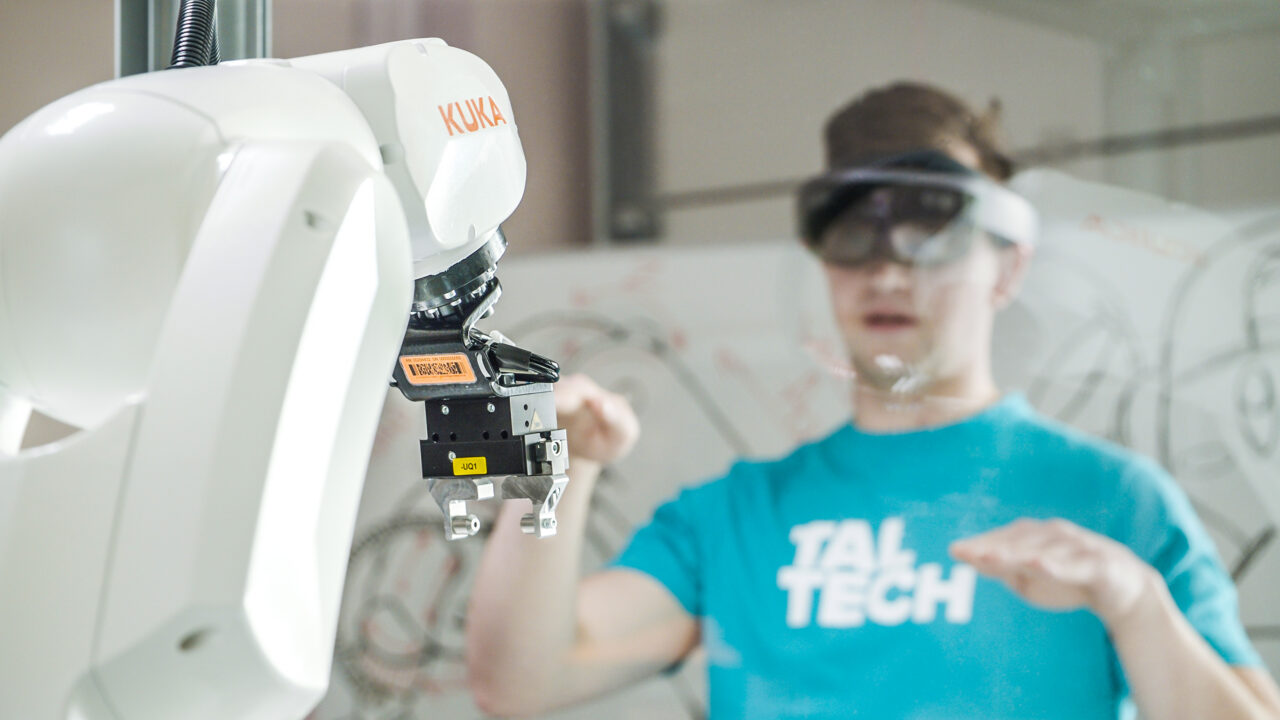
Developments in AI and robotics are changing engineers’ work and placing new demands on engineering education. Pictured: a TalTech student with an industrial robot. Photo: TalTech
With mind, hand and heart
The development of engineering pedagogy in Estonia has been guided by an important understanding: learning means personal development as well as acquiring knowledge.
Even the most advanced technology cannot replace trust, motivation, a sense of belonging or an inspiring teacher. The learning sciences confirm that deep learning takes place in an environment that encourages learners to ask questions confidently, experiment, make mistakes and try again.
In this sense, engineering pedagogy is much more than teaching methodology.
It embodies the understanding that technological development begins with human development.
Strong foundations, a new leap forward
When the Estonian Centre for Engineering Pedagogy was established in 2001, our main aim was to help engineers teach better.
Today, our ambition is considerably broader:
how can we develop people who can lead technological change, address sustainability challenges, use AI responsibly and create value in a rapidly changing world?
The coming decades of engineering education in Estonia will depend on how we answer these questions.
A quarter of a century has laid strong foundations. The next leap forward will come through learning.
Because technology alone will not shape our future.
The future will be shaped by people who can understand, create and use technology wisely. The Estonian Centre for Engineering Pedagogy has played an important role in developing such people for 25 years.
“The future will be shaped by people who can understand, create and use technology wisely.”