Editor of Trialoog
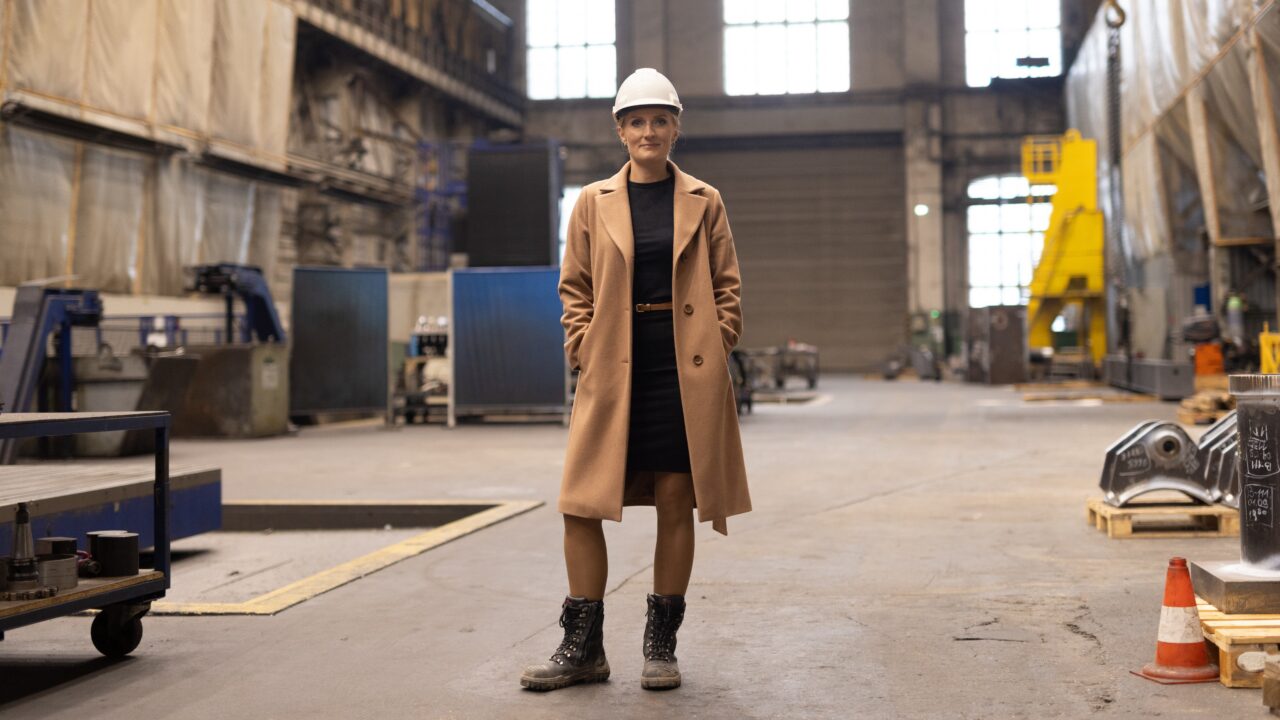
Liisi Särglep did not dream of becoming an engineer as a child. Her first plan was to study medicine, but when she was not admitted to the University of Tartu on her first attempt, her next choice took her to Tallinn University of Technology to study product development and production engineering.
Today, the TalTech alumna is a Development Adviser at the Federation of Estonian Engineering Industry, heads the Estonian Welding Society and is the founder of Seltec, which provides engineering consultancy and services including welding coordination.
An engineer almost by chance
“I did not initially want to become an engineer at all. I wanted to study medicine, but I did not get in,” Särglep recalled. Unwilling to take a year out, she turned to a technical field because cars were her other great passion.
Särglep says she grew up largely among boys: she had an older brother, and there were more boys than girls around the family’s summer cottage. She also enjoyed the sciences. Joining Tallinn Secondary School of Science in the seventh grade deepened her interest in mathematics and physics.
She discovered welding engineering while working at Saku Metall. When the company began manufacturing products for the railway industry, quality requirements became much stricter. It needed a welding engineer, and Särglep took on the role.
She was drawn to a problem that needed solving. Welding was a production bottleneck, determining how much could be manufactured and how quickly. “It seemed strange that one operation dictated the pace of the entire production process. As an engineer, I wanted to find a way to make the whole process work better,” she said.
Her welding engineering responsibilities included quality systems, welding processes, materials selection, staff training and company certification.
“It seemed strange that one operation dictated the pace of the entire production process. As an engineer, I wanted to find a way to make the whole process work better.”
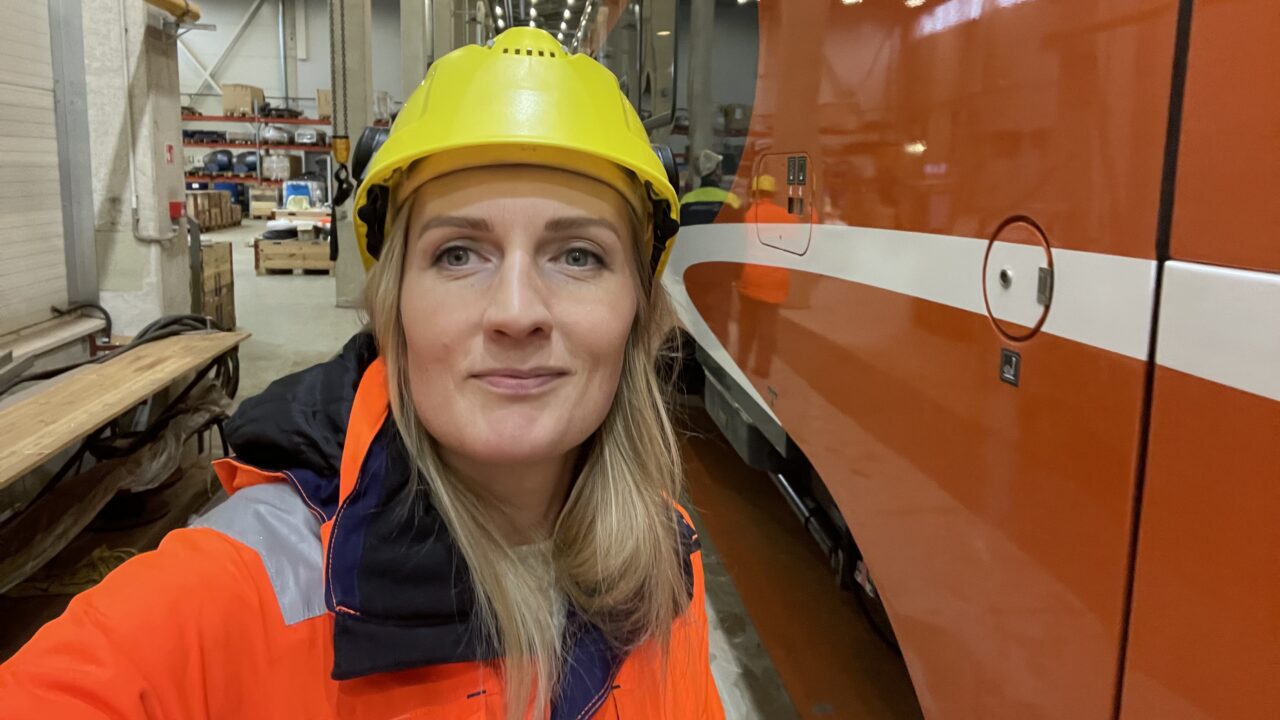
The railway industry has been a recurring theme in Liisi Särglep’s career: stricter quality requirements for railway products originally led her into welding engineering, and she later encountered the sector again at Operail. Photo: private collection
A blonde woman in a male-dominated environment
When Särglep entered the metal industry at 22–23, she was clearly in the minority as a young woman. Yet she did not feel she constantly had to prove herself. At university too, where most classmates were men, she felt she belonged.
Outside her own team, she did encounter stereotypes. At one meeting, Southern European customers bluntly told the company’s owner they would not place an order because a young woman was responsible for welding. Over the years, she also heard suggestions such as “just wear a shorter skirt when the auditor comes” on several occasions.
Nevertheless, Särglep does not see these incidents as having significantly affected her career. She places much greater value on experience that has taught her to solve problems and learn from failure. “Engineering is problem-solving. You need the foundations from school, but becoming a competent problem-solver requires considerable work experience — and just as much experience of failure,” she said.
Over the years, she has become increasingly convinced that technical knowledge alone is insufficient. Equally important are communicating with different kinds of people, understanding their perspectives and finding common ground, particularly when everyone has their own view of how something should be done.
Särglep considers balancing differing opinions one of her strengths. “I think being a woman in engineering has its advantages too: I do not take offence easily or feel I must always be right. My ego is not that big. When solving a problem where everyone has their own view, that is a major advantage,” she said.
“I think being a woman in engineering has its advantages too: I do not take offence easily or feel I must always be right. My ego is not that big. When solving a problem where everyone has their own view, that is a major advantage.”
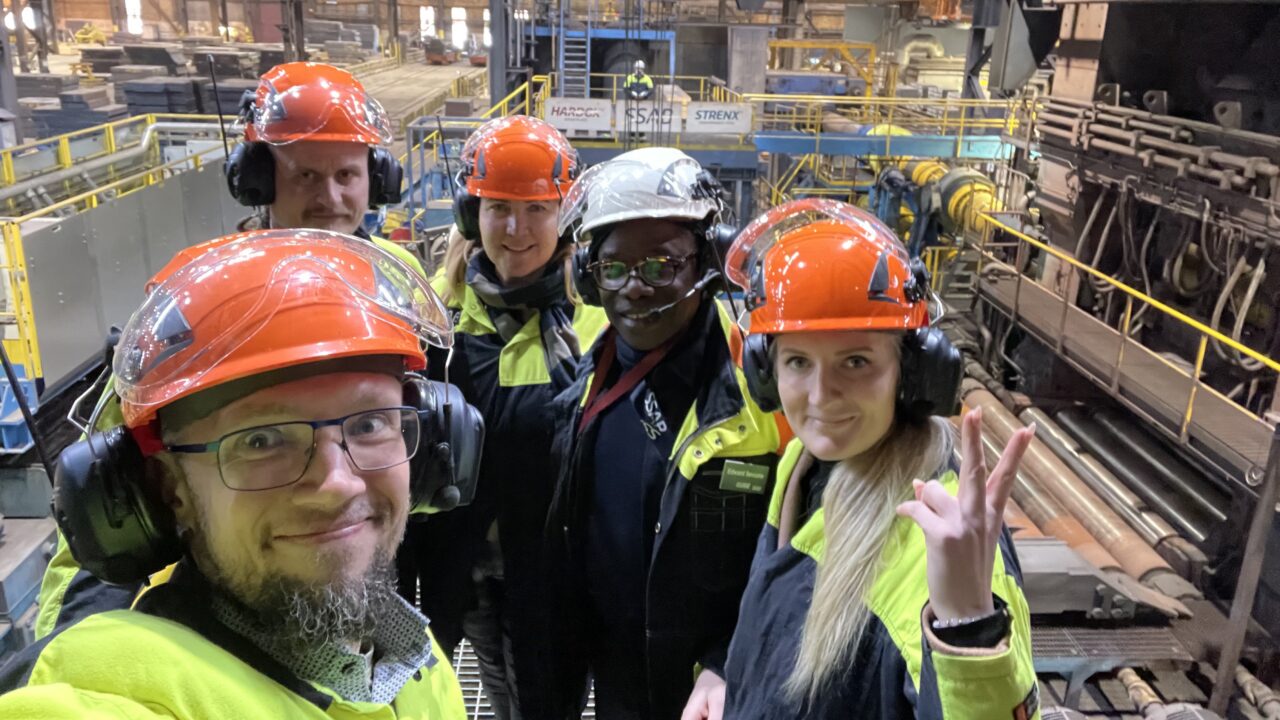
When Särglep entered the metal industry at 22–23, she was clearly in the minority as a young woman. Yet she did not feel she constantly had to prove herself. At university too, where most classmates were men, she felt she belonged. Photo: private collection
Estonia needs more good engineers
At one point, Särglep realised she wanted her experience to benefit more than one company. She established her own business and began providing welding coordination to several companies simultaneously.
She soon realised that even then, one person could reach only a limited number of businesses. More good welding engineers and coordinators in Estonia would have a far greater impact. She therefore began contributing to training new specialists, and in recent years dozens have completed internationally recognised training under her leadership. “One person’s success will not take a small industrial nation very far. Two good engineers are much better than one, and ten are better still.”
The same principle applies to companies, she says. Estonian firms are small beside international industrial giants and must cooperate more to win larger orders.
Särglep believes Estonia’s future industrial challenge will be a shortage of good engineers rather than skilled workers. She sees little future in cheap labour and basic subcontracting. “We should expand our pool of engineers so we can develop more technological solutions.” A small country without major natural resources must invest primarily in knowledge, technology and capable engineers.
This often leads her to consider whether training strong engineers should remain mainly the responsibility of public universities or whether privately established institutions could play a larger role in balancing supply and demand. “Especially given that many of the best practitioners work in companies rather than universities, I believe we should create more opportunities to pass their knowledge and experience to the next generation,” she said.
Recognising the need alone will not instantly produce new engineers. It starts much earlier, with whether a child becomes interested in experimenting and building things by hand. She remembers the family summer cottage and garage, where she could make things with her father, hammer nails into wood and create something herself. “Many children today do not have those opportunities.” She therefore considers it important for schools to offer hands-on experience of technology alongside teaching it.
Särglep believes this opportunity should be equally natural for boys and girls. At the same time, engineering should not be forced on girls or presented as something exceptional they must try because of their gender. Giving children opportunities to experiment and recognising their strengths and interests matters more.
Her own journey shows that a first choice need not be final. Several times during her career, she has taken time out, tried other jobs and considered a major life change. Yet she has always returned to industry. “The knowledge, contacts and international network I have built over the years outweigh the idea of starting from scratch in another sector,” she concluded.
“One person’s success will not take a small industrial nation very far. Two good engineers are much better than one, and ten are better still.”
* This article was produced in cooperation with the Engineering Academy. One of its aims is to increase the proportion of girls in engineering fields.