Aigar Vaigu: measure outcomes rather than numbers

16.11.2026
Aigar Vaigu: measure outcomes rather than numbers. 16.11.2026. TalTech’s Entrepreneurship Day featured a discussion entitled “What happens if we do not cooperate?”, in which Krister Kalda, Head of Business Cooperation in the Entrepreneurship Department, asked whether advances in artificial intelligence could reduce businesses’ need to work with universities. Why involve researchers if companies are becoming increasingly capable of developing new solutions themselves? University knowledge creates value even without a contract Vaigu believes the first step should be to establish what cooperation is intended to achieve. “Do we need more cooperation, or do we actually need the knowledge created at universities to reach society, where it can have greater impact and create more value?” A company can commission laboratory measurements from a university, ask a researcher for advice or launch a long-term development project, he said. All these activities are called cooperation, although their nature and impact differ considerably. Meaningful cooperation arises when the parties can create something together that neither could achieve alone. Vaigu gave the example of a university that trains good engineers. Its graduates go to work in companies, develop new products and set up businesses of their own. The economy grows, even though there may not be a single cooperation agreement between the university and those companies. Successful cooperation can also end after the very first meeting. In a single conversation, a researcher may explain to an entrepreneur why a proposed technology will not work, or suggest a simpler solution. The entrepreneur gains the knowledge they need and moves on. “Is that failed cooperation? Perhaps not. Because the entrepreneur obtained the knowledge they needed from the university,” Vaigu reflected. Knowledge can also reach businesses through research papers. Researchers may publish a paper that goes unnoticed for years, Vaigu said, until one day an entrepreneur happens to find it using AI or a search engine and applies the solution it describes to developing a new product. Economic value has been created, yet it is not reflected in official cooperation statistics in any way. “Do we need more cooperation, or do we actually need the knowledge created at universities to reach society, where it can have greater impact and create more value?” Finding a partner takes effort How should an entrepreneur recognise the moment when it is worth approaching a university? Vaigu compared it to finding love: you may stumble upon the right person by chance, but your chances improve if you leave home and talk to others. He highlighted Finland’s Aalto University, where he earned his doctorate. Every year, his former professor brings together the people whose doctoral research he supervised. There are now 52 of them, working in businesses, universities and international organisations. At a recent meeting, Vaigu overheard a conversation in which a technology developed by one participant caught the interest of another participant’s company. A potential collaboration emerged simply because the right people met: “Knowledge is exchanged when people come into contact and communicate with one another.” Vaigu encouraged entrepreneurs to be bolder about contacting their former lecturers. Even if a professor cannot offer a solution personally, they may be able to point the person approaching them towards the right researcher. Communication should work both ways. Entrepreneurs could talk about the problems they are seeking to solve, while researchers could do more to introduce their discoveries and expertise. This can bring together a need and a technology that the entrepreneur did not previously know existed. Businesses want speed; research takes time Different working rhythms can make cooperation between researchers and entrepreneurs difficult. A company wants a quick solution, while research may take years. Vaigu attributes this to the organisations’ different objectives. A company must meet its customers’ needs and generate revenue. A university’s task is to create new knowledge and provide education. Yet bringing together mindsets that work to different timescales can also produce something valuable. He believes Estonia should do more to encourage people to move between universities, businesses and the public sector. Researchers could spend some time working in a company and later bring that experience back to the university. Likewise, specialists from businesses could contribute to teaching and development work. Such movement would help knowledge circulate and create new contacts. Vaigu emphasised that it can take decades for research findings to become part of everyday life. Consider Albert Einstein’s theoretical work, which helped lay the foundations for the development of lasers. Today, lasers are used in both industry and medicine, but it took a long time for practical applications to emerge. “Knowledge is exchanged when people come into contact and communicate with one another.” The state could buy solutions instead of funding activities The discussion’s sharpest criticism concerned Estonia’s established approach to assessing and funding research and development cooperation. Vaigu believes too much attention is paid to the number of cooperation agreements, the scale of projects and the money spent. Much less is asked about whether cooperation produced a new product, improved production or solved an important problem. “We measure activity, but not outcomes,” he summed up. Even an unsuccessful experiment can be valuable if it tells a company that its chosen technology does not work, Vaigu said. In that case, it should be possible to end the project and redirect resources elsewhere. He expects an even greater change from the state. At present, funding is often conditional on involving particular partners, such as a university or several companies. Instead, Vaigu believes the state could define a problem and offer payment for a solution that works. The state could announce a prize for solving a specific technological problem, or promise to buy a large quantity of a product if a company manages to develop it. This would give the entrepreneur a clear reason to invest and, where necessary, involve researchers. “If we know there is a customer somewhere who needs a solution to a problem, we will have no trouble finding the university’s door and putting researchers’ findings to use in our products and services,” Vaigu said. In his view, this approach could provide a stronger impetus for research cooperation than grants paid simply for involving partners. At the end of the discussion, Vaigu reiterated that cooperation between researchers and entrepreneurs should help solve real problems, rather than merely pretend to solve them. “If we know there is a customer somewhere who needs a solution to a problem, we will have no trouble finding the university’s door and putting researchers’ findings to use in our products and services.” This conversation took place on 29 October at TalTech’s Entrepreneurship Day, whose central themes were competitiveness and efficiency. The focus was on solutions that support businesses’ competitiveness, research cooperation and putting innovative ideas into practice. Further information: HERE.
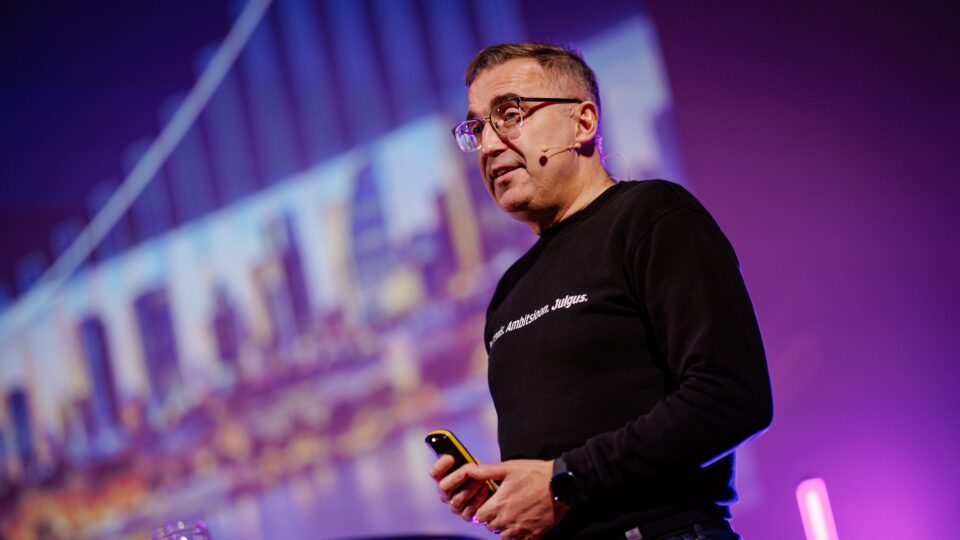
Aigar Vaigu believes the success of cooperation between universities and businesses should be judged by the value it creates and the problems it helps solve. Useful knowledge can reach a company through a single conversation, without a cooperation agreement being signed. Photo: Rene Lutterus

Aigar Vaigu believes the success of cooperation between universities and businesses should be judged by the value it creates and the problems it helps solve. Useful knowledge can reach a company through a single conversation, without a cooperation agreement being signed. Photo: Rene Lutterus

Cooperation between universities and businesses is often judged by the number of contracts signed and the money involved. Aigar Vaigu, CEO of engineering consultancy Steiger, believes this approach can distract from the most important question: what value does cooperation actually create? At TalTech’s Entrepreneurship Day, he called for more problem-solving instead of simply measuring cooperation in numbers.

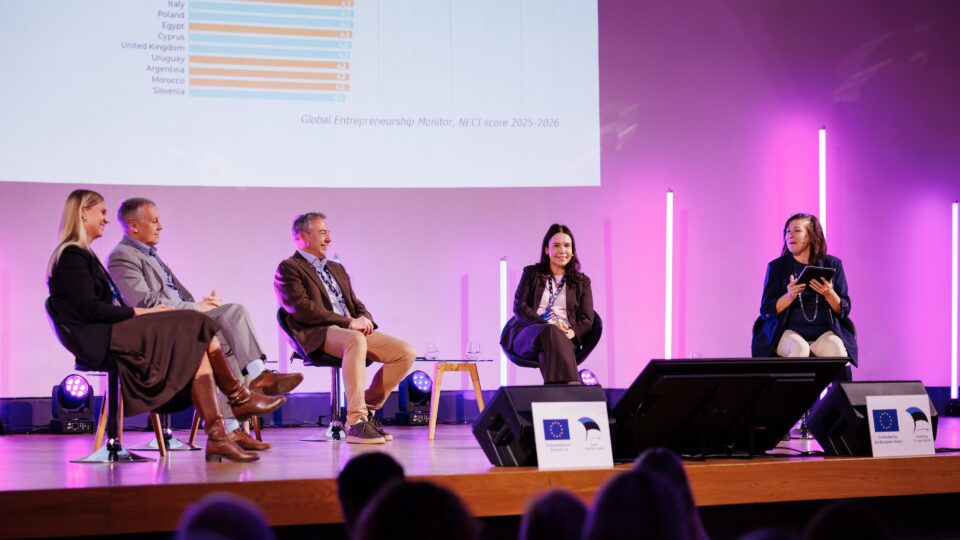
TalTech’s Entrepreneurship Day featured a discussion entitled “What happens if we do not cooperate?”, in which Krister Kalda, Head of Business Cooperation in the Entrepreneurship Department, asked whether advances in artificial intelligence could reduce businesses’ need to work with universities. Why involve researchers if companies are becoming increasingly capable of developing new solutions themselves?

University knowledge creates value even without a contract

Vaigu believes the first step should be to establish what cooperation is intended to achieve. “Do we need more cooperation, or do we actually need the knowledge created at universities to reach society, where it can have greater impact and create more value?”

A company can commission laboratory measurements from a university, ask a researcher for advice or launch a long-term development project, he said. All these activities are called cooperation, although their nature and impact differ considerably. Meaningful cooperation arises when the parties can create something together that neither could achieve alone.

Vaigu gave the example of a university that trains good engineers. Its graduates go to work in companies, develop new products and set up businesses of their own. The economy grows, even though there may not be a single cooperation agreement between the university and those companies.

Successful cooperation can also end after the very first meeting. In a single conversation, a researcher may explain to an entrepreneur why a proposed technology will not work, or suggest a simpler solution. The entrepreneur gains the knowledge they need and moves on. “Is that failed cooperation? Perhaps not. Because the entrepreneur obtained the knowledge they needed from the university,” Vaigu reflected.

Knowledge can also reach businesses through research papers. Researchers may publish a paper that goes unnoticed for years, Vaigu said, until one day an entrepreneur happens to find it using AI or a search engine and applies the solution it describes to developing a new product.

Economic value has been created, yet it is not reflected in official cooperation statistics in any way.

“Do we need more cooperation, or do we actually need the knowledge created at universities to reach society, where it can have greater impact and create more value?”

Aigar Vaigu, CEO of engineering consultancy Steiger, emphasises that cooperation between businesses and researchers often grows out of personal contacts. One example is the collaboration between German company I Am Hydro and TalTech, which produced HydroCam, a camera system for monitoring fish movements in rivers. It began through the existing acquaintance between company co-founder Christian Haas and TalTech Professor Jeffrey Andre Tuhtan. Photo: Christian Haas

Aigar Vaigu, CEO of engineering consultancy Steiger, emphasises that cooperation between businesses and researchers often grows out of personal contacts. One example is the collaboration between German company I Am Hydro and TalTech, which produced HydroCam, a camera system for monitoring fish movements in rivers. It began through the existing acquaintance between company co-founder Christian Haas and TalTech Professor Jeffrey Andre Tuhtan. Photo: Christian Haas

Finding a partner takes effort

How should an entrepreneur recognise the moment when it is worth approaching a university? Vaigu compared it to finding love: you may stumble upon the right person by chance, but your chances improve if you leave home and talk to others.

He highlighted Finland’s Aalto University, where he earned his doctorate. Every year, his former professor brings together the people whose doctoral research he supervised. There are now 52 of them, working in businesses, universities and international organisations.

At a recent meeting, Vaigu overheard a conversation in which a technology developed by one participant caught the interest of another participant’s company. A potential collaboration emerged simply because the right people met: “Knowledge is exchanged when people come into contact and communicate with one another.”

Vaigu encouraged entrepreneurs to be bolder about contacting their former lecturers. Even if a professor cannot offer a solution personally, they may be able to point the person approaching them towards the right researcher.

Communication should work both ways. Entrepreneurs could talk about the problems they are seeking to solve, while researchers could do more to introduce their discoveries and expertise. This can bring together a need and a technology that the entrepreneur did not previously know existed.

Businesses want speed; research takes time

Different working rhythms can make cooperation between researchers and entrepreneurs difficult. A company wants a quick solution, while research may take years.

Vaigu attributes this to the organisations’ different objectives. A company must meet its customers’ needs and generate revenue. A university’s task is to create new knowledge and provide education. Yet bringing together mindsets that work to different timescales can also produce something valuable.

He believes Estonia should do more to encourage people to move between universities, businesses and the public sector. Researchers could spend some time working in a company and later bring that experience back to the university. Likewise, specialists from businesses could contribute to teaching and development work.

Such movement would help knowledge circulate and create new contacts. Vaigu emphasised that it can take decades for research findings to become part of everyday life. Consider Albert Einstein’s theoretical work, which helped lay the foundations for the development of lasers. Today, lasers are used in both industry and medicine, but it took a long time for practical applications to emerge.

“Knowledge is exchanged when people come into contact and communicate with one another.”

The discussion’s sharpest criticism concerned Estonia’s approach to assessing and funding research and development cooperation. Vaigu believes too much attention is paid to the number of agreements, the scale of projects and the money spent. Much less is asked about whether cooperation produced a new product, improved production or solved an important problem. Photo: Rene Lutterus

The discussion’s sharpest criticism concerned Estonia’s approach to assessing and funding research and development cooperation. Vaigu believes too much attention is paid to the number of agreements, the scale of projects and the money spent. Much less is asked about whether cooperation produced a new product, improved production or solved an important problem. Photo: Rene Lutterus

The state could buy solutions instead of funding activities

The discussion’s sharpest criticism concerned Estonia’s established approach to assessing and funding research and development cooperation.

Vaigu believes too much attention is paid to the number of cooperation agreements, the scale of projects and the money spent. Much less is asked about whether cooperation produced a new product, improved production or solved an important problem. “We measure activity, but not outcomes,” he summed up.

Even an unsuccessful experiment can be valuable if it tells a company that its chosen technology does not work, Vaigu said. In that case, it should be possible to end the project and redirect resources elsewhere.

He expects an even greater change from the state. At present, funding is often conditional on involving particular partners, such as a university or several companies. Instead, Vaigu believes the state could define a problem and offer payment for a solution that works.

The state could announce a prize for solving a specific technological problem, or promise to buy a large quantity of a product if a company manages to develop it. This would give the entrepreneur a clear reason to invest and, where necessary, involve researchers. “If we know there is a customer somewhere who needs a solution to a problem, we will have no trouble finding the university’s door and putting researchers’ findings to use in our products and services,” Vaigu said.

In his view, this approach could provide a stronger impetus for research cooperation than grants paid simply for involving partners.

At the end of the discussion, Vaigu reiterated that cooperation between researchers and entrepreneurs should help solve real problems, rather than merely pretend to solve them.

“If we know there is a customer somewhere who needs a solution to a problem, we will have no trouble finding the university’s door and putting researchers’ findings to use in our products and services.”

This conversation took place on 29 October at TalTech’s Entrepreneurship Day, whose central themes were competitiveness and efficiency. The focus was on solutions that support businesses’ competitiveness, research cooperation and putting innovative ideas into practice. Further information: HERE.