Andres Sutt: Estonia’s economy needs ambition

02.11.2026
Andres Sutt: Estonia’s economy needs ambition. 02.11.2026. Sutt noted that the nominal size of Estonia’s economy has doubled over the past 20 years, despite a period encompassing the global financial crisis, the eurozone debt crisis, the coronavirus pandemic and the economic shocks caused by Russia’s full-scale war. In his view, Estonia’s ability to grow its economy through all this shows that businesses, the state and society have done quite a few things right. Past success does not, however, mean it is time to rest on our laurels. Data centres could spur new electricity generation Sutt believes expanding Estonia’s energy capacity and linking it to new industrial investment could bring economic growth. Greater electricity generation could create the conditions for new businesses and large energy consumers to locate in Estonia. Data centres have an important role here, as their significance grows with the spread of AI and increasing demand for computing power. “Our ambition cannot be limited to building data centres alone,” Sutt said. He believes greater value is created when the computing capacity located here can also be used by Estonian entrepreneurs, researchers and anyone else interested. Data centres and new electricity generation capacity depend on one another. Before making an investment decision, an electricity producer needs confidence that there will be enough consumers for its output. A large energy consumer, in turn, wants to know that electricity will be available in the required quantities and at a suitable price. Sutt sees a contradiction here: society expects the cheapest possible electricity, while also expecting investors to build new generation capacity in Estonia. Investors, however, need sufficient long-term demand and confidence that their investment will pay off. “Now I am going to say something many people may disagree with, but Estonia’s economy has done very well.” From billion-euro projects to a Baltic single market Sutt highlighted the Tallinn–Helsinki tunnel as a potential economic engine. He said it would mean far more than a connection between two capitals: its impact would extend to the economy, logistics and security. He linked the tunnel to Rail Baltica and, in the future, the development of Arctic trade routes. If Finland and Estonia were connected by a fixed link and Rail Baltica continued from here to Central Europe, Estonia’s role in international freight flows could grow considerably. Once Rail Baltica is completed, it would be worth considering the next infrastructure project on a similar scale. Sutt said it is equally important to attract strategic industries whose impact extends beyond a single factory. He specifically discussed permanent magnet production: such an investment can connect Estonia to an international value chain and attract suppliers, research and development, and new businesses. Not every opportunity for economic growth requires a billion-euro project, however. Sutt believes a small country has advantages of its own: the ability to make decisions quickly and make it easier for companies to operate. He highlighted closer integration among the Baltic states. In banking, Estonia, Latvia and Lithuania already function as a fairly unified market, and he believes the same principle could be extended to other fields. A business starting in Estonia would then immediately gain access to a larger home market, rather than three small, separate ones. Sutt said this does not always require new laws or yet another strategy, but above all the ability to use existing opportunities. “Not a single new law is needed. It is all in our own hands. We do not need another report,” he said. Growth starts with ambition At the end of his presentation, Sutt returned to his central message. Estonian businesses have made many sound choices over recent decades; otherwise, the economy could not have grown so much despite the crises. He therefore sees no need to keep searching for past mistakes. What matters more is deciding how high Estonia will set its next bar. “There is no point staring into the rear-view mirror. The watchwords going forward should be ‘mindset’, ‘ambition’ and ‘courage’,” Sutt said. Ultimately, each company must define its own ambition. If more capital-intensive investment enabled Estonia to double the size of its economy over the next decade, Sutt said, this would mean the same tax burden but considerably more money for defence, healthcare and other essential areas. “The central concept is a focus on growth. We talk an enormous amount about cost efficiency. But cost efficiency alone will not deliver growth,” he said. Estonia’s goal for the next decade must therefore be an economy that is not only more efficient, but also larger and more ambitious. “The central concept is a focus on growth. We talk an enormous amount about cost efficiency. But cost efficiency alone will not deliver growth.” Andres Sutt spoke at TalTech’s Entrepreneurship Day on 29 October, where the central themes were competitiveness and efficiency. The event focused on solutions supporting business competitiveness, research cooperation and putting innovative ideas into practice. More information: HERE.
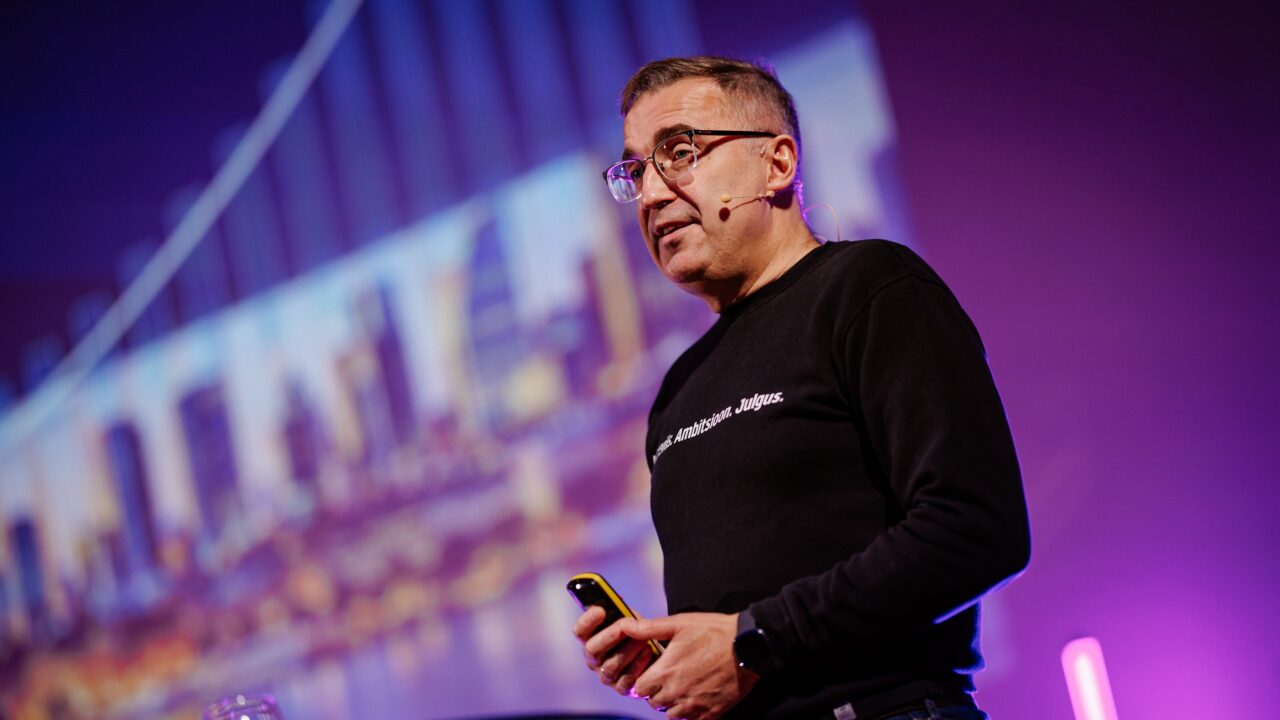
At TalTech’s Entrepreneurship Day, Andres Sutt noted that the nominal size of Estonia’s economy has doubled over the past 20 years, despite the global financial crisis, the eurozone debt crisis, the coronavirus pandemic and the economic shocks caused by Russia’s full-scale war. Photo: Rene Lutterus

At TalTech’s Entrepreneurship Day, Andres Sutt noted that the nominal size of Estonia’s economy has doubled over the past 20 years, despite the global financial crisis, the eurozone debt crisis, the coronavirus pandemic and the economic shocks caused by Russia’s full-scale war. Photo: Rene Lutterus

“Now I am going to say something many people may disagree with, but Estonia’s economy has done very well,” former Minister of Energy and the Environment Andres Sutt said at TalTech’s Entrepreneurship Day.

Sutt noted that the nominal size of Estonia’s economy has doubled over the past 20 years, despite a period encompassing the global financial crisis, the eurozone debt crisis, the coronavirus pandemic and the economic shocks caused by Russia’s full-scale war.

In his view, Estonia’s ability to grow its economy through all this shows that businesses, the state and society have done quite a few things right. Past success does not, however, mean it is time to rest on our laurels.

Data centres could spur new electricity generation

Sutt believes expanding Estonia’s energy capacity and linking it to new industrial investment could bring economic growth. Greater electricity generation could create the conditions for new businesses and large energy consumers to locate in Estonia.

Data centres have an important role here, as their significance grows with the spread of AI and increasing demand for computing power. “Our ambition cannot be limited to building data centres alone,” Sutt said. He believes greater value is created when the computing capacity located here can also be used by Estonian entrepreneurs, researchers and anyone else interested.

Data centres and new electricity generation capacity depend on one another. Before making an investment decision, an electricity producer needs confidence that there will be enough consumers for its output. A large energy consumer, in turn, wants to know that electricity will be available in the required quantities and at a suitable price.

Sutt sees a contradiction here: society expects the cheapest possible electricity, while also expecting investors to build new generation capacity in Estonia. Investors, however, need sufficient long-term demand and confidence that their investment will pay off.

“Now I am going to say something many people may disagree with, but Estonia’s economy has done very well.”

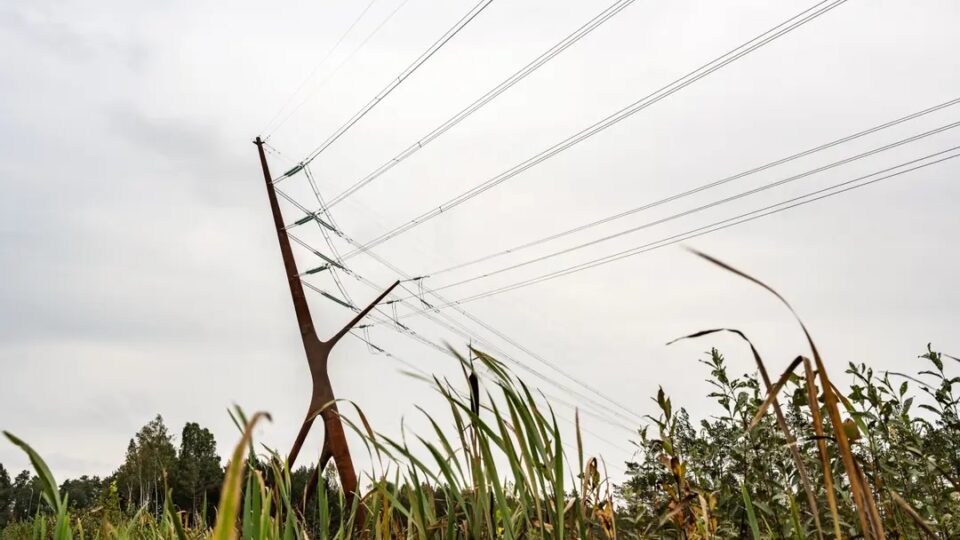
Sutt highlighted the Tallinn–Helsinki tunnel as a potential economic engine. He said it would mean far more than a connection between two capitals: its impact would extend to the economy, logistics and security. Photo: Chat GPT

Sutt highlighted the Tallinn–Helsinki tunnel as a potential economic engine. He said it would mean far more than a connection between two capitals: its impact would extend to the economy, logistics and security. Photo: Chat GPT

From billion-euro projects to a Baltic single market

Sutt highlighted the Tallinn–Helsinki tunnel as a potential economic engine. He said it would mean far more than a connection between two capitals: its impact would extend to the economy, logistics and security.

He linked the tunnel to Rail Baltica and, in the future, the development of Arctic trade routes. If Finland and Estonia were connected by a fixed link and Rail Baltica continued from here to Central Europe, Estonia’s role in international freight flows could grow considerably. Once Rail Baltica is completed, it would be worth considering the next infrastructure project on a similar scale.

Sutt said it is equally important to attract strategic industries whose impact extends beyond a single factory. He specifically discussed permanent magnet production: such an investment can connect Estonia to an international value chain and attract suppliers, research and development, and new businesses.

Not every opportunity for economic growth requires a billion-euro project, however. Sutt believes a small country has advantages of its own: the ability to make decisions quickly and make it easier for companies to operate.

He highlighted closer integration among the Baltic states. In banking, Estonia, Latvia and Lithuania already function as a fairly unified market, and he believes the same principle could be extended to other fields. A business starting in Estonia would then immediately gain access to a larger home market, rather than three small, separate ones.

Sutt said this does not always require new laws or yet another strategy, but above all the ability to use existing opportunities. “Not a single new law is needed. It is all in our own hands. We do not need another report,” he said.

Growth starts with ambition

At the end of his presentation, Sutt returned to his central message. Estonian businesses have made many sound choices over recent decades; otherwise, the economy could not have grown so much despite the crises.

He therefore sees no need to keep searching for past mistakes. What matters more is deciding how high Estonia will set its next bar. “There is no point staring into the rear-view mirror. The watchwords going forward should be ‘mindset’, ‘ambition’ and ‘courage’,” Sutt said. Ultimately, each company must define its own ambition.

If more capital-intensive investment enabled Estonia to double the size of its economy over the next decade, Sutt said, this would mean the same tax burden but considerably more money for defence, healthcare and other essential areas. “The central concept is a focus on growth. We talk an enormous amount about cost efficiency. But cost efficiency alone will not deliver growth,” he said. Estonia’s goal for the next decade must therefore be an economy that is not only more efficient, but also larger and more ambitious.

“The central concept is a focus on growth. We talk an enormous amount about cost efficiency. But cost efficiency alone will not deliver growth.”

Andres Sutt spoke at TalTech’s Entrepreneurship Day on 29 October, where the central themes were competitiveness and efficiency. The event focused on solutions supporting business competitiveness, research cooperation and putting innovative ideas into practice. More information: HERE.