Trialoog editor
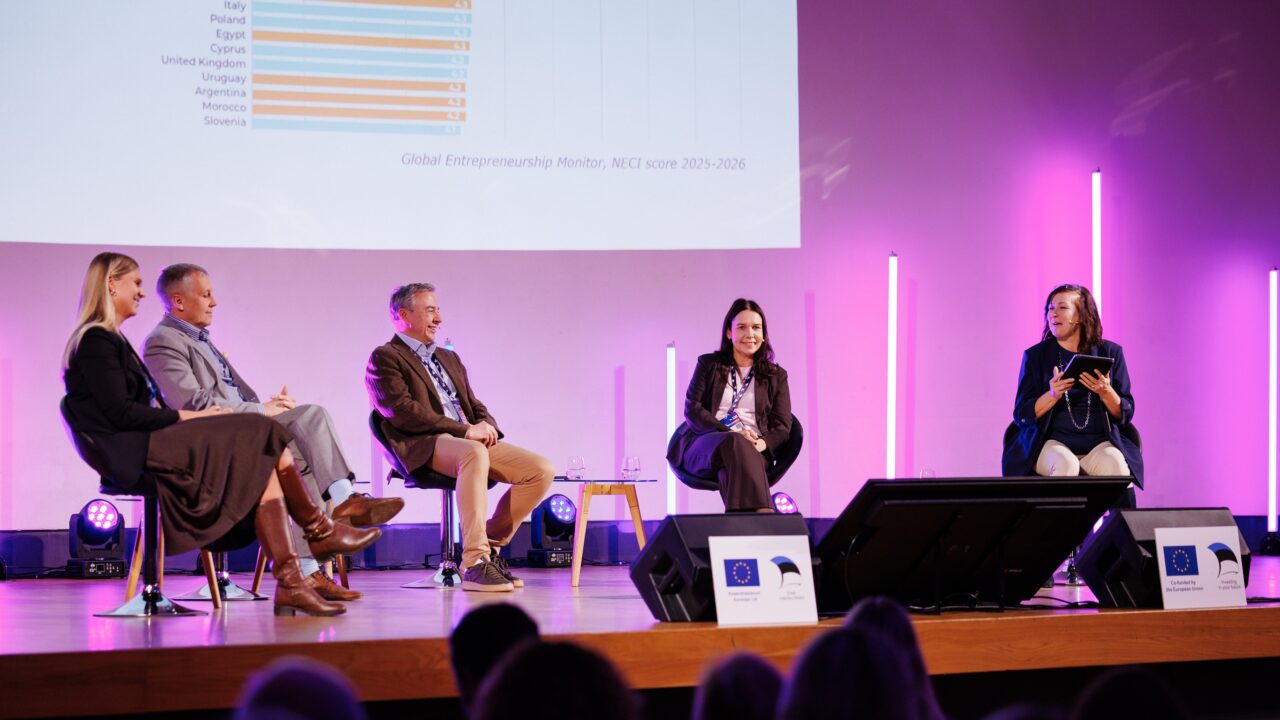
Estonia has plenty of good business ideas, researchers and technology, yet many promising projects never become companies. Sometimes a project loses its driving force; elsewhere, funding or the courage to take risks is lacking. At TalTech’s Entrepreneurship Day, experts discussed why entrepreneurship in Estonia is losing momentum and what is needed for the next success stories to emerge and grow.
The latest results of the Global Entrepreneurship Monitor (GEM) show that entrepreneurial activity in Estonia has declined in recent years. Presenting the findings, panel moderator Sirje Ustav highlighted young people’s growing fear of business failure as a particularly worrying trend.
Funding is shrinking, but the biggest challenge is people
The discussion noted that start-ups face increasing difficulty in raising investment. Entrepreneur and investor Aleksander Gansen said direct investment by angel investors fell from €3.8 million in 2024 to €2.3 million last year. “The situation is bleak,” he said.
At the same time, a shortage of funding forces entrepreneurs to think their business models through more carefully. “You need to reach your customer as quickly as possible,” Gansen stressed. Before making major expenditures, he said, founders should understand which problem their business solves and whether customers are willing to pay for the solution.
Gansen also sees new opportunities in the changed funding environment. AI tools allow companies with one or two founders to perform tasks that previously required a larger team and considerable expenditure. This enables entrepreneurs to test ideas with less capital and reach the market faster.
Sigrid Harjo, Head of Entrepreneurship Programmes at the University of Tartu, brought another perspective to the discussion: “Money alone does not deliver results.” She believes the success of a company or a research-based business idea often depends on finding someone willing to take responsibility and lead the project consistently.
Harjo cited the University of Tartu, which has supported almost a hundred experimental development projects in recent years. Among discontinued projects, 80% stopped because there was no one to keep them going. “We have researchers and ideas, but we need someone actively driving things forward,” she said.
Such projects could be led by a researcher, a doctoral candidate or a co-founder with business experience, Harjo said. Researchers may feel, however, that starting a business puts their career and reputation at risk, allowing fear of failure to hold back even the most promising ideas.
“The situation is bleak.”
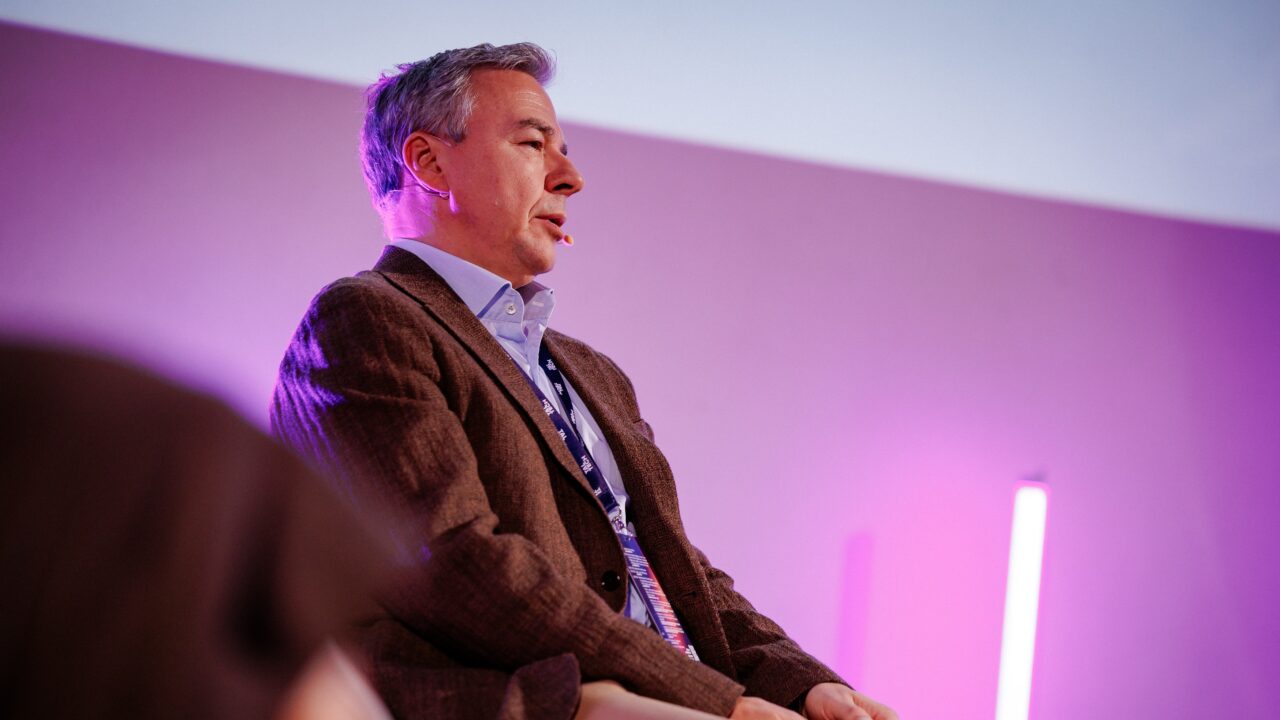
The discussion noted that start-ups face increasing difficulty in raising investment. Entrepreneur and investor Aleksander Gansen said direct investment by angel investors fell from €3.8 million in 2024 to €2.3 million last year. Photo: Rene Lutterus
Estonia’s small size calls for greater ambition
Ergo Metsla, Head of TalTech’s Alumni and Support Relations Office, believes entrepreneurial thinking must be developed at school and continued across every university discipline. “It is a question of mindset and ambition,” he stressed. Given Estonia’s small domestic market, future entrepreneurs should target foreign markets from the outset, while the value they create could remain in Estonia.
Metsla believes the state should examine why Estonian companies move abroad. “For example, we should analyse why Skeleton Technologies moved its operations to Germany. What should we have offered them to persuade them to stay in Estonia?” In his view, Estonia could do more to retain growing technology companies’ manufacturing and investment.
Kati Keel, Head of the Economic Policy Department at the Ministry of Economic Affairs and Communications, said Estonia must focus on raising productivity: “Our next growth success story must come from the ability to do things smarter and create greater added value.”
To support this, the ministry plans to pilot a programme in 2027 that would bring universities, research institutions and start-ups together around large companies, helping new technologies reach the market faster.
Keel said businesses also need conditions conducive to growth: “It must be easy for entrepreneurs to operate in Estonia, and the state must not get in their way without good reason.” She identified the shortage of engineers and skilled workers as a major obstacle, requiring better specialist training and easier recruitment of necessary foreign specialists.
Keel compared Estonia with Lithuania, whose economy has grown faster in recent years. She said Lithuania benefits from a larger domestic market and close links with Poland’s economy, but also from its ability to attract foreign investment. “They do a very good job of selling themselves,” she said in praise of Estonia’s southern neighbour.
“Our next growth success story must come from the ability to do things smarter and create greater added value.”
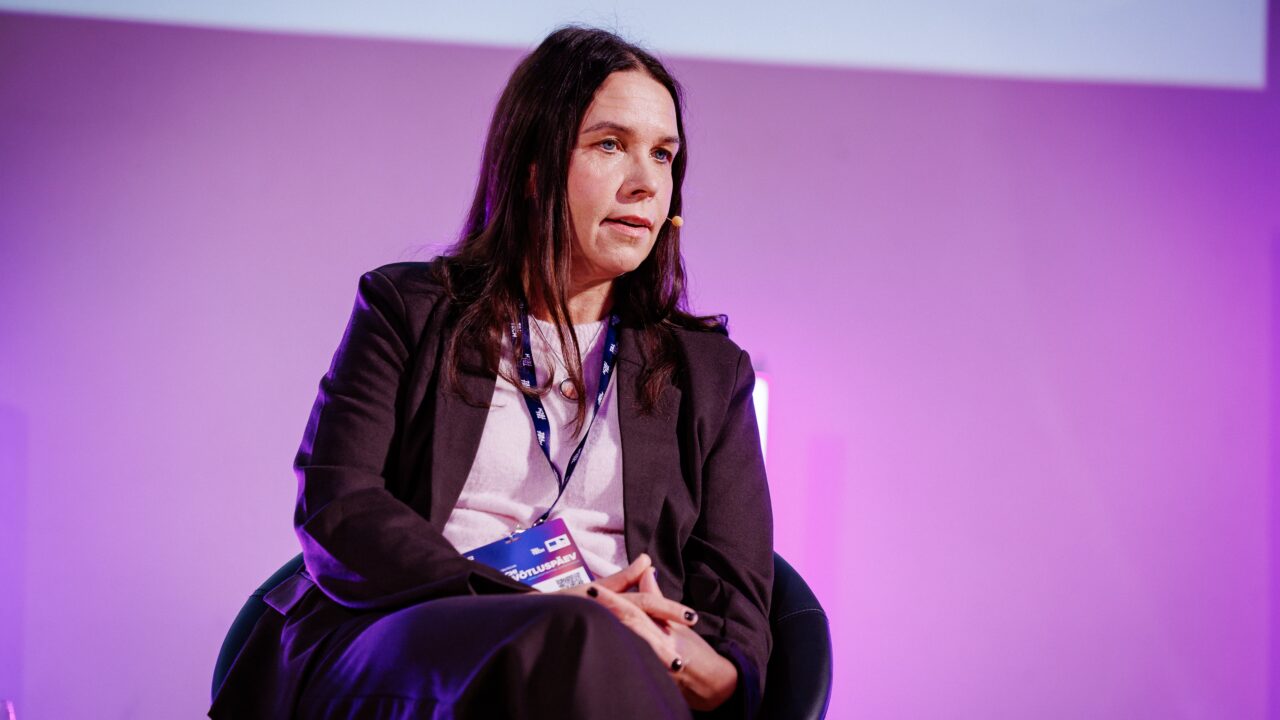
Sigrid Harjo believes the success of a company or a research-based business idea often depends on finding someone willing to take responsibility and lead the project consistently. Photo: Rene Lutterus
AI’s opportunities depend on businesses’ readiness to change
The discussion also considered AI’s potential to strengthen Estonian companies’ competitiveness. Sigrid Harjo highlighted an interesting contradiction: in the GEM study, Latvian experts rate their country’s capacity to use AI more highly than Estonian experts do, even though Eurostat data show that almost a quarter of Estonian companies use AI, compared with just 12% in Latvia.
Harjo suggested the difference may reflect Estonian entrepreneurs’ more demanding assessment of their own achievements. She said AI’s real potential will emerge when businesses also use it in production processes and reorganise their work accordingly.
Metsla said Estonia should set clearer goals for AI development. Given a small country’s limited resources, it should focus on fields where the technology promises the greatest economic benefits. “AI is not a magic bullet: it is a tool,” he stressed.
At the end, the discussion returned to enterprising people. The experts agreed that, alongside growing new companies, attention should be paid to established entrepreneurs, who can always renew their products and business models.
Harjo recalled a manufacturer of water treatment equipment in southern Estonia that discovered new product development opportunities through an innovation programme and became more ambitious as a result. This shows that people with extensive business experience can continue to develop too.
Metsla drew attention to generational succession among entrepreneurs. He discussed Japan, where the departure of ageing owners can mean the loss not only of companies, but also valuable skills and technologies. He believes Estonia could anticipate this problem and help young entrepreneurs take over and develop existing businesses.
One clear thread connected the problems discussed: Estonia’s next success stories need capital, research, technology and a supportive business environment, but above all they need people who can spot opportunities and dare to make them happen.
“AI is not a magic bullet: it is a tool.”