From TalTech to Volvo: a young engineer’s bold journey

27.10.2026
From TalTech to Volvo: a young engineer’s bold journey. 27.10.2026. Kivimäe became interested in engineering at Pärnu Koidula Gymnasium, where her growing passion for maths and science was encouraged by a physics teacher who brought science to life through everyday situations. Eager to test herself, she travelled to Tallinn at the end of Year 9 to sit the joint entrance examinations for four schools. Although she had not initially planned to change schools, she was offered a place at Tallinn Secondary School of Science and moved to the capital to live independently. “I have been very lucky to have parents who have always encouraged and supported me. They gave me the opportunity to take on a new and exciting challenge.” At her new school, Kivimäe found herself surrounded by ambitious peers. “I knew I was good at maths and science, but there was always someone at school who was even better. Healthy competition and that drive to move forward made me work even harder,” she recalled. International experience built confidence When it was time to go to university, Kivimäe was equally interested in genetic engineering and product development and production engineering. Having seen early on at her parents’ manufacturing company how designs become products used in everyday life, she knew she wanted to focus on product development and production engineering. Few women studied the subject at TalTech. According to Kivimäe, she was the only woman among those who graduated within the standard duration of the programme. Yet she never felt that she was treated differently because of it: “I was never left out, and there was no special treatment either.” Active involvement in a student organisation provided valuable support during her studies. Working with the Federation of Estonian Engineering Industry also gave her practical experience and new contacts, as she attended industry conferences and other events through the organisation. After completing her bachelor’s studies at TalTech, Kivimäe went on to pursue a master’s degree at Chalmers University of Technology in Sweden. She was drawn by the appeal of studying abroad: the chance to test herself in an international environment and build friendships and contacts around the world. Chalmers’ close ties with industrial companies offering excellent internship opportunities were another decisive factor. While studying at Chalmers, Kivimäe heard about Volvo Cars’ two-year Global Graduate Program, which offers young professionals with master’s degrees an exceptional springboard for their careers. The programme focuses on practical experience, international exposure and mentoring by senior executives, enabling young talent to help shape the future directly. Kivimäe won a place against strong competition. Over the two years, she worked on product development for new models and preparing production systems for mass production, contributed to teams focusing on battery and energy strategy, and spent five months in the United States on a project to launch a new car model. Each new role strengthened the young engineer’s confidence and willingness to take responsibility. “I realised that I could join a project that was still under way and help bring it to a successful conclusion.” “I was never left out, and there was no special treatment either.” Trust creates opportunities to gain experience After the programme, Kivimäe continued working in manufacturing engineering at Volvo Cars, preparing product development, manufacturing technology and production systems worldwide to meet the needs of the company’s factories. Just a few months later, she had the opportunity to join a new car model development project in China. By then, Kivimäe had proved herself as a young and ambitious engineer who was known to be ready for new challenges, quick to adapt to different situations, willing to take responsibility and able to deliver results. She also saw the opportunity Volvo Cars gave her as a sign of her line manager’s considerable trust. “I am very grateful that I had a good manager at the time who was willing to take a risk. Sending a more experienced colleague who had carried out similar tasks many times before would have been the safer choice.” In her current work, Kivimäe has not felt that she needs to prove herself more because of her gender, although women remain underrepresented in senior roles in the industry. Instead, she has encountered assumptions related to age: the expectation that someone should spend years in their current position before being given greater responsibility. She believes young people should be offered opportunities earlier. “If challenging tasks are always entrusted only to the most experienced people, the next generation will never gain the experience it needs.” “If challenging tasks are always entrusted only to the most experienced people, the next generation will never gain the experience it needs.” China values speed, Sweden values involvement Kivimäe lived in China for almost a year and a half. What surprised her most was the speed at which things happened. In Sweden, many people are involved in decision-making and consensus is sought; in China, action is often taken before every question has been resolved. Kivimäe recalled days when the team worked until the evening on a manufacturing process problem, only for suppliers to return with new proposals the following morning. “Their pace and speed of work are completely different.” That speed was partly a result of long working days that also extended into weekends. Kivimäe explained that, although most local Chinese companies follow the notorious 9-9-6 work culture — working from 9 am to 9 pm, six days a week — and a strict hierarchy, Volvo Cars’ Chinese organisation operated differently. In those local companies, when a manager is in the same room, the expectation is that only the manager will answer a customer’s questions. “In keeping with Swedish work culture, Volvo has a less rigid hierarchy and follows transparent working-time principles,” Kivimäe said. Working in different countries has helped Kivimäe recognise the strengths of different work cultures. She considers Estonian engineers versatile and adaptable. In her view, there is much to learn from Americans about presenting and selling ideas, from Swedes about teamwork and involvement, and from Chinese colleagues about decisive, swift action. A good engineer does not have to know everything Kivimäe now lives and works in Sweden again. Although much of her work involves managing people and projects, she still carries out technical engineering work. Her task is to understand technical problems and work with different teams to assess how changes can be implemented in production. In Kivimäe’s view, there is no single type of good engineer. Some are specialists who can spend days working on one complex technical problem and come up with several solutions. Others bring different fields together — and it is in this connecting role that she sees herself. “I understand the technical side, but I can also see the bigger picture and how one solution affects other areas,” she explained. Above all, she expects her teammates to be able to solve problems, critically assess whether solutions work and explain their thinking to others. Recognising the limits of one’s knowledge is equally important. “I understand my strengths and weaknesses. I know how to ask for help,” Kivimäe said. She believes it is better to bring in a colleague at the right moment than to struggle alone for a long time and ultimately offer a solution whose effectiveness you cannot be sure of. “I understand the technical side, but I can also see the bigger picture and how one solution affects other areas.” Girls need role models in engineering In Kivimäe’s view, one of the most persistent myths about engineering is that it is a field for men. “That has not been true for a long time,” she said. Simply telling girls that they too can become engineers is not enough to change attitudes, she believes. “Role models and early practical experience do much more than words,” Kivimäe stressed. A robotics club, an engineering workshop or the chance to build something yourself helps show what mathematics and physics are actually used for. Visible female role models, meanwhile, show where an interest in engineering can lead. “When girls see women around them leading global engineering projects, working in the automotive industry or helping create the technologies of the future, the myth that this is a field for boys disappears on its own,” she noted. It is equally important for parents and teachers to notice girls’ interests and encourage those with an aptitude for engineering thinking and practical work. Kivimäe said she reached her current position step by step, continually spotting new opportunities and deciding to challenge herself. When making decisions, she has always been guided by opportunities to learn and prospects for professional development. Her success has rested on being active beyond her studies and maintaining a curious mindset and an eagerness to learn. An international career does not mean that Estonia has lost this Sweden-based talent for good. Kivimäe said she does not plan to return to Estonia in the next few years, but would not rule it out in the future. “Estonia is still my home,” she concluded. “When girls see women around them leading global engineering projects, working in the automotive industry or helping create the technologies of the future, the myth that this is a field for boys disappears on its own.” * This article was produced in cooperation with the Engineering Academy. One of the Engineering Academy’s aims is to increase the proportion of girls studying engineering.
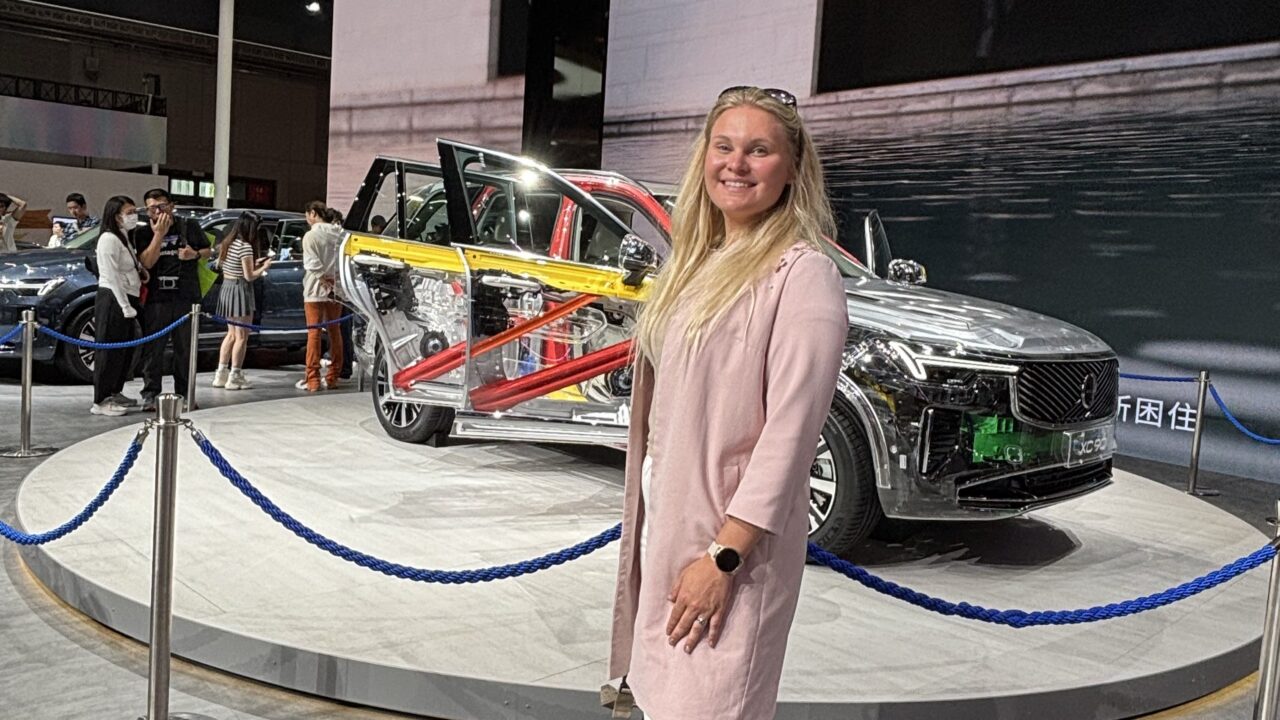
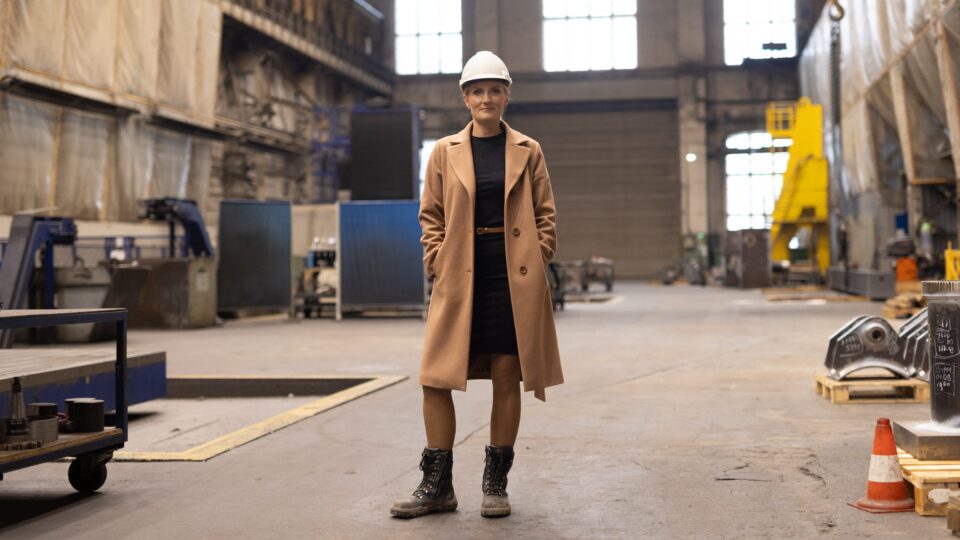
Marie-Mädli Kivimäe’s career shows where the courage to step outside your comfort zone can lead. Her desire to keep challenging herself took her from TalTech to Sweden, then to Volvo Cars, and on to China for almost a year and a half to work on a new car model development project. Photo: private collection

Marie-Mädli Kivimäe’s career shows where the courage to step outside your comfort zone can lead. Her desire to keep challenging herself took her from TalTech to Sweden, then to Volvo Cars, and on to China for almost a year and a half to work on a new car model development project. Photo: private collection

Despite her young age, TalTech alumna Marie-Mädli Kivimäe has built an impressive engineering career in the international automotive industry. Her willingness to keep stepping outside her comfort zone has helped her move forward.

Kivimäe became interested in engineering at Pärnu Koidula Gymnasium, where her growing passion for maths and science was encouraged by a physics teacher who brought science to life through everyday situations. Eager to test herself, she travelled to Tallinn at the end of Year 9 to sit the joint entrance examinations for four schools.

Although she had not initially planned to change schools, she was offered a place at Tallinn Secondary School of Science and moved to the capital to live independently. “I have been very lucky to have parents who have always encouraged and supported me. They gave me the opportunity to take on a new and exciting challenge.”

At her new school, Kivimäe found herself surrounded by ambitious peers. “I knew I was good at maths and science, but there was always someone at school who was even better. Healthy competition and that drive to move forward made me work even harder,” she recalled.

International experience built confidence

When it was time to go to university, Kivimäe was equally interested in genetic engineering and product development and production engineering. Having seen early on at her parents’ manufacturing company how designs become products used in everyday life, she knew she wanted to focus on product development and production engineering.

Few women studied the subject at TalTech. According to Kivimäe, she was the only woman among those who graduated within the standard duration of the programme. Yet she never felt that she was treated differently because of it: “I was never left out, and there was no special treatment either.”

Active involvement in a student organisation provided valuable support during her studies. Working with the Federation of Estonian Engineering Industry also gave her practical experience and new contacts, as she attended industry conferences and other events through the organisation.

After completing her bachelor’s studies at TalTech, Kivimäe went on to pursue a master’s degree at Chalmers University of Technology in Sweden. She was drawn by the appeal of studying abroad: the chance to test herself in an international environment and build friendships and contacts around the world. Chalmers’ close ties with industrial companies offering excellent internship opportunities were another decisive factor.

While studying at Chalmers, Kivimäe heard about Volvo Cars’ two-year Global Graduate Program, which offers young professionals with master’s degrees an exceptional springboard for their careers. The programme focuses on practical experience, international exposure and mentoring by senior executives, enabling young talent to help shape the future directly.

Kivimäe won a place against strong competition. Over the two years, she worked on product development for new models and preparing production systems for mass production, contributed to teams focusing on battery and energy strategy, and spent five months in the United States on a project to launch a new car model. Each new role strengthened the young engineer’s confidence and willingness to take responsibility. “I realised that I could join a project that was still under way and help bring it to a successful conclusion.”

“I was never left out, and there was no special treatment either.”

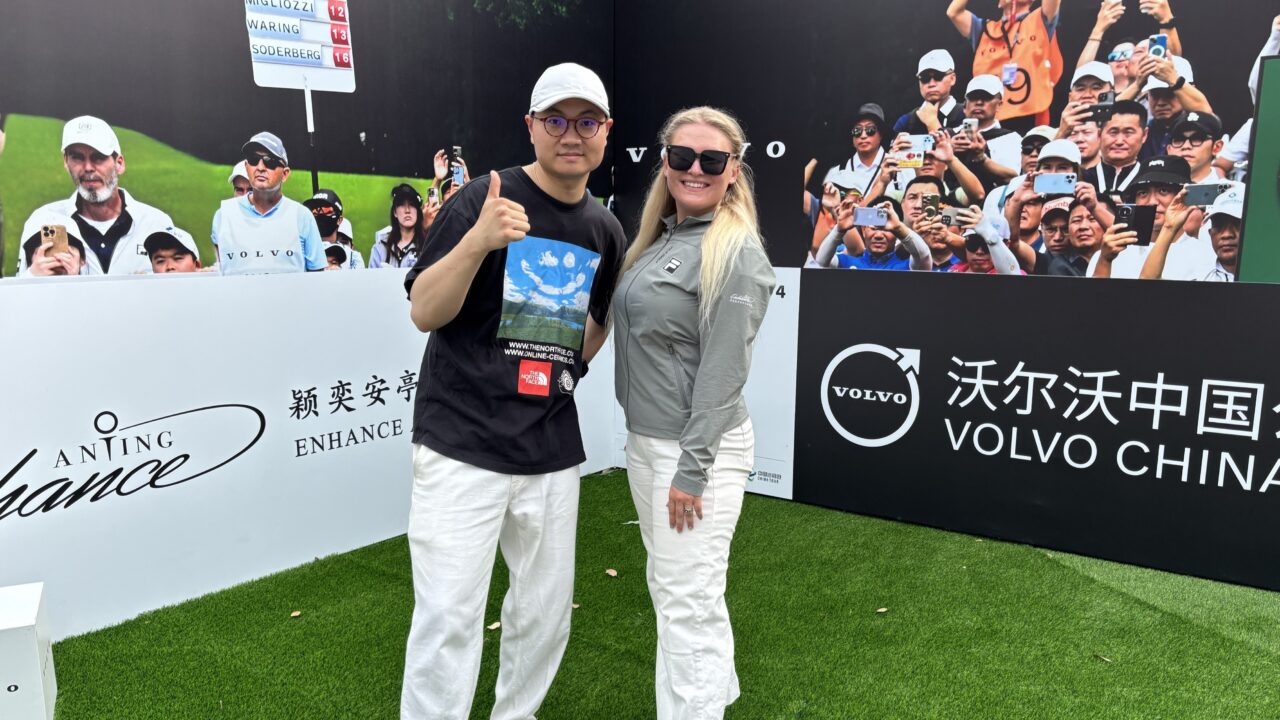
While studying at Chalmers, Kivimäe applied to Volvo Cars’ two-year Global Graduate Program. She was selected after a highly competitive process, marking the start of her rapid rise at Volvo. Photo: private collection

While studying at Chalmers, Kivimäe applied to Volvo Cars’ two-year Global Graduate Program. She was selected after a highly competitive process, marking the start of her rapid rise at Volvo. Photo: private collection

Trust creates opportunities to gain experience

After the programme, Kivimäe continued working in manufacturing engineering at Volvo Cars, preparing product development, manufacturing technology and production systems worldwide to meet the needs of the company’s factories. Just a few months later, she had the opportunity to join a new car model development project in China.

By then, Kivimäe had proved herself as a young and ambitious engineer who was known to be ready for new challenges, quick to adapt to different situations, willing to take responsibility and able to deliver results. She also saw the opportunity Volvo Cars gave her as a sign of her line manager’s considerable trust. “I am very grateful that I had a good manager at the time who was willing to take a risk. Sending a more experienced colleague who had carried out similar tasks many times before would have been the safer choice.”

In her current work, Kivimäe has not felt that she needs to prove herself more because of her gender, although women remain underrepresented in senior roles in the industry. Instead, she has encountered assumptions related to age: the expectation that someone should spend years in their current position before being given greater responsibility. She believes young people should be offered opportunities earlier. “If challenging tasks are always entrusted only to the most experienced people, the next generation will never gain the experience it needs.”

“If challenging tasks are always entrusted only to the most experienced people, the next generation will never gain the experience it needs.”

China values speed, Sweden values involvement

Kivimäe lived in China for almost a year and a half. What surprised her most was the speed at which things happened. In Sweden, many people are involved in decision-making and consensus is sought; in China, action is often taken before every question has been resolved.

Kivimäe recalled days when the team worked until the evening on a manufacturing process problem, only for suppliers to return with new proposals the following morning. “Their pace and speed of work are completely different.”

That speed was partly a result of long working days that also extended into weekends. Kivimäe explained that, although most local Chinese companies follow the notorious 9-9-6 work culture — working from 9 am to 9 pm, six days a week — and a strict hierarchy, Volvo Cars’ Chinese organisation operated differently. In those local companies, when a manager is in the same room, the expectation is that only the manager will answer a customer’s questions.

“In keeping with Swedish work culture, Volvo has a less rigid hierarchy and follows transparent working-time principles,” Kivimäe said.

Working in different countries has helped Kivimäe recognise the strengths of different work cultures. She considers Estonian engineers versatile and adaptable. In her view, there is much to learn from Americans about presenting and selling ideas, from Swedes about teamwork and involvement, and from Chinese colleagues about decisive, swift action.

A good engineer does not have to know everything

Kivimäe now lives and works in Sweden again. Although much of her work involves managing people and projects, she still carries out technical engineering work. Her task is to understand technical problems and work with different teams to assess how changes can be implemented in production.

In Kivimäe’s view, there is no single type of good engineer. Some are specialists who can spend days working on one complex technical problem and come up with several solutions. Others bring different fields together — and it is in this connecting role that she sees herself. “I understand the technical side, but I can also see the bigger picture and how one solution affects other areas,” she explained.

Above all, she expects her teammates to be able to solve problems, critically assess whether solutions work and explain their thinking to others. Recognising the limits of one’s knowledge is equally important. “I understand my strengths and weaknesses. I know how to ask for help,” Kivimäe said. She believes it is better to bring in a colleague at the right moment than to struggle alone for a long time and ultimately offer a solution whose effectiveness you cannot be sure of.

“I understand the technical side, but I can also see the bigger picture and how one solution affects other areas.”
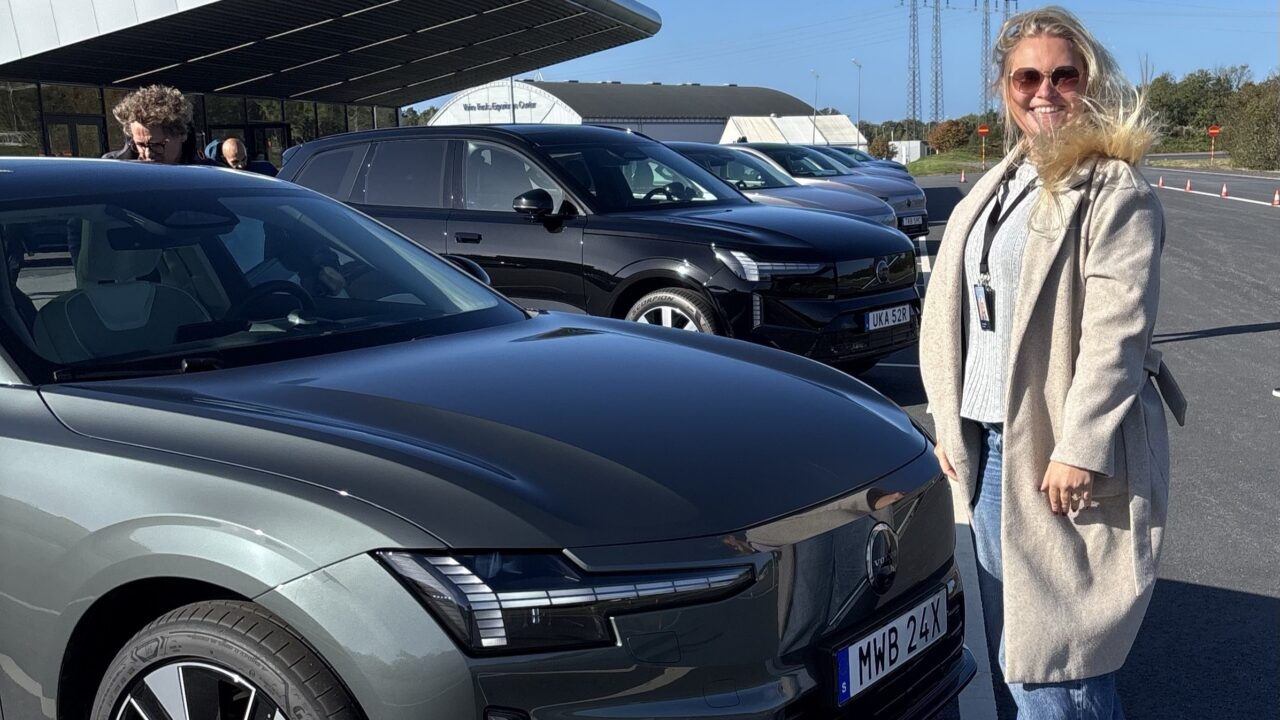
An international career does not mean that Estonia has lost this Sweden-based talent for good. Kivimäe says she does not plan to return to Estonia in the next few years, but would not rule it out in the future. Photo: private collection

An international career does not mean that Estonia has lost this Sweden-based talent for good. Kivimäe says she does not plan to return to Estonia in the next few years, but would not rule it out in the future. Photo: private collection

Girls need role models in engineering

In Kivimäe’s view, one of the most persistent myths about engineering is that it is a field for men. “That has not been true for a long time,” she said.

Simply telling girls that they too can become engineers is not enough to change attitudes, she believes. “Role models and early practical experience do much more than words,” Kivimäe stressed.

A robotics club, an engineering workshop or the chance to build something yourself helps show what mathematics and physics are actually used for. Visible female role models, meanwhile, show where an interest in engineering can lead. “When girls see women around them leading global engineering projects, working in the automotive industry or helping create the technologies of the future, the myth that this is a field for boys disappears on its own,” she noted. It is equally important for parents and teachers to notice girls’ interests and encourage those with an aptitude for engineering thinking and practical work.

Kivimäe said she reached her current position step by step, continually spotting new opportunities and deciding to challenge herself. When making decisions, she has always been guided by opportunities to learn and prospects for professional development. Her success has rested on being active beyond her studies and maintaining a curious mindset and an eagerness to learn.

An international career does not mean that Estonia has lost this Sweden-based talent for good. Kivimäe said she does not plan to return to Estonia in the next few years, but would not rule it out in the future. “Estonia is still my home,” she concluded.

“When girls see women around them leading global engineering projects, working in the automotive industry or helping create the technologies of the future, the myth that this is a field for boys disappears on its own.”

* This article was produced in cooperation with the Engineering Academy. One of the Engineering Academy’s aims is to increase the proportion of girls studying engineering.