
Tenured Full Professor at the Estonian Maritime Academy
Whoever controls the world’s maritime transport flows controls the world. This phrase has, over the centuries, guided everyone from Christopher Columbus and the East India Companies of the seventeenth–nineteenth centuries to US President Donald Trump.
Over the past 50 years, the importance of seaborne transport of crude oil and petroleum products has continued to grow. In 1980, oil and gas accounted for more than half of global maritime transport. At the same time, the Organisation of the Petroleum Exporting Countries (OPEC) was vested with considerable power in world affairs.
But the situation is changing. Today, oil’s share of global maritime transport has fallen to around 16%.
Although the world economy has broadly doubled since 2010, oil transport has remained more or less at the same level, at around two billion tonnes. Even the transport of refined petroleum products has not increased since 2019, despite the world having recovered from the pandemic.
At first glance, one might therefore conclude that, as the world slowly reduces its dependence on oil, a crisis disrupting oil exports from the Strait of Hormuz and the Persian Gulf need not be counted among the more serious threats.
Unfortunately, that would be deeply misleading.
The consequences of the US attack
The Strait of Hormuz links the Persian Gulf to the Indian Ocean. Some of the world’s most important oil and gas exporters – including Iran, Iraq, Saudi Arabia, Qatar, Kuwait and the United Arab Emirates – have ports in the Persian Gulf which together export around a fifth of the world’s fossil fuels. At its narrowest point, the strait is only about 40 kilometres wide.
At the end of February, the United States and Israel launched a military assault against Iran. In response, Iran closed the Strait of Hormuz to shipping a few days later.
This move almost immediately reduced the global availability of oil and gas, and the changed situation has already nearly doubled world market prices for these resources. Although oil from the Persian Gulf has previously been exported mainly to Asia, rising petrol and diesel prices can now be seen at pumps across the world – and prices continue to climb.
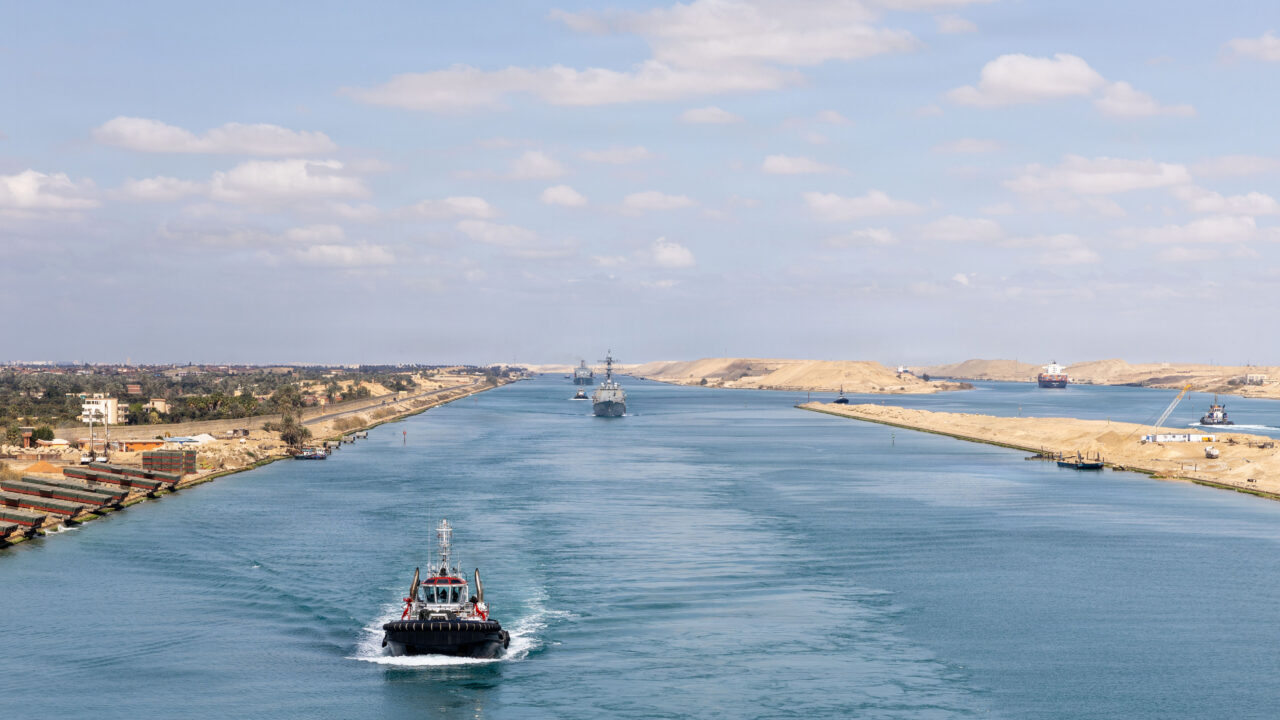
The guided-missile destroyer USS Bainbridge passes through the Suez Canal during Operation Epic Fury in March 2026. Photo by the US Navy.
The International Energy Agency (IEA), concerned about oil availability and prices, has already begun drawing on its strategic oil reserves, but such a response offers only temporary relief.
Among other measures, the IEA has suggested that oil demand could be reduced through remote working, car-sharing and greater use of public transport. Yet the more serious consequences of the strait’s closure now also include persistently higher interest rates, while the reduced availability of fertilisers due to gas shortages has made the world’s food production system more vulnerable.
The war in Ukraine on our doorstep
Unfortunately, rising energy prices are not the only problem for us stemming from the Hormuz crisis. Petrol prices have also risen in the United States, undermining the seemingly unshakeable popularity of President Trump.
Trump has lifted US sanctions on Russian oil shipments. Russia has therefore reaped multiple economic gains: first from higher oil prices, and second from the removal of sanctions targeting its shadow fleet.
Ukraine is concerned that the growing profits from Russian oil trade will in turn bolster Russia’s military power.
The latest twist in the Strait of Hormuz crisis must be seen in Ukraine’s attacks on the oil ports of Primorsk and Ust-Luga, both extraordinarily close to our border. The attacks have been so extensive that Russia has suspended oil exports from these ports almost entirely.
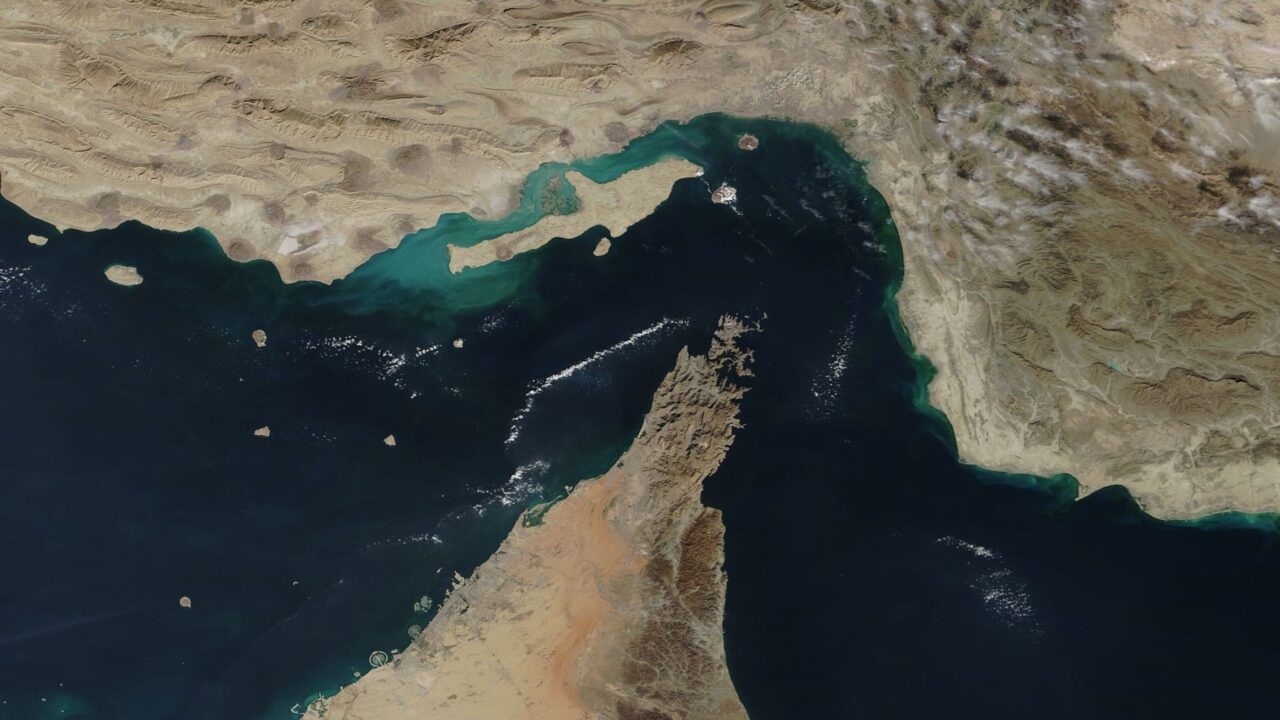
The Strait of Hormuz and the Musandam Peninsula in a NASA Terra satellite image taken on 6 December 2018.
Alternative energy as a security measure
In any case, the situation is shocking. The price of fossil fuels is rising, the war in Ukraine has shifted alarmingly close to our borders, and at the same time shadow-fleet vessels are gathering in the Gulf of Finland, waiting to take on cargo from Russia’s bombed ports.
Dependence on oil, the availability of oil and the operations of the shadow fleet all pose a threat to us.
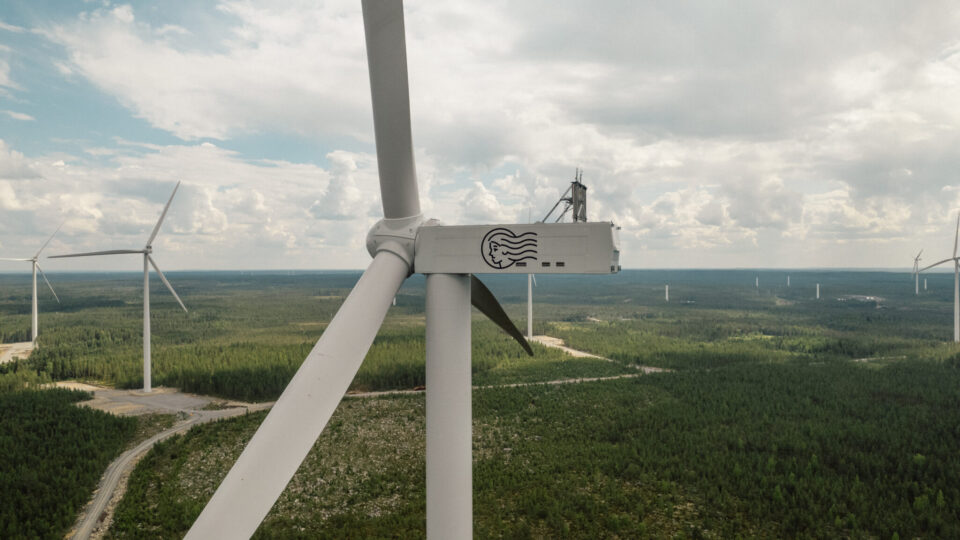
The best guarantee for the future of efficient and energy-intensive production, heating and transport would be the full-scale adoption of alternative energy sources – solar, wind, bioenergy and nuclear power. That would, of course, require political will and technological expertise related to renewable energy sources.
The best guarantee for the future of efficient and energy-intensive production, heating and transport would be the full-scale adoption of alternative energy sources – solar, wind, bioenergy and nuclear power.