TalTech professor: healthcare can learn from self-service checkouts

12.10.2026
TalTech professor: healthcare can learn from self-service checkouts. 12.10.2026. “Healthcare is a service sector, and service sectors are increasingly handing tasks over to customers,” said Professor Peeter Ross, who leads the e-Health Applications and Services Research Group within TalTech’s Centre of Excellence in Health and Food Technologies. He compared the change to supermarket self-service checkouts and travel bookings. Just as people scan their own shopping or buy their own airline tickets, they can increasingly carry out health-related tasks without attending a medical appointment. These might include entering symptoms before an appointment, monitoring health data or sending a photograph to their family practice for a minor concern. Ross gave the example of a recent eye infection. He sent his family nurse a photograph of his eye and received help without an in-person appointment. Such arrangements save time for both patients and healthcare professionals. Staff shortages are one reason healthcare is moving in this direction. This does not mean fewer doctors will be needed, Ross said. Complex illnesses, operations and treatment decisions will remain the responsibility of specialists, but digital solutions can allow people to carry out some simpler tasks themselves. The current system knows more about illness than health Ross says Estonia’s health information system performs very well internationally, but has one important shortcoming. “When we talk about a health information system today, we are essentially talking about an illness information system,” he said. Most information entering the system is collected by doctors or other healthcare professionals: diagnoses, examinations and treatment. Much less is known about how people live between appointments. Yet most illnesses do not develop overnight. Over the years, people may become less active, sleep worse, start smoking or gradually gain weight. Detecting these changes earlier could help prevent illness, Ross believes. “Perhaps we could say ten years earlier: if you changed something in your behaviour now, you might enjoy more years of good health later,” he explained. “Healthcare is a service sector, and service sectors are increasingly handing tasks over to customers.” Smartwatches collect data that doctors struggle to use Today, information about our health is constantly generated outside hospitals too. Smartwatches and smart rings measure movement, heart rate and sleep; phones also collect data. The problem is that different manufacturers’ information sits in different systems. People who want to show their doctor data from an Apple Watch or another device must somehow extract and send it themselves. Doctors cannot work through files from dozens of different apps one by one. TalTech researchers are investigating how to standardise such data so it can be used meaningfully in healthcare. Ross used his own experience as an example. Working as a radiologist in hospital, he takes about 4,000 steps a day; lecturing at university, only 2,000; and in the countryside, 15,000. Seeing those figures prompted him to make a conscious effort to walk more on working days. The main value of such data, Ross says, lies in tracking changes in an individual’s health behaviour and offering suitable recommendations. The aim is not to give everyone identical targets. Even the common recommendation of 10,000 steps a day may not suit everyone. For someone who has had a heart attack, regularly taking medication or making a small but lasting dietary change may be far more important. “Perhaps we could say ten years earlier: if you changed something in your behaviour now, you might enjoy more years of good health later.” The Health Portal could gain a section for personal health data People may currently be asked repeatedly by different doctors whether they smoke, but the answer often remains as free text in separate information systems. Meanwhile, the National Institute for Health Development collects smoking data through separate population surveys. Ross says this means the same information is collected several times, while existing data remains difficult to reuse. Under a new solution, smoking data could be brought together in a standard format in the Health Portal and updated by both healthcare professionals and individuals themselves. The same question would not have to be repeated every time, and changes in smoking habits could be tracked over a longer period. The same data could also help assess population health. “Instead of sending a questionnaire to a few thousand people every two years, we would effectively have data on the whole population,” Ross explained. Smoking data is the first step. Information on alcohol use, mental health, physical activity and sleep could later be added to people’s personal health data view. Healthcare professionals would gain a better picture of what happens between appointments and could detect changes earlier. Ross said the smoking-data solution is hoped to be introduced as early as next year. Automatically bringing smartwatch and other device data into the Health Portal would be a subsequent step, requiring agreement on which data to collect, how to present it and how to use it in healthcare. In future, individuals could hold the key to their health data Ross and his research group are also exploring ideas further into the future, including how to give individuals greater control over their health data. People’s medical data is currently held by hospitals and national information systems. Although individuals have a right to access it, obtaining all their data and using it according to their own needs is not always straightforward. For example, an X-ray may not be downloadable from the Health Portal, requiring the person to contact the hospital instead. Under the model being studied at TalTech, individuals would hold a digital key to manage their data and decide whom to share it with. They might give a doctor, carer or loved one access to part of it. Hospitals’ obligation to retain medical data generated during treatment would remain. Ross acknowledges that this is still an idea for the distant future, with legal, funding and data governance questions to resolve. Yet the more his group explores it, the more potential he sees. “When Skype arrived, it completely changed how we communicate — previously, we could not even have imagined such a possibility,” Ross said. “Why could something similar not happen with health data? We cannot predict precisely today how it will be used in twenty years’ time.” “When Skype arrived, it completely changed how we communicate — previously, we could not even have imagined such a possibility. Why could something similar not happen with health data? We cannot predict precisely today how it will be used in twenty years’ time.” The research is carried out within the TEM-TA105 “Digital Healthcare for a Healthy Society” project and the EstWell Centre of Excellence of Well-Being Sciences projects.
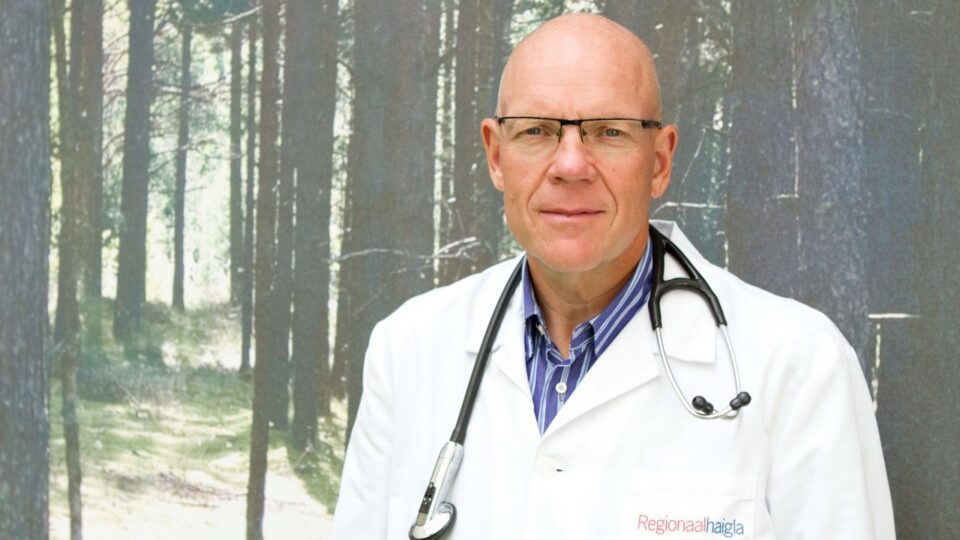
Professor Peeter Ross, who leads the e-Health Applications and Services Research Group within TalTech’s Centre of Excellence in Health and Food Technologies, says healthcare is increasingly moving towards self-service. People can do more themselves, from entering symptoms to monitoring health data and sending a photograph to a doctor. Photo: Karl-Kristjan Nigesen

Professor Peeter Ross, who leads the e-Health Applications and Services Research Group within TalTech’s Centre of Excellence in Health and Food Technologies, says healthcare is increasingly moving towards self-service. People can do more themselves, from entering symptoms to monitoring health data and sending a photograph to a doctor. Photo: Karl-Kristjan Nigesen

Just as we scan our own shopping and book flights and hotels ourselves, healthcare is increasingly moving towards self-service. TalTech Professor Peeter Ross believes people could collect and manage more of their own health data and receive advice before illness develops. Estonia is already taking its first steps in that direction.

“Healthcare is a service sector, and service sectors are increasingly handing tasks over to customers,” said Professor Peeter Ross, who leads the e-Health Applications and Services Research Group within TalTech’s Centre of Excellence in Health and Food Technologies.

He compared the change to supermarket self-service checkouts and travel bookings. Just as people scan their own shopping or buy their own airline tickets, they can increasingly carry out health-related tasks without attending a medical appointment. These might include entering symptoms before an appointment, monitoring health data or sending a photograph to their family practice for a minor concern.

Ross gave the example of a recent eye infection. He sent his family nurse a photograph of his eye and received help without an in-person appointment. Such arrangements save time for both patients and healthcare professionals.

Staff shortages are one reason healthcare is moving in this direction. This does not mean fewer doctors will be needed, Ross said. Complex illnesses, operations and treatment decisions will remain the responsibility of specialists, but digital solutions can allow people to carry out some simpler tasks themselves.

The current system knows more about illness than health

Ross says Estonia’s health information system performs very well internationally, but has one important shortcoming. “When we talk about a health information system today, we are essentially talking about an illness information system,” he said.

Most information entering the system is collected by doctors or other healthcare professionals: diagnoses, examinations and treatment. Much less is known about how people live between appointments.

Yet most illnesses do not develop overnight. Over the years, people may become less active, sleep worse, start smoking or gradually gain weight. Detecting these changes earlier could help prevent illness, Ross believes. “Perhaps we could say ten years earlier: if you changed something in your behaviour now, you might enjoy more years of good health later,” he explained.

“Healthcare is a service sector, and service sectors are increasingly handing tasks over to customers.”

Smartwatches collect data that doctors struggle to use

Today, information about our health is constantly generated outside hospitals too. Smartwatches and smart rings measure movement, heart rate and sleep; phones also collect data.

The problem is that different manufacturers’ information sits in different systems. People who want to show their doctor data from an Apple Watch or another device must somehow extract and send it themselves. Doctors cannot work through files from dozens of different apps one by one.

TalTech researchers are investigating how to standardise such data so it can be used meaningfully in healthcare.

Ross used his own experience as an example. Working as a radiologist in hospital, he takes about 4,000 steps a day; lecturing at university, only 2,000; and in the countryside, 15,000. Seeing those figures prompted him to make a conscious effort to walk more on working days.

The main value of such data, Ross says, lies in tracking changes in an individual’s health behaviour and offering suitable recommendations. The aim is not to give everyone identical targets. Even the common recommendation of 10,000 steps a day may not suit everyone. For someone who has had a heart attack, regularly taking medication or making a small but lasting dietary change may be far more important.

“Perhaps we could say ten years earlier: if you changed something in your behaviour now, you might enjoy more years of good health later.”

Peeter Ross says smoking data could be brought together in a standard format in the Health Portal, so people would not have to repeat the same information at different appointments and changes in their smoking habits could be monitored over time. Photo: Pexels

Peeter Ross says smoking data could be brought together in a standard format in the Health Portal, so people would not have to repeat the same information at different appointments and changes in their smoking habits could be monitored over time. Photo: Pexels

The Health Portal could gain a section for personal health data

People may currently be asked repeatedly by different doctors whether they smoke, but the answer often remains as free text in separate information systems. Meanwhile, the National Institute for Health Development collects smoking data through separate population surveys. Ross says this means the same information is collected several times, while existing data remains difficult to reuse.

Under a new solution, smoking data could be brought together in a standard format in the Health Portal and updated by both healthcare professionals and individuals themselves. The same question would not have to be repeated every time, and changes in smoking habits could be tracked over a longer period. The same data could also help assess population health. “Instead of sending a questionnaire to a few thousand people every two years, we would effectively have data on the whole population,” Ross explained.

Smoking data is the first step. Information on alcohol use, mental health, physical activity and sleep could later be added to people’s personal health data view. Healthcare professionals would gain a better picture of what happens between appointments and could detect changes earlier.

Ross said the smoking-data solution is hoped to be introduced as early as next year. Automatically bringing smartwatch and other device data into the Health Portal would be a subsequent step, requiring agreement on which data to collect, how to present it and how to use it in healthcare.

Ross’s research group is exploring a future health data model in which individuals would hold a digital key to manage their own data and decide what to share with doctors, carers or loved ones. Photo: ChatGPT

Ross’s research group is exploring a future health data model in which individuals would hold a digital key to manage their own data and decide what to share with doctors, carers or loved ones. Photo: ChatGPT

In future, individuals could hold the key to their health data

Ross and his research group are also exploring ideas further into the future, including how to give individuals greater control over their health data.

People’s medical data is currently held by hospitals and national information systems. Although individuals have a right to access it, obtaining all their data and using it according to their own needs is not always straightforward. For example, an X-ray may not be downloadable from the Health Portal, requiring the person to contact the hospital instead.

Under the model being studied at TalTech, individuals would hold a digital key to manage their data and decide whom to share it with. They might give a doctor, carer or loved one access to part of it. Hospitals’ obligation to retain medical data generated during treatment would remain. Ross acknowledges that this is still an idea for the distant future, with legal, funding and data governance questions to resolve. Yet the more his group explores it, the more potential he sees.

“When Skype arrived, it completely changed how we communicate — previously, we could not even have imagined such a possibility,” Ross said. “Why could something similar not happen with health data? We cannot predict precisely today how it will be used in twenty years’ time.”

“When Skype arrived, it completely changed how we communicate — previously, we could not even have imagined such a possibility. Why could something similar not happen with health data? We cannot predict precisely today how it will be used in twenty years’ time.”

The research is carried out within the TEM-TA105 “Digital Healthcare for a Healthy Society” project and the EstWell Centre of Excellence of Well-Being Sciences projects.