
Rutte at TalTech: Estonia sets an example for the entire alliance

14.10.2026
Rutte at TalTech: Estonia sets an example for the entire alliance. 14.10.2026. Estonia’s contribution to NATO goes beyond defence spending Throughout his speech, Rutte repeatedly highlighted Estonia’s contribution to the security of the Alliance. He pointed to defence spending, strong support for Ukraine and Estonian technology companies manufacturing drones, air defence interceptors, cybersecurity systems, battlefield software, energy storage solutions and more. According to Rutte, Estonia’s strengths lie particularly in software, artificial intelligence and autonomous systems, while cooperation with companies from other Allied countries combines this expertise with their heavy manufacturing capabilities and large-scale resources. “Estonia is a place where people can turn a good idea into reality,” Rutte said. He added that this development is also growing Estonia’s economy, creating jobs and opportunities while making NATO stronger. He placed particular emphasis on Estonia’s whole-of-society approach to resilience. “And what’s remarkable about Estonia is that it’s not just your national defence forces or your advanced tech sector or your growing defence industry that are contributing to NATO’s strengths. It’s everyone,” Rutte said. According to Rutte, a whole-of-society approach to resilience means that everyone knows what to do when disaster strikes – from schoolchildren and retirees to construction workers and CEOs. He also highlighted the Estonian Defence League, through which tens of thousands of people volunteer to enhance national readiness. “In Estonia, we see a level of national civil preparedness that we would like to see across the whole of NATO,” Rutte said. “And what’s remarkable about Estonia is that it’s not just your national defence forces or your advanced tech sector or your growing defence industry that are contributing to NATO’s strengths. It’s everyone.” The war in Ukraine shows what technology NATO needs During the question-and-answer session, Rutte was asked which problems TalTech students and researchers could start working on today. Rutte identified drone and counter-drone technology as one of the most urgent areas for further development. According to him, the war in Ukraine has shown that simply stockpiling ready-made drones is not enough. “It is not so much about having the drones on the shelf but having the drone building capability when it is needed,” Rutte said. Drone technology is developing so rapidly, he noted, that production capacity and the ability to continuously adapt solutions are at least as important as existing stockpiles. He considered the development of a more layered air defence system equally important. Alongside high-end systems, NATO also needs solutions at different levels and price points that can protect cities and critical infrastructure in a cost-effective way. Rutte stressed that NATO is currently drawing many practical lessons from Ukraine’s experience of war. In drone and counter-drone technology, for example, the Alliance is learning a great deal from Ukraine, while NATO continues to share its expertise in battlefield tactics and strategy with Ukraine. “It is really a two-way street,” Rutte said. “It is not so much about having the drones on the shelf but having the drone building capability when it is needed.” Young people’s courage is part of security As hybrid attacks have become more frequent across Europe, students also asked Rutte when such activity could trigger a collective NATO response. According to Rutte, NATO deliberately keeps that threshold ambiguous so that adversaries do not know in advance how or when the Alliance will respond. “It doesn’t go unanswered, but you will not always see it,” he said. As an example, Rutte pointed to Baltic Sentry, an operation launched to protect critical infrastructure in the Baltic Sea after damage to undersea cables. To conclude his lecture, Rutte recalled a story from 1982, when Estonian students jokingly set up a NATO base at a summer camp during the Soviet occupation. He said their courage and creativity were a reminder of the important role young people can play in defending freedom. “So often in history it is young people like you who dare to stand up, to laugh at the would-be empire, and to show the world how weak it really is,” he said. Rutte ended his speech with a message to TalTech students: “As long as we have young people like you showing courage and creativity, our alliance will keep our one billion people safe, now and in the future.” “As long as we have young people like you showing courage and creativity, our alliance will keep our one billion people safe, now and in the future.” WATCH AGAIN:
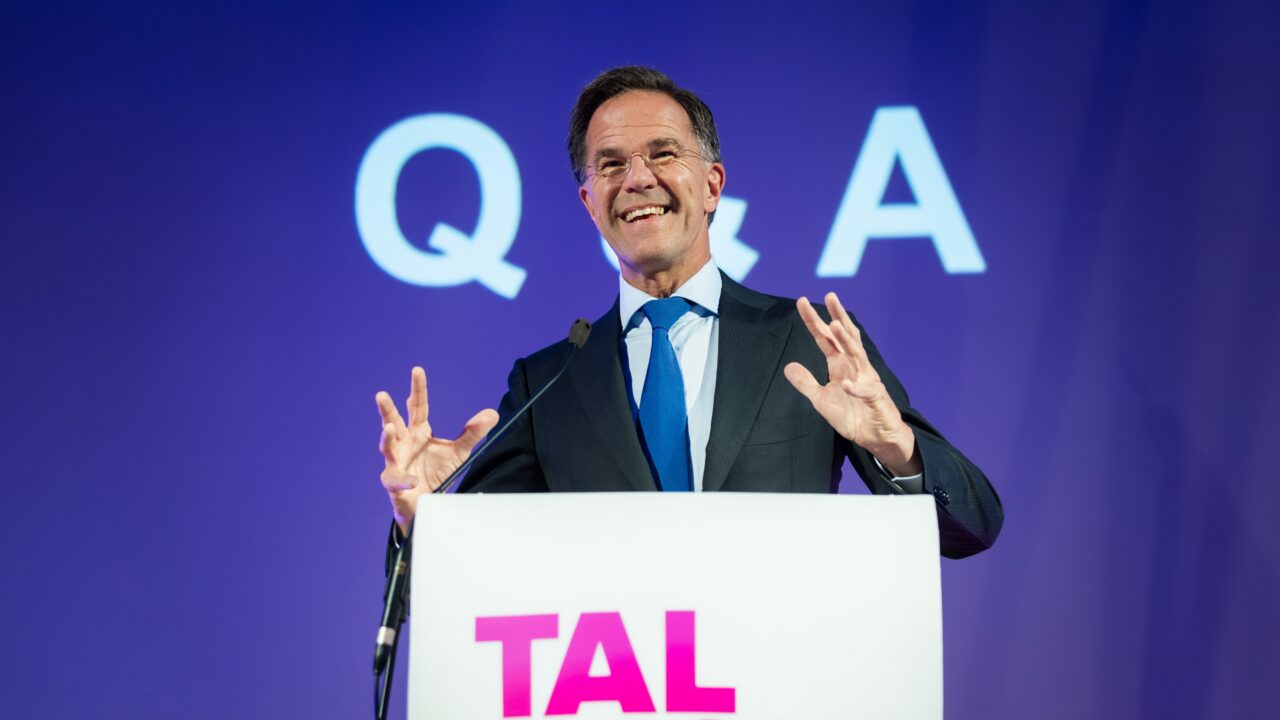
In a public lecture to students at TalTech, NATO Secretary General Mark Rutte reaffirmed that NATO is ready to defend every inch of its territory and that Estonia currently faces no imminent military threat. Photo: Jürgen Randma

In a public lecture to students at TalTech, NATO Secretary General Mark Rutte reaffirmed that NATO is ready to defend every inch of its territory and that Estonia currently faces no imminent military threat. Photo: Jürgen Randma

In a public lecture to students and researchers at TalTech, NATO Secretary General Mark Rutte said that Estonia sets an example for the entire Alliance through its defence investment, support for Ukraine, technological innovation and whole-of-society crisis preparedness. He identified the development of drone and counter-drone technology, as well as more effective air defence, as some of the most urgent tasks for future engineers and researchers.

Estonia’s contribution to NATO goes beyond defence spending

Throughout his speech, Rutte repeatedly highlighted Estonia’s contribution to the security of the Alliance. He pointed to defence spending, strong support for Ukraine and Estonian technology companies manufacturing drones, air defence interceptors, cybersecurity systems, battlefield software, energy storage solutions and more.

According to Rutte, Estonia’s strengths lie particularly in software, artificial intelligence and autonomous systems, while cooperation with companies from other Allied countries combines this expertise with their heavy manufacturing capabilities and large-scale resources. “Estonia is a place where people can turn a good idea into reality,” Rutte said. He added that this development is also growing Estonia’s economy, creating jobs and opportunities while making NATO stronger.

He placed particular emphasis on Estonia’s whole-of-society approach to resilience. “And what’s remarkable about Estonia is that it’s not just your national defence forces or your advanced tech sector or your growing defence industry that are contributing to NATO’s strengths. It’s everyone,” Rutte said.

According to Rutte, a whole-of-society approach to resilience means that everyone knows what to do when disaster strikes – from schoolchildren and retirees to construction workers and CEOs. He also highlighted the Estonian Defence League, through which tens of thousands of people volunteer to enhance national readiness. “In Estonia, we see a level of national civil preparedness that we would like to see across the whole of NATO,” Rutte said.

“And what’s remarkable about Estonia is that it’s not just your national defence forces or your advanced tech sector or your growing defence industry that are contributing to NATO’s strengths. It’s everyone.”
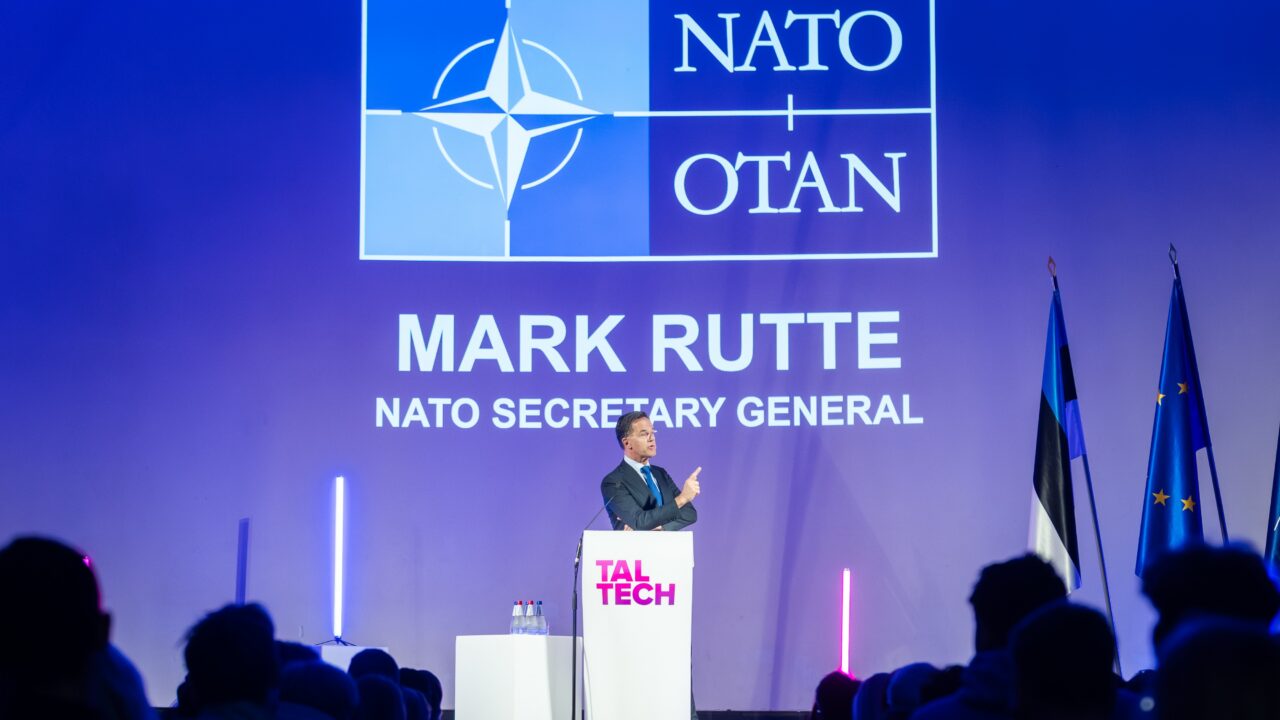
Rutte praised Estonia for its defence investment, support for Ukraine, technological innovation and whole-of-society crisis preparedness. According to him, Estonia shows how a small country can strengthen the security of the entire NATO Alliance through its knowledge, technology and people. Photo: Jürgen Randma

Rutte praised Estonia for its defence investment, support for Ukraine, technological innovation and whole-of-society crisis preparedness. According to him, Estonia shows how a small country can strengthen the security of the entire NATO Alliance through its knowledge, technology and people. Photo: Jürgen Randma

The war in Ukraine shows what technology NATO needs

During the question-and-answer session, Rutte was asked which problems TalTech students and researchers could start working on today.

Rutte identified drone and counter-drone technology as one of the most urgent areas for further development. According to him, the war in Ukraine has shown that simply stockpiling ready-made drones is not enough. “It is not so much about having the drones on the shelf but having the drone building capability when it is needed,” Rutte said. Drone technology is developing so rapidly, he noted, that production capacity and the ability to continuously adapt solutions are at least as important as existing stockpiles.

He considered the development of a more layered air defence system equally important. Alongside high-end systems, NATO also needs solutions at different levels and price points that can protect cities and critical infrastructure in a cost-effective way.

Rutte stressed that NATO is currently drawing many practical lessons from Ukraine’s experience of war. In drone and counter-drone technology, for example, the Alliance is learning a great deal from Ukraine, while NATO continues to share its expertise in battlefield tactics and strategy with Ukraine. “It is really a two-way street,” Rutte said.

“It is not so much about having the drones on the shelf but having the drone building capability when it is needed.”
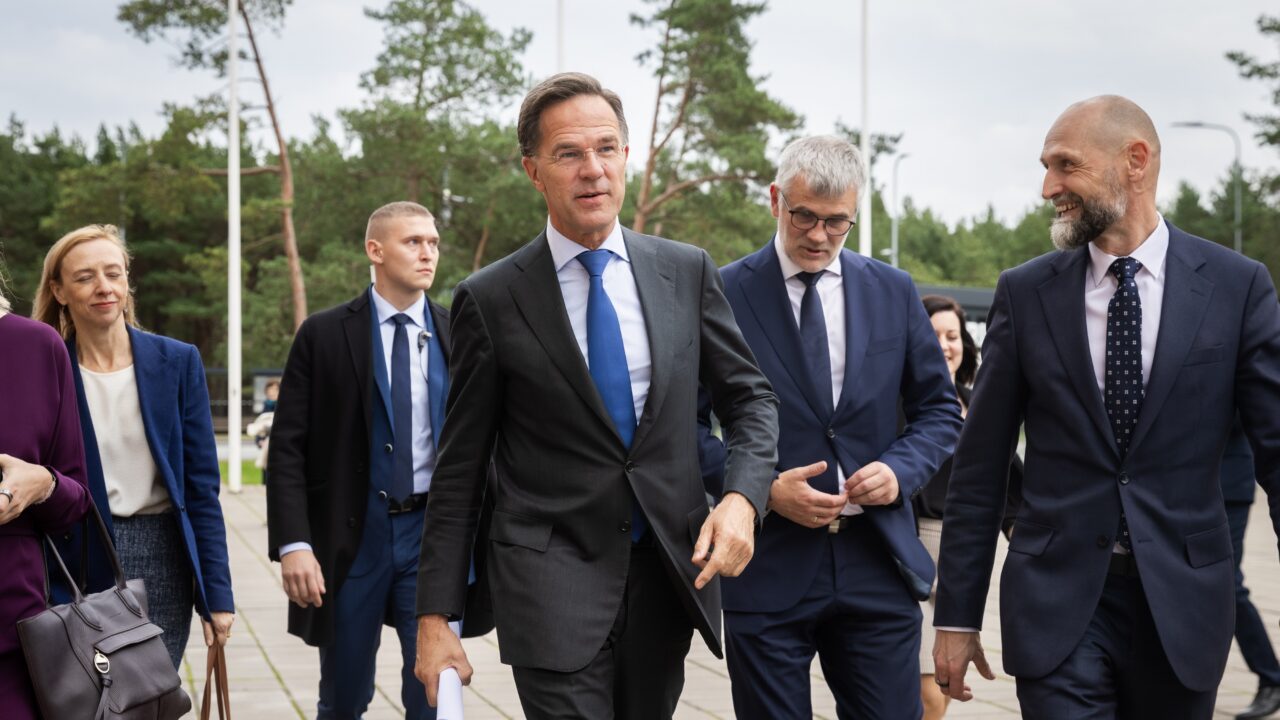
According to Rutte, Estonia’s strengths lie particularly in software, artificial intelligence and autonomous systems, while cooperation with other Allied countries helps combine this expertise with greater production capacity. Photo: Jürgen Randma

According to Rutte, Estonia’s strengths lie particularly in software, artificial intelligence and autonomous systems, while cooperation with other Allied countries helps combine this expertise with greater production capacity. Photo: Jürgen Randma

Young people’s courage is part of security

As hybrid attacks have become more frequent across Europe, students also asked Rutte when such activity could trigger a collective NATO response.

According to Rutte, NATO deliberately keeps that threshold ambiguous so that adversaries do not know in advance how or when the Alliance will respond. “It doesn’t go unanswered, but you will not always see it,” he said.

As an example, Rutte pointed to Baltic Sentry, an operation launched to protect critical infrastructure in the Baltic Sea after damage to undersea cables.

To conclude his lecture, Rutte recalled a story from 1982, when Estonian students jokingly set up a NATO base at a summer camp during the Soviet occupation. He said their courage and creativity were a reminder of the important role young people can play in defending freedom. “So often in history it is young people like you who dare to stand up, to laugh at the would-be empire, and to show the world how weak it really is,” he said.

Rutte ended his speech with a message to TalTech students: “As long as we have young people like you showing courage and creativity, our alliance will keep our one billion people safe, now and in the future.”

“As long as we have young people like you showing courage and creativity, our alliance will keep our one billion people safe, now and in the future.”
WATCH AGAIN: