
Trialoogi toimetaja

At TalTech’s School of Science conference, early stage researcher Kärol Soodla from the Department of Cybernetics explained something most of us never think about: why some muscles get tired quickly, while others can hold us upright all day long.
She started with the basics. Our body has two main muscle types. “We have glycolytic muscles that produce a lot of strength – for example, when sprinting – and we have oxidative muscles that help us maintain posture,” Soodla said. Glycolytic muscles are built for short bursts and don’t have much room for mitochondria – the tiny “power plants” of the cell. Oxidative muscles are the opposite: they’re full of mitochondria and made for slow, steady work.
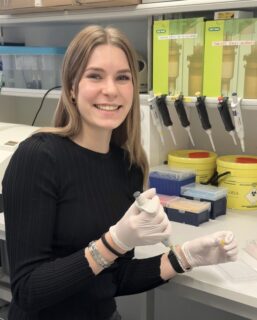
This difference makes one enzyme especially important: AMPK, the cell’s built-in energy sensor. When a muscle starts running low on fuel, AMPK tells the cell to pull in more nutrients so it can keep working. “If AMPK is activated, it signals the translocation of substrate transporters to the cell membrane, so we can take more substrate into the cell,” Soodla explained.
Here’s where it gets interesting. Soodla’s team found that the two muscle types have different level of AMPK activation. That was unexpected, because muscles overall aren’t low on fuel, when we just use them for daily activity.
The researchers think that energy levels are not the same throughout the cells. Soodla explained that cells maintain several distinct AMPK pools – in the mitochondria, nucleus, lysosomes and around the myofibrils – and each of these can switch on separately. Therefore, Soodla’s team is now shifting their focus on AMPK’s location inside the cells to study which pools of AMPK are more activated in postural muscles.
Although, they don’t know exactly how AMPK is more activated in postural muscles, the finding makes sense: muscles that are always active have higher AMPK activation, because their continuous work demands more access to fuel.
Ta alustas põhiasjadest. Meie kehas on kaks peamist lihasetüüpi. „On glükolüütilised lihased, mis toodavad palju jõudu – näiteks sprindis –, ning oksüdatiivsed lihased, mis aitavad meil rühti hoida,” sõnas Soodla. Glükolüütilised lihased on mõeldud lühiajalisteks ja intensiivseteks pingutusteks ning neis pole eriti ruumi mitokondritele – raku pisikestele „elektrijaamadele”. Oksüdatiivsed, rühti hoidvad lihased on vastupidised: need on mitokondritest pungil ja kohandunud aeglaseks, ühtlaseks tööks.