Tiit Atso: the faster technology changes, the more important the ability to learn becomes

19.11.2026
Tiit Atso: the faster technology changes, the more important the ability to learn becomes. 19.11.2026. On Friday, 13 November, Atso gave Trialoog an interview while still Chair of the Management Board of Harju Elekter Group. Three days later, the company announced his removal from the position. Drawing on his extensive experience in industry, Atso discussed how AI is changing engineers’ work, which skills the future will require and where Estonian industry’s competitive advantage lies. Imagine a Nordic electricity network operator requesting a quotation for a substation. Every network operator has its own technical requirements. Previously, preparing a quotation meant an engineer had to work through earlier projects, study technical drawings and calculate costs. This could take a great deal of time, with no guarantee that the quotation would lead to an order. Atso says AI can now put together the broad outline of a quotation itself, based on earlier projects. Just a year ago, AI frequently made mistakes when reading technical drawings and counting components. According to Atso, however, the system’s accuracy has since improved considerably: “The breakthrough over the past year means AI now makes practically no mistakes.” Of course, the system still cannot be trusted completely. When AI handles the time-consuming preparatory work, engineers can focus on more complex tasks. Among other things, AI helps industrial companies make purchasing more efficient. Large factories use hundreds of thousands of different components, and the price of the same part can vary severalfold between projects. AI can compare previous purchase prices and check whether a component is already available in a warehouse. The technology can also sequence production tasks and plan production more efficiently. Who wins and who loses? Atso hopes AI will free people from routine tasks rather than push them out of industry. Employees can then concentrate on more complex work that creates greater value. For companies, this offers a way to increase output without hiring new people at the same rate. In Atso’s view, AI’s impact on employment may become apparent first in office work, where the need for new staff is likely to decline over the next few years. Skilled workers will still be needed in production because robots cannot perform every task. In ten years’ time, however, the situation could be entirely different. An even more serious question is what will happen to people whose occupations risk disappearing altogether as technology advances. Atso gives the example of drivers, whose work could eventually be taken over by autonomous vehicles: “It will be very difficult to find new challenges for such a large number of people.” Atso believes technological development can no longer be stopped, although it remains far from clear who will ultimately gain or lose from the changes. “Those who do not keep up with change will certainly fall behind,” he said. “Those who do not keep up with change will certainly fall behind.” The most important skill for a future engineer is the ability to learn AI is also changing what is expected of engineers. Atso believes that proficiency in particular programs or working methods is becoming less important than the ability to learn quickly and adapt to change. Knowledge that is valuable today could become outdated within a few years. “Hard-working people will always manage, though,” he believes. In Atso’s view, a university’s main task is therefore to give students strong foundations and the ability to learn independently and continuously. Atso’s own journey to a TalTech degree took 13 years. He entered university in 2001, began studying IT and later moved on to economics. He graduated in 2014, having combined work and study for much of that time. Looking back, he sees this parallel existence as an advantage: work experience helped him understand what he was learning and connect it with practice. “Perhaps people should take a break from their studies, work for a while and then finish university. At least for me, it was a major advantage,” Atso reflected. Although the shortage of engineers is widely discussed in Estonia, Atso no longer considers the situation as critical as before. In his experience, suitable specialists are now easier to find and companies have a wider choice of candidates. Alongside the development of AI, Estonian industry’s future is shaped by the question of how to compete with countries where production is much cheaper. Atso believes Estonia should avoid relying too heavily on price competition, because its strengths lie elsewhere. Trust is Estonian industry’s trump card According to Atso, expensive electricity is not the biggest concern in every industry. The rising cost of living and the wage expectations it creates can be a greater problem. Higher costs do not necessarily mean, however, that companies should move production out of Estonia. During his career, he has seen companies relocate production to China or the Balkans, only to start looking for European partners again later. “Competing on cheapness has never really taken anyone very far,” he said. Instead, he sees Estonia’s strength in its reliable business culture. “Estonians know how to do business in what you might call the Western European way. They keep to agreed times, honour their promises and answer emails.” Atso therefore believes Estonian industry’s opportunity lies primarily in reliability and the ability to offer complex solutions. AI could further improve companies’ competitiveness while also changing the labour market. Atso cannot predict which occupations will disappear in ten years or which new ones will emerge. He is convinced, however, that those who can adapt to change and acquire new skills when necessary will fare better. “Estonians know how to do business in what you might call the Western European way. They keep to agreed times, honour their promises and answer emails.”
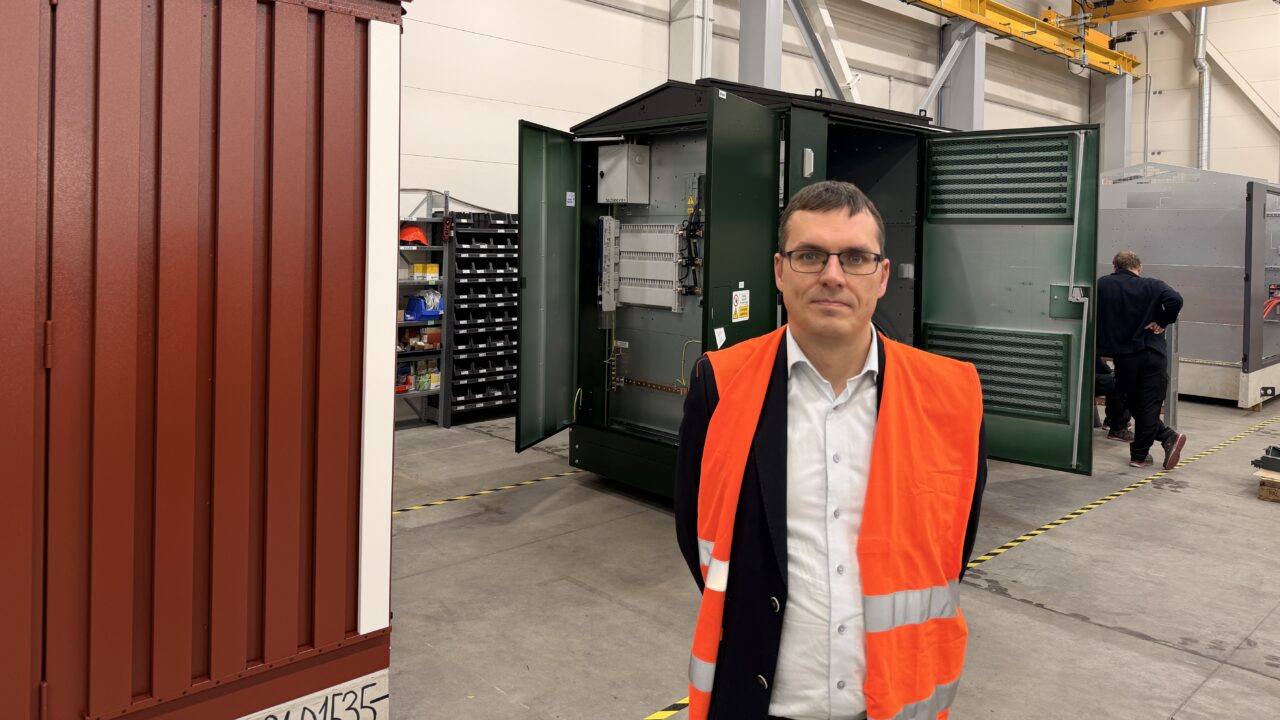
Tiit Atso, former Chair of the Management Board of Harju Elekter Group, believes the rapid development of AI will benefit those who can keep pace with change and acquire new skills the most. Photo: Eveliis Vaaks

Tiit Atso, former Chair of the Management Board of Harju Elekter Group, believes the rapid development of AI will benefit those who can keep pace with change and acquire new skills the most. Photo: Eveliis Vaaks

AI is increasingly taking over time-consuming engineering tasks in industry, from preparing quotations to planning production. TalTech alumnus Tiit Atso, who worked at Harju Elekter Group for almost 15 years, says this opens up new opportunities for companies while also calling the future of many existing jobs into question. In Atso’s view, those who can keep pace with technological development stand to gain the most.

On Friday, 13 November, Atso gave Trialoog an interview while still Chair of the Management Board of Harju Elekter Group. Three days later, the company announced his removal from the position. Drawing on his extensive experience in industry, Atso discussed how AI is changing engineers’ work, which skills the future will require and where Estonian industry’s competitive advantage lies.

Imagine a Nordic electricity network operator requesting a quotation for a substation. Every network operator has its own technical requirements. Previously, preparing a quotation meant an engineer had to work through earlier projects, study technical drawings and calculate costs. This could take a great deal of time, with no guarantee that the quotation would lead to an order.

Atso says AI can now put together the broad outline of a quotation itself, based on earlier projects. Just a year ago, AI frequently made mistakes when reading technical drawings and counting components. According to Atso, however, the system’s accuracy has since improved considerably: “The breakthrough over the past year means AI now makes practically no mistakes.” Of course, the system still cannot be trusted completely.

When AI handles the time-consuming preparatory work, engineers can focus on more complex tasks.

Among other things, AI helps industrial companies make purchasing more efficient. Large factories use hundreds of thousands of different components, and the price of the same part can vary severalfold between projects. AI can compare previous purchase prices and check whether a component is already available in a warehouse. The technology can also sequence production tasks and plan production more efficiently.

Who wins and who loses?

Atso hopes AI will free people from routine tasks rather than push them out of industry. Employees can then concentrate on more complex work that creates greater value. For companies, this offers a way to increase output without hiring new people at the same rate.

In Atso’s view, AI’s impact on employment may become apparent first in office work, where the need for new staff is likely to decline over the next few years. Skilled workers will still be needed in production because robots cannot perform every task. In ten years’ time, however, the situation could be entirely different.

An even more serious question is what will happen to people whose occupations risk disappearing altogether as technology advances. Atso gives the example of drivers, whose work could eventually be taken over by autonomous vehicles: “It will be very difficult to find new challenges for such a large number of people.”

Atso believes technological development can no longer be stopped, although it remains far from clear who will ultimately gain or lose from the changes. “Those who do not keep up with change will certainly fall behind,” he said.

“Those who do not keep up with change will certainly fall behind.”

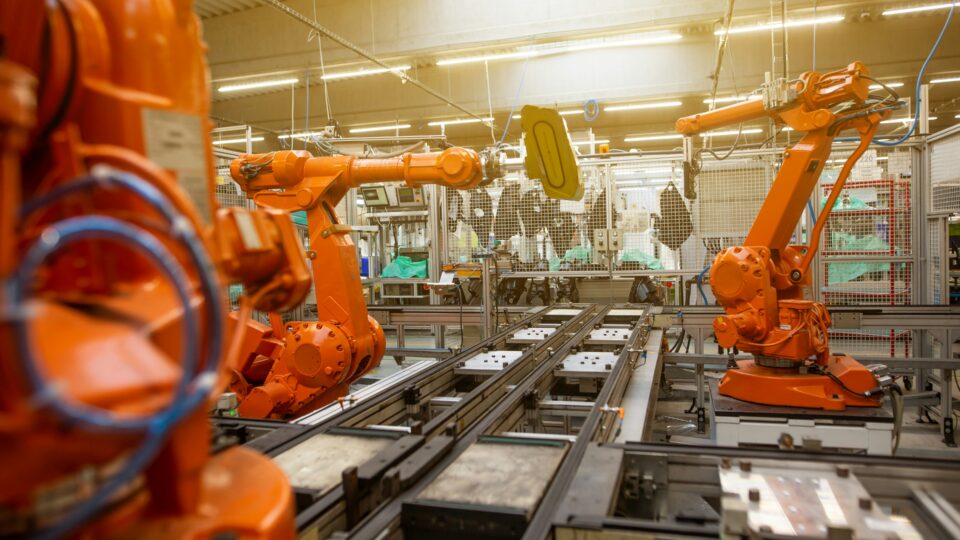
Atso hopes AI will free people from routine tasks rather than push them out of industry, allowing employees to focus on more complex work that creates greater value. Pictured: an engineer at Smitech programming a production line. Photo: Smitech

Atso hopes AI will free people from routine tasks rather than push them out of industry, allowing employees to focus on more complex work that creates greater value. Pictured: an engineer at Smitech programming a production line. Photo: Smitech

The most important skill for a future engineer is the ability to learn

AI is also changing what is expected of engineers. Atso believes that proficiency in particular programs or working methods is becoming less important than the ability to learn quickly and adapt to change. Knowledge that is valuable today could become outdated within a few years. “Hard-working people will always manage, though,” he believes.

In Atso’s view, a university’s main task is therefore to give students strong foundations and the ability to learn independently and continuously.

Atso’s own journey to a TalTech degree took 13 years. He entered university in 2001, began studying IT and later moved on to economics. He graduated in 2014, having combined work and study for much of that time.

Looking back, he sees this parallel existence as an advantage: work experience helped him understand what he was learning and connect it with practice. “Perhaps people should take a break from their studies, work for a while and then finish university. At least for me, it was a major advantage,” Atso reflected.

Although the shortage of engineers is widely discussed in Estonia, Atso no longer considers the situation as critical as before. In his experience, suitable specialists are now easier to find and companies have a wider choice of candidates.

Alongside the development of AI, Estonian industry’s future is shaped by the question of how to compete with countries where production is much cheaper. Atso believes Estonia should avoid relying too heavily on price competition, because its strengths lie elsewhere.

Trust is Estonian industry’s trump card

According to Atso, expensive electricity is not the biggest concern in every industry. The rising cost of living and the wage expectations it creates can be a greater problem. Higher costs do not necessarily mean, however, that companies should move production out of Estonia.

During his career, he has seen companies relocate production to China or the Balkans, only to start looking for European partners again later. “Competing on cheapness has never really taken anyone very far,” he said.

Instead, he sees Estonia’s strength in its reliable business culture. “Estonians know how to do business in what you might call the Western European way. They keep to agreed times, honour their promises and answer emails.”

Atso therefore believes Estonian industry’s opportunity lies primarily in reliability and the ability to offer complex solutions. AI could further improve companies’ competitiveness while also changing the labour market.

Atso cannot predict which occupations will disappear in ten years or which new ones will emerge. He is convinced, however, that those who can adapt to change and acquire new skills when necessary will fare better.

“Estonians know how to do business in what you might call the Western European way. They keep to agreed times, honour their promises and answer emails.”