Trialoog editor
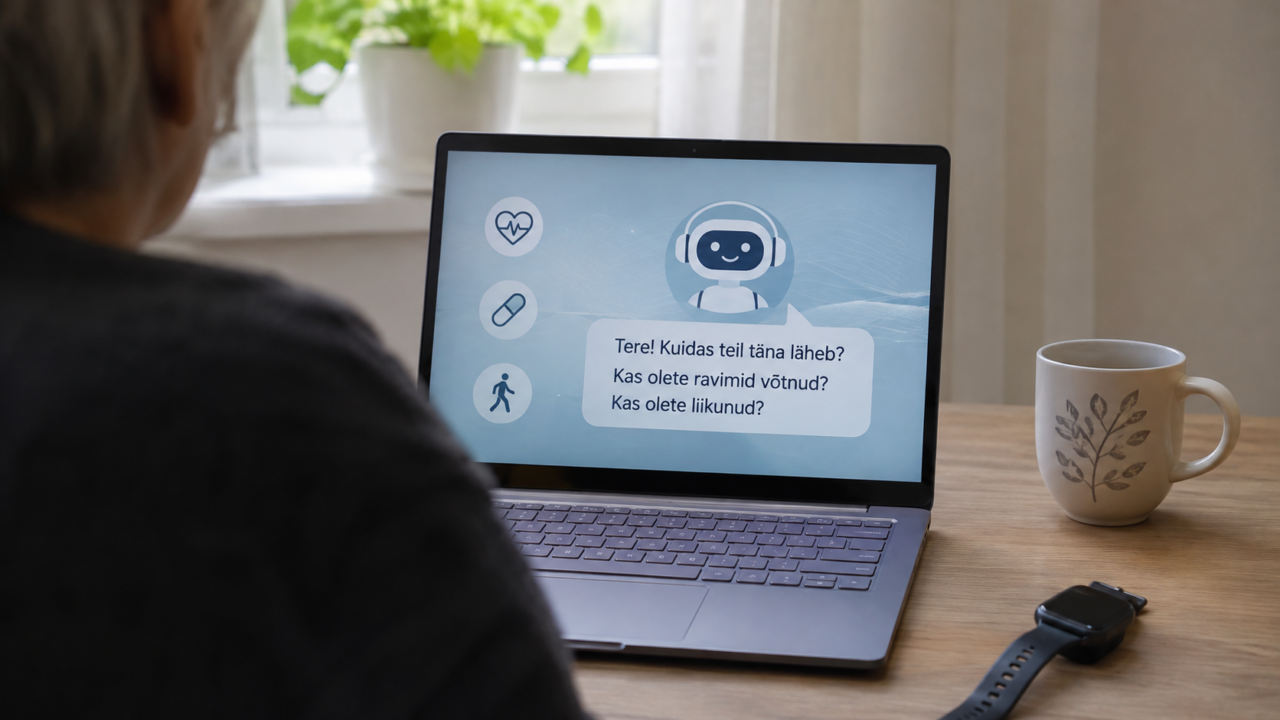
“The population is ageing, resources are becoming scarcer, and too few healthcare professionals are entering the workforce,” Elli Valla, a researcher at TalTech’s e-Health Centre, said at the university’s Entrepreneurship Day. As one possible solution, TalTech researchers are developing a digital consultation that could help patients follow their treatment plans after leaving hospital and save healthcare professionals’ time.
Imagine someone who has returned home from hospital after a heart attack. Their doctor has prescribed medication and given them recommendations. A week later, they are asked how they are doing, whether they have taken their medicines and whether they have been physically active enough. The questions, however, come from an AI-based virtual assistant.
This is precisely the kind of solution being developed at TalTech. According to Valla, it illustrates how AI could benefit healthcare. There are, of course, many other possibilities, from detecting diseases to assessing rehabilitation and making doctors’ work easier.
Signs of disease may be hidden in a single drawing
Among other things, Valla studies how smart devices can be used to detect Parkinson’s disease. In her doctoral thesis, she proposed ways to distinguish people with Parkinson’s disease from healthy people using data collected with phones and tablets.
For example, someone may be asked to draw a spiral on a tablet. This simple task provides a surprising amount of information. The device records how fast the person draws, how hard they press on the screen and the angle at which they hold the stylus. Machine learning can search the data for patterns that may indicate Parkinson’s disease. “Among them are features that the human eye cannot even see,” Valla explained.
The spirals drawn by two healthy people can differ considerably, making it difficult to describe signs of disease through fixed rules. Machine learning helps identify connections that people cannot spot themselves. In future, such solutions could help detect diseases at GP practices or at home.
Similar possibilities are being explored in rehabilitation. Movement is currently assessed in specialised gait laboratories, where cameras, pressure plates and markers attached to the body measure a person’s movements. TalTech researchers are looking for simpler, cheaper ways to collect the necessary information, making it easier for doctors and physiotherapists to monitor a patient’s recovery.
The researchers have other exciting ideas on their desks too. They have begun investigating whether substances found in sweat could be used to predict certain blood parameters. If successful, a sweat sample might be enough to monitor some indicators. This would be particularly valuable for newborn babies, who need repeated blood tests.
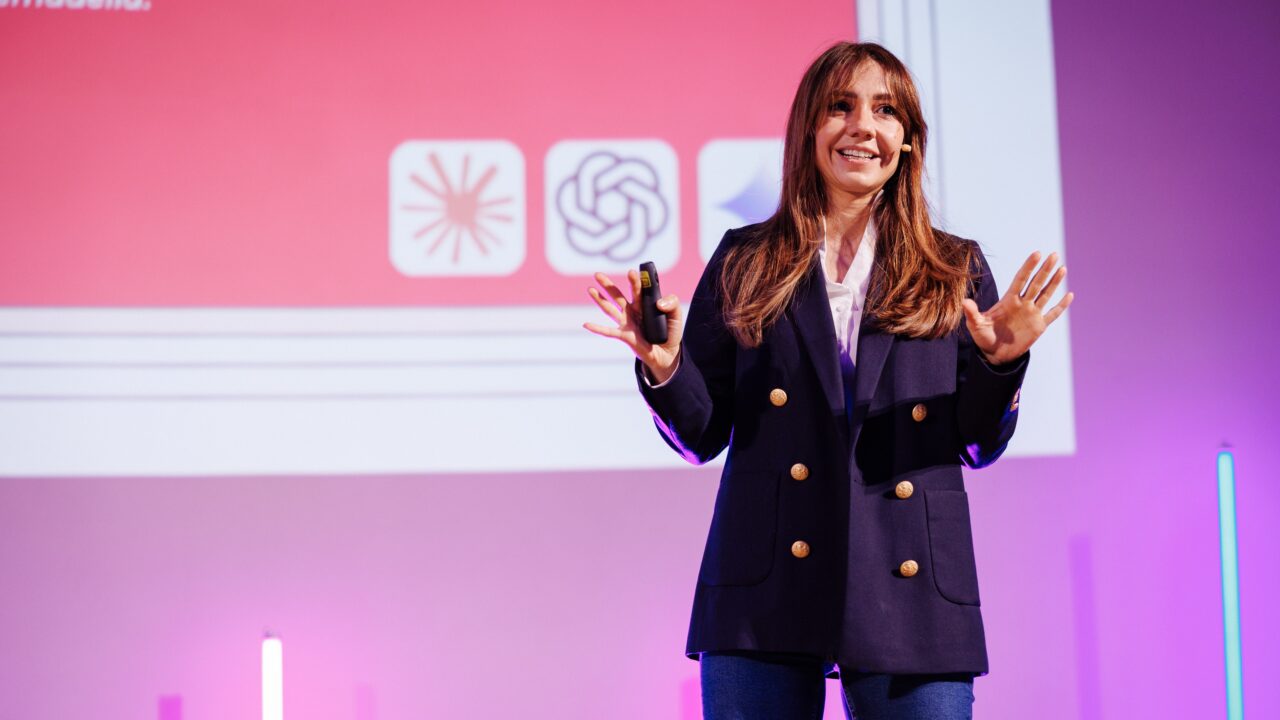
Elli Valla, a researcher at TalTech’s e-Health Centre, presented AI’s potential for early disease detection, patient monitoring and making doctors’ everyday work easier at Entrepreneurship Day. She said adoption of new solutions depends heavily on how much doctors and patients trust them.
Who monitors patients’ health after hospital?
One of the developments Valla presented addresses how to help people follow their prescribed treatment consistently. After a stroke or heart attack, it is important to lower LDL cholesterol, or “bad” cholesterol. Patients may have their medication and treatment plan, but the outcome depends heavily on how carefully they follow the recommendations.
Ideally, a doctor or nurse would call patients regularly, ask how they feel and check whether they have taken their medication and followed advice on physical activity. A shortage of healthcare professionals, however, makes it difficult to offer this service to everyone.
A digital consultation is therefore being developed under the leadership of cardiologist Margus Viigimaa. It could communicate with patients once a week, allowing them to answer questions in writing or by speaking. A smartwatch can also be connected, with its data taken into account by the digital consultation.
The researchers want to find out whether regular communication helps improve treatment adherence: how well patients follow their treatment plans. A clinical trial is expected to begin in January 2027.
AI could give doctors more time
The researchers are also investigating how AI could make doctors’ work easier both before and during appointments. A language model could be instructed to ask patients before their visit about their symptoms and when they began. The doctor would receive a summary at the start of the appointment, helping them reach the important questions more quickly.
Valla said this approach is already being tested. One advantage that has emerged is the ability to communicate with patients in a language that suits them.
During an appointment, AI could listen to the conversation between doctor and patient and produce a summary suitable for the medical record. This would leave the doctor more time to focus on the patient.
However, the accuracy of an AI-generated summary must be checked. Valla gave the example of a patient’s body temperature: a language model may produce a fluent, plausible summary while confusing important facts, interpreting a rise in temperature as a fall. In medicine, such an error could have a major impact on treatment decisions.
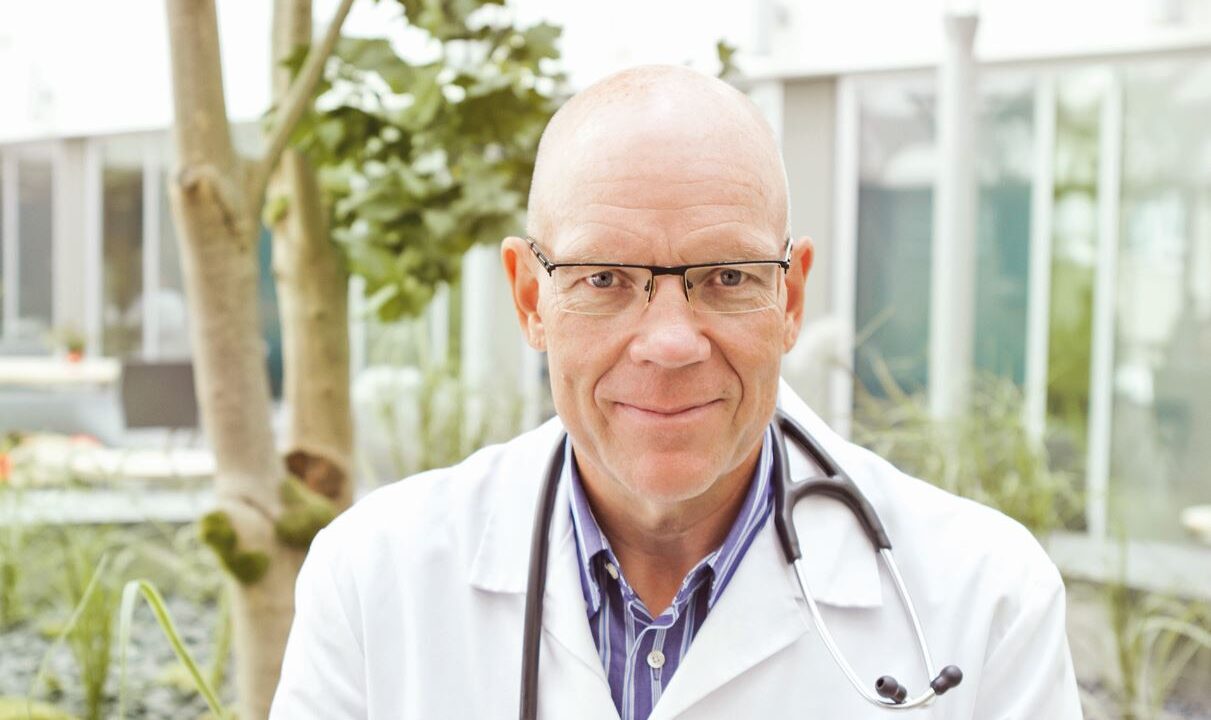
Margus Viigimaa says the digital doctor will not replace a real doctor, but will monitor patients between appointments and raise the alarm when necessary. Private collection
Healthcare moves at the speed of trust
Alongside technology, it is necessary to understand whether patients and doctors are ready to use AI. “Healthcare moves at the speed of trust. It is one of the most conservative sectors, as indeed it should be,” Valla stressed.
In developing the digital consultation, researchers have begun examining how a virtual assistant should communicate with patients and what that interaction might look like. People must also be left in no doubt that they are talking to AI.
The security of health data matters too. Alongside large commercial language models, the researchers are therefore testing open-source solutions that could reduce dependence on US and Chinese technology companies.
Valla said researchers need to answer technical and legal questions, as well as questions about human trust. “What is exciting is that we are looking for the answers through research.”
Although the digital consultation will initially be developed with stroke and heart attack patients, Valla sees much wider possibilities. In occupational health, for example, a similar system could help monitor physical activity, the effects of night shifts and indicators associated with burnout. In future, digital consultations could also support people with diabetes, high blood pressure and other chronic conditions.
First, however, researchers must establish whether communicating with AI really helps patients take better care of their health. If the digital consultation proves its worth, it could support many people and leave doctors more time for those who need direct care.
Elli Valla spoke at TalTech’s Entrepreneurship Day on 29 October, where the central themes were competitiveness and efficiency. The event focused on solutions supporting business competitiveness, research cooperation and putting innovative ideas into practice. More information: HERE.