Expert at the FinEst Centre for Smart Cities


Every building demolished produces large quantities of materials that could be reused. Unfortunately, much of it is wasted because construction waste is not properly separated. A master’s thesis completed at TalTech shows that simple, practical steps can improve the situation.
When we talk about environmental sustainability and the circular economy, we often think about sorting household waste. Separating food waste and returning deposit containers have become everyday habits. Far less attention is paid, however, to a major waste stream generated by building and renewing our cities: construction and demolition waste.
According to European Union statistics, construction and demolition debris accounts for around half of all waste generated, far exceeding household waste volumes. Between 2020 and 2023, Tallinn generated an average of 4.5 tonnes of waste per resident, 66% of it construction and demolition waste. The rest of Estonia faces a similar problem.
Every demolished building produces enormous quantities of concrete, bricks, metal, wood, glass and other materials. Unfortunately, much of it ends up in landfill or is used as lower-value fill because sufficiently thorough separation at source has not become standard practice.
Yet these materials are valuable resources. Reuse and recycling could substantially reduce both environmental pressures and demand for new raw materials. Concrete can be made into crushed aggregate, metal can be reprocessed, and wood can become new products or be used to generate energy. Many building components, such as stairs and glued laminated timber beams, can also be reused directly where suitable.
The problem begins on the construction site
We need to ask how waste is separated on construction sites and how current practices could be improved. Rene Ron Vest, one of this article’s authors, addressed these questions in a master’s thesis in Industrial Ecology defended at TalTech’s Tartu College in 2025.
Observations at selected construction sites in Tallinn showed that, although the city’s waste management rules require separate collection, compliance is often inadequate. There were too few containers, labelling was unclear and workers’ awareness was limited.
Under these conditions, high-quality recycling is difficult to achieve. When different waste streams become mixed on site, they are harder to separate later, reducing opportunities to reuse the materials.
When different waste streams become mixed on site, they are harder to separate later, reducing opportunities to reuse the materials.
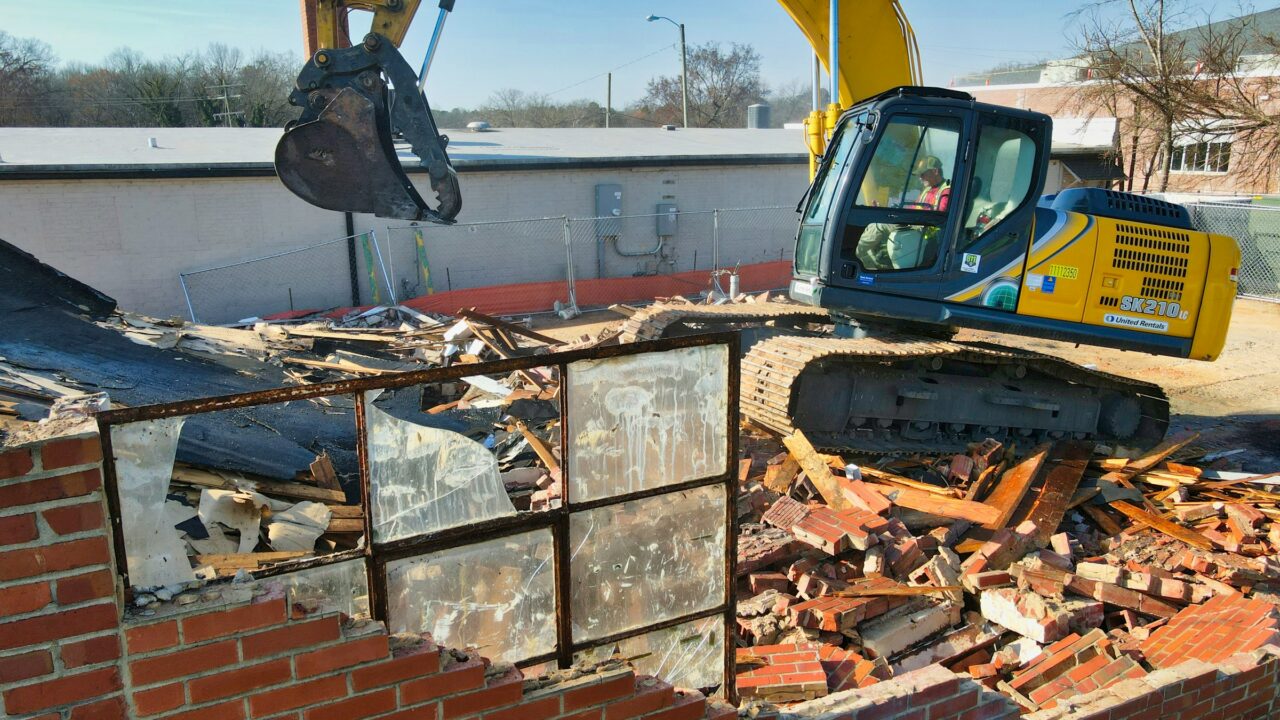
Bricks, wood and other materials become mixed on a demolition site, making them harder to separate and recycle later. Photo: Gene Gallin / Unsplash
A simple guide can drive change
To address the problem, the thesis produced a visually straightforward, practical guide to the separate collection of construction and demolition waste in Tallinn. It explains which waste streams must be collected separately on construction sites and how to do so.
The guide was distributed to construction companies and introduced at an information day attended by representatives of Tallinn and the national government, builders, architects and waste management specialists. The aim was to raise awareness and strengthen cooperation within the sector.
Follow-up observations after the guide was introduced showed a marked improvement. More containers had been provided on construction sites, their labelling was clearer and workers better understood why materials needed to be separated.
The findings confirm that even simple, carefully considered changes can significantly improve waste separation on construction sites.
Vest’s thesis also analysed Tallinn’s waste management requirements for construction and demolition waste. It found that the requirements needed updating and that supervision on construction sites should be strengthened.
Awareness-raising must also be sustained rather than limited to isolated campaigns. Comparisons with practices in other Estonian cities and European countries showed that clear requirements, effective guidance and consistent communication can deliver good results in modernising waste management.
Tallinn has every opportunity to set a good example for other municipalities in this field.
The findings confirm that even simple, carefully considered changes can significantly improve waste separation on construction sites.
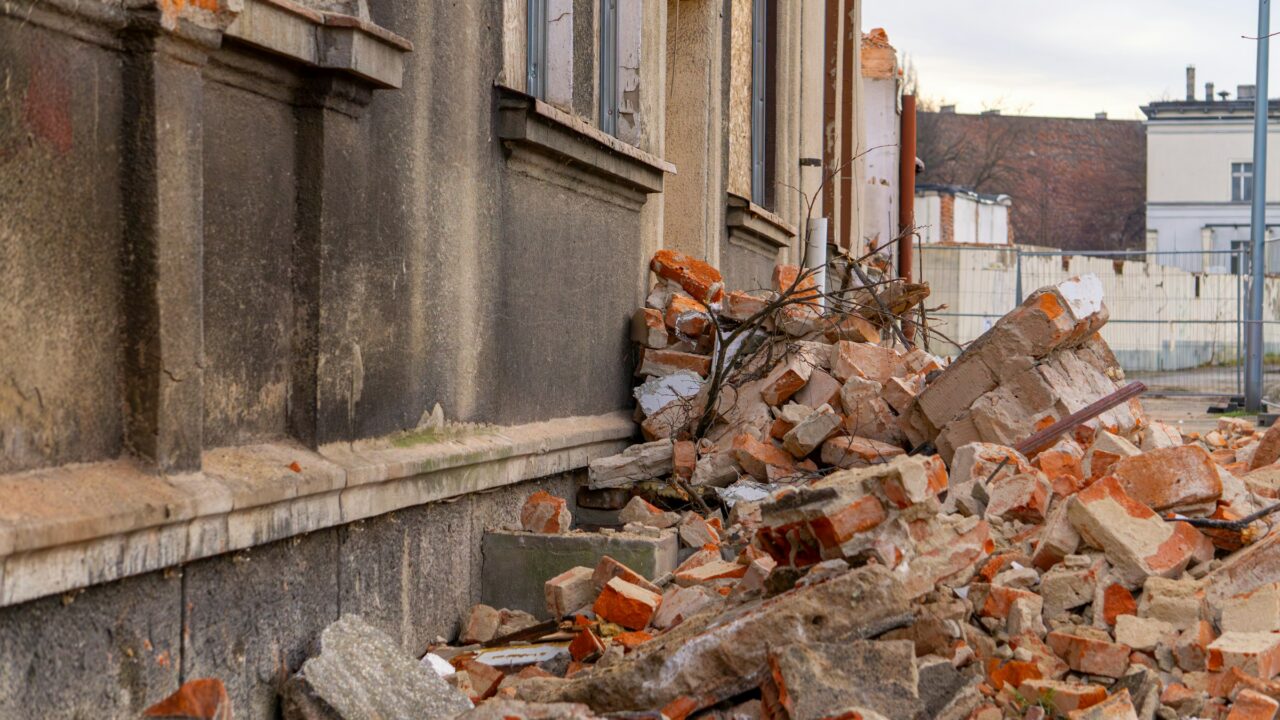
Bricks and pieces of concrete lie beside the wall of a demolished building: materials that could find a new use. Photo: Getty Images
Finding new value in construction waste
Imagine an Estonia where demolition no longer wastes valuable materials but gives them opportunities for a new life: concrete from old buildings is used in road construction, wood finds a place in new buildings and metal returns in new structures.
If we take separate collection seriously, this is not a distant vision but an entirely achievable possibility.
The study at Tallinn construction sites shows that change does not have to begin with major investment or complex technology. If clear guidance and thoughtful working arrangements improved waste separation in the capital, similar solutions can be applied in Tartu, Narva, Viljandi or Kuressaare.
This requires cooperation between construction companies, waste operators and local authorities, clear requirements and sustained awareness-raising. Above all, attitudes must change: materials arising from demolition should not be treated as rubbish to be disposed of as quickly as possible.
Estonia’s construction sector has an opportunity to become a leader in the circular economy. It should start with the simplest steps: collect materials correctly, use existing resources wisely and give them a chance of a new life.
Above all, attitudes must change: materials arising from demolition should not be treated as rubbish to be disposed of as quickly as possible.