Editor-in-Chief of Trialoog
World Science Day reminds us that the impact of science also depends on how well society understands it and how thoughtfully it is discussed. Focused debate needs platforms where complex knowledge can be explained patiently and researchers, entrepreneurs and public-sector representatives can truly listen to one another.
World Science Day for Peace and Development, celebrated on 10 November, invites us to reflect on the role of science in society. Science helps protect our vulnerable planet, solve practical problems and find opportunities for cooperation even in difficult circumstances. Yet knowledge does not reach society by itself. It must be explained, discussed and connected to decisions that affect people’s lives.
This work depends on the ability to read and understand longer, more complex texts. In her recent article “The End of Reading Is Here”, The Atlantic journalist Rose Horowitch describes how short, fragmented texts and a constant stream of messages can erode our patience for sustained reading. This can also weaken our ability to follow complex reasoning, draw conclusions and distinguish a well-founded argument from a merely persuasive presentation.
This does not mean short videos, podcasts or social media lack value. They help attract attention and spread ideas. But research, along with its uncertainties, limitations and possible consequences, cannot always be summarised in a few sentences. Some knowledge needs more space: background, different perspectives and time for readers to think things through.
This concern is familiar in Estonia too. In PISA 2025, Estonia’s 15-year-olds scored 499 points in reading, 12 fewer than in 2022. According to the Ministry of Education and Research’s data, the score has fallen by 15 points over the past decade. Estonian students’ results remain very strong internationally, but the downward trend deserves attention. PISA assesses, among other things, students’ ability to understand a text and draw conclusions from it. These skills are also needed to assess science news and take part in public debate.
Knowledge must inform decisions
Science communication does not mean simplifying complexity at any cost. It means making complex matters understandable while preserving what matters. Trialoog columnist Jan Kaus has written that the growing complexity of science may increase society’s longing for simple answers. Researchers’ task is not only to create new knowledge, but also to find ways to discuss it beyond their own disciplines. No laboratory exists in a vacuum.
The value of science is also reflected in how knowledge informs public-sector and business decisions. In a Eurobarometer survey published by the European Commission in 2025, 63% of respondents believed public involvement in scientific and technological development helps ensure that it meets society’s needs, values and expectations. Meanwhile, 80% believed the results of publicly funded research should be freely available online. These findings point to two important principles: science must listen to society, and research findings must reach the public.
Research and development is a strategic investment for businesses too. According to the European Commission’s 2025 report, the world’s 2,000 largest corporate R&D investors spent a combined €1.4 trillion on it in 2024. This represented more than 90% of all business-funded R&D worldwide. The Commission’s analysis found that these investments helped increase productivity and generate patents. Knowledge creates value when skills, cooperation and practical applications bring it into business and society.
A discovery made at a university does not automatically become a product, a service or a better public service. Putting a scientific idea into practice requires entrepreneurs who can give development a practical outlet, and a public sector that understands society’s needs and can help implement new solutions. Science creates knowledge, business can turn it into effective innovation, and public-sector support can create conditions that allow innovation to spread more widely.
Cooperation between researchers, entrepreneurs and the public sector requires people from different fields to understand one another’s work and know which questions to ask. A shortage of suitable business partners, researchers’ lack of time and academic performance measures that do not necessarily encourage knowledge application can hinder the development of research-based companies. These problems need public discussion so that researchers, entrepreneurs and decision-makers can seek solutions together.
A place where science and society meet
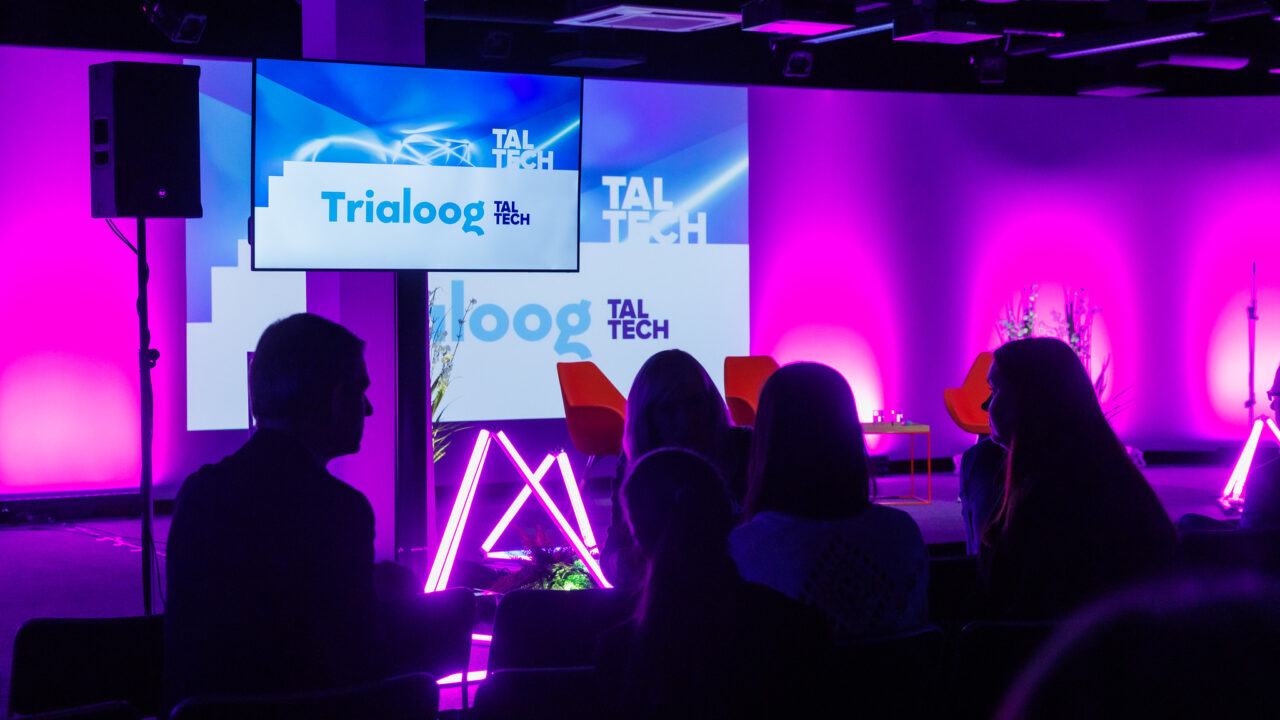
This is why we need publications that help create a public space for discussing science. Trialoog publishes articles by researchers, entrepreneurs and other experts at the intersection of science, the economy and society. Writing is not the right format for every message, but it makes it possible to show how an idea developed, what evidence supports it and which questions remain unanswered.
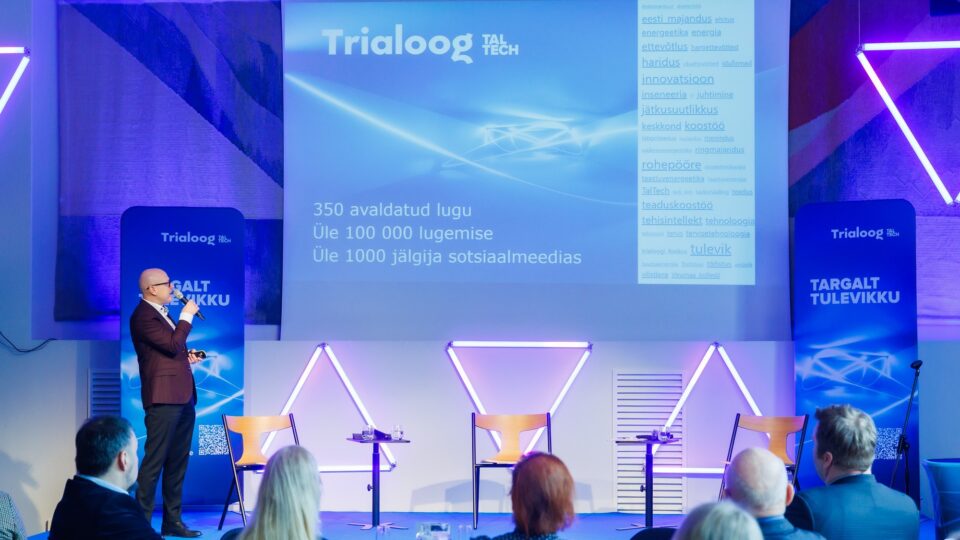
Since its launch in February 2024, Trialoog has published more than 1,000 articles, nearly 200 of them in English, and brought readers the views of more than 500 researchers, entrepreneurs and public-sector representatives. Trialoog articles have been read more than a million times. Many have reached other Estonian publications: Delfi, ERR, Postimees and Äripäev have published Trialoog texts, as have international outlets including Science & Business, EurekAlert and Estonian World.
Artificial intelligence is profoundly changing society today. Its development already affects research, business, education, public services and our information environment. The more widely AI is used, the more important it becomes to discuss its opportunities, limitations and effects on everyday life. Trialoog has published more than 140 articles on AI, examining these changes from different perspectives. Our coverage illustrates why we need publications that give complex questions space and help society think through, and keep pace with, technological change.
World Science Day was established to strengthen the relationship between science and society. UNESCO proclaimed it in 2001, following the commitments made at the 1999 World Conference on Science in Budapest. Its original purpose remains relevant: the value of science lies not only in discoveries, but also in practical cooperation and the ability to use knowledge to solve shared problems.
If we want science to help shape a more sustainable society, we must ensure that people have opportunities to understand it better. Trialoog provides that space: a place to explore complex issues calmly, bring together knowledge from different fields and invite readers to think along.
Follow Trialoog on Facebook and LinkedIn to keep up with new articles and discussions.