Young Engineer prize awarded to Karolina Kudelina-Zhang and Annika Kaalep

20.03.2026
Young Engineer prize awarded to Karolina Kudelina-Zhang and Annika Kaalep. 20.03.2026. Both laureates have close ties to Tallinn University of Technology: one is a researcher at the university, the other a TalTech graduate who also contributes to the development of its teaching. Presenting the awards, President Alar Karis said that engineering demanded far more than technical precision alone. “The essence of the engineering profession lies not only in precision and technical knowledge, but also in curiosity, creativity and perseverance,” the president said. “These are qualities Estonia needs not only in engineering, but across society as a whole.” He also noted that both this year’s winners had, in previous interviews, described learning itself as one of the most compelling aspects of engineering. Estonia, he said, needed more young people capable of seeing the excitement of the discipline and of discovering and developing their talents at the earliest possible stage. This year’s laureates, he added, serve as examples of how demanding, purposeful and inspiring an engineer’s path can be. The two winners represent branches of engineering that are equally essential to the functioning of society. While Karolina Kudelina-Zhang’s work centres on the diagnostics of electrical machines and the improvement of industrial reliability, Annika Kaalep operates on the front line of health technology, where engineering expertise has a direct bearing upon patient care and the dependability of life-critical systems. A force in promoting engineering Karolina Kudelina-Zhang is an energy researcher at TalTech’s Virumaa College whose work focuses on artificial intelligence-based condition monitoring of electrical machines and industrial diagnostics. Her aim is to render complex technologies intelligible, dependable and practically useful for engineers and maintenance specialists alike. In 2024, she defended her doctoral thesis, “Artificial Intelligence-Based Approaches to Predicting Electrical Machine Faults” through Vibration Spectrum Analysis. Her field is the diagnostics of electrical machines, an area of importance across almost every industrial sector. Unexpected failures in electrical machines and drive systems can result in severe financial losses, environmental harm and, in the gravest cases, danger to human life. It is the reduction of precisely these risks that lies at the heart of Kudelina-Zhang’s research. She began her academic journey at Narva-Jõesuu Secondary School, from which she graduated with honours in 2015. She then read electrical power engineering at undergraduate level at TalTech before continuing with a master’s degree in energy conversion and control systems. In 2020, her master’s thesis won first prize in the engineering and technology category of Estonia’s national student research competition. During her undergraduate years she worked as an electrical engineer at Narva Power Plants; by the time of her postgraduate studies she had joined TalTech itself as an engineer. Since 2024, she has served there as an energy researcher at Virumaa College. Alongside her research, Kudelina-Zhang has devoted considerable energy to popularising engineering, particularly among girls. She shares her expertise in schools across Harju and Ida-Viru counties, conducts workshops and encourages young people to take a keener interest in the engineering sciences. She has also developed an engineering elective for upper secondary school pupils. In addition, she has mentored young engineers and schoolchildren, taken part in initiatives such as the Young Engineer Programme and Enerhack, and served as chair of IEEE Estonia’s Women in Engineering section. For this work she has also received recognition through the Baltic L’Oréal-UNESCO Women in Science award. Judged by achievement, not gender Annika Kaalep works at the North Estonia Medical Centre, where she leads the department responsible for life-supporting equipment and oversees the reliability and development of the hospital’s most critical medical devices. She holds the professional title of Senior Biomedical Engineer as well as a Level 8 chartered qualification in biomedical engineering. Her own route into the profession also ran through TalTech. At the end of secondary school she found herself torn between physics and medicine, but on discovering the profession of biomedical engineer, it swiftly became clear that here the two disciplines met. She first studied technical physics at undergraduate level before going on to complete a master’s degree in biomedical engineering and medical physics. Even during her studies, Kaalep undertook an internship at the North Estonia Medical Centre and remained there thereafter. At the core of her daily work lies medical technology of growing sophistication: she must procure and implement equipment, while also resolving problems in an environment where technical reliability is inseparable from both human life and the quality of care. At the hospital she leads, among other initiatives, the e-ICU project, whose aim is to integrate fully the medical devices used in intensive care units with the hospital’s information system. Beyond her practical engineering work, Kaalep also contributes to the development of Estonia’s professional engineering framework. She has helped draw up professional standards for engineers and participates in the work of the Vocational Council for Engineering, Manufacturing and Processing, thereby helping to shape the national direction of engineering qualifications. She is likewise committed to fostering the next generation. Kaalep has helped develop the master’s curriculum in medical engineering and medical physics at TalTech’s Institute of Health Technologies, and has worked to align academic study with the practical needs of a modern hospital. In doing so, she has helped create opportunities for students to acquire meaningful and responsible professional experience while still at university. She is also an active member of the board of the Estonian Society for Biomedical Engineering and Medical Physics. Kaalep has emphasised that engineering is not solely a man’s domain, even if men remain more numerous in the field. In the end, she argues, an engineer is judged by achievement rather than gender. She also regards biomedical engineering as a profession of the future, given the steadily expanding role of technology in medicine and the corresponding rise in demand for engineers. The Young Engineer Award carries a prize of €7,000 and is intended for young engineers who have achieved outstanding results in research, teaching or the promotion of the profession. It is funded by Auve Tech and Väino Kaldoja. The award was established by President Alar Karis in 2024. Its first recipient was Margus Sammelsaar, who works in the development and production of unmanned aircraft. Last year the same honour was awarded to Tuule Mall Parts, Senior Research Fellow in the near-zero energy buildings research group at TalTech’s Institute of Civil Engineering and Architecture.
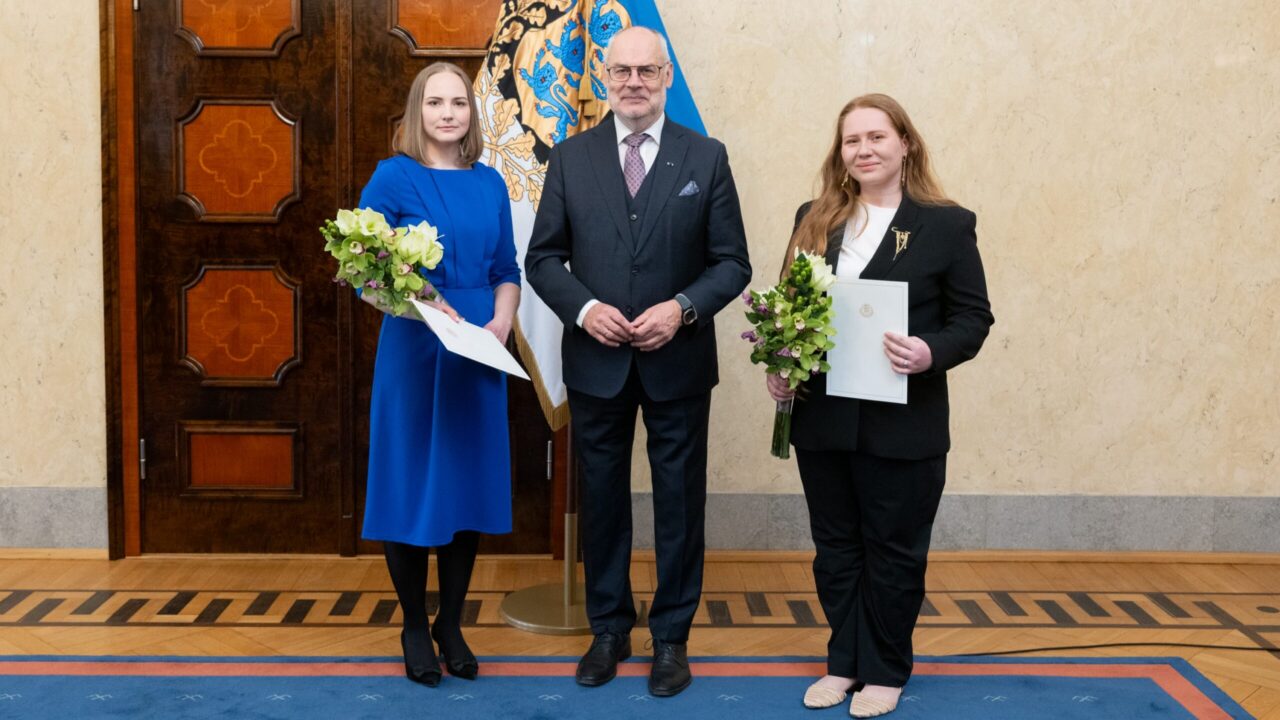
This year’s Young Engineer Award of the President of the Republic’s Cultural Foundation was awarded to Karolina Kudelina-Zhang (first right), energy researcher at Tallinn University of Technology’s Virumaa College, and Annika Kaalep (first left), Head of the Senior Biomedical Engineering Department at the North Estonia Medical Centre; pictured in the centre is President Alar Karis. Photo by Raigo Pajula.

This year’s Young Engineer Award of the President of the Republic’s Cultural Foundation was awarded to Karolina Kudelina-Zhang (first right), energy researcher at Tallinn University of Technology’s Virumaa College, and Annika Kaalep (first left), Head of the Senior Biomedical Engineering Department at the North Estonia Medical Centre; pictured in the centre is President Alar Karis. Photo by Raigo Pajula.

This year’s Young Engineer Award of the President of the Republic’s Cultural Foundation has been bestowed upon Karolina Kudelina-Zhang, an energy researcher at TalTech’s Virumaa College, and Annika Kaalep, Senior Biomedical Engineer and Head of Department at the North Estonia Medical Centre.

Both laureates have close ties to Tallinn University of Technology: one is a researcher at the university, the other a TalTech graduate who also contributes to the development of its teaching.

Presenting the awards, President Alar Karis said that engineering demanded far more than technical precision alone. “The essence of the engineering profession lies not only in precision and technical knowledge, but also in curiosity, creativity and perseverance,” the president said. “These are qualities Estonia needs not only in engineering, but across society as a whole.”

He also noted that both this year’s winners had, in previous interviews, described learning itself as one of the most compelling aspects of engineering. Estonia, he said, needed more young people capable of seeing the excitement of the discipline and of discovering and developing their talents at the earliest possible stage. This year’s laureates, he added, serve as examples of how demanding, purposeful and inspiring an engineer’s path can be.

The two winners represent branches of engineering that are equally essential to the functioning of society. While Karolina Kudelina-Zhang’s work centres on the diagnostics of electrical machines and the improvement of industrial reliability, Annika Kaalep operates on the front line of health technology, where engineering expertise has a direct bearing upon patient care and the dependability of life-critical systems.
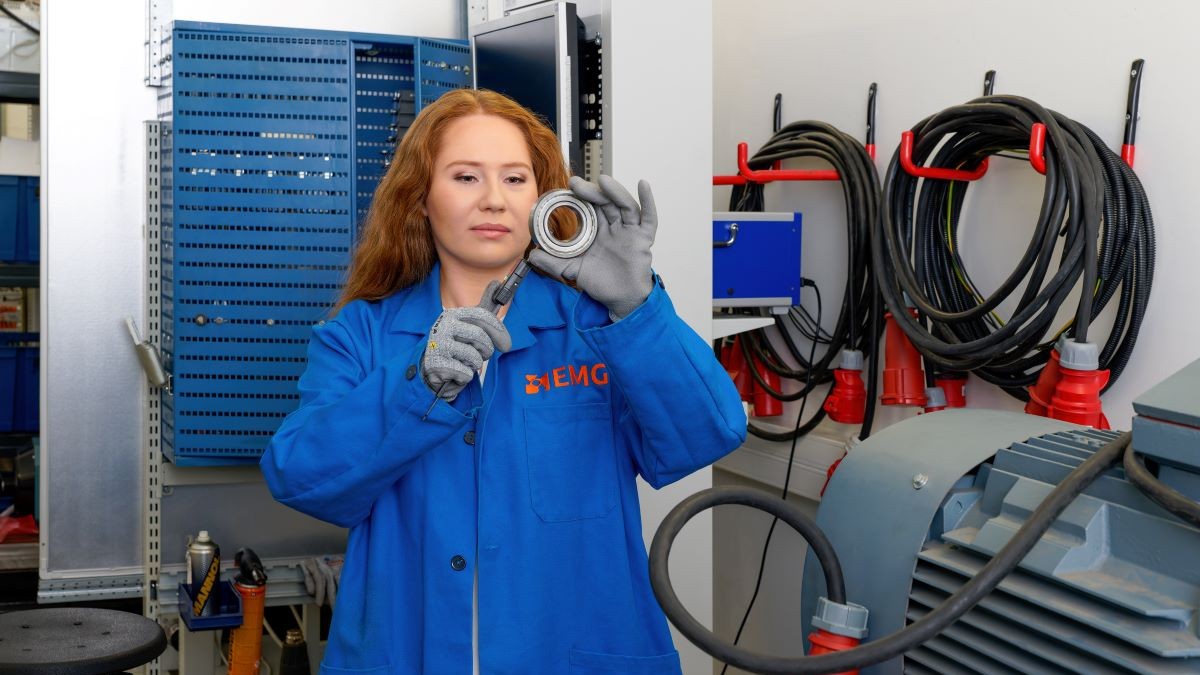
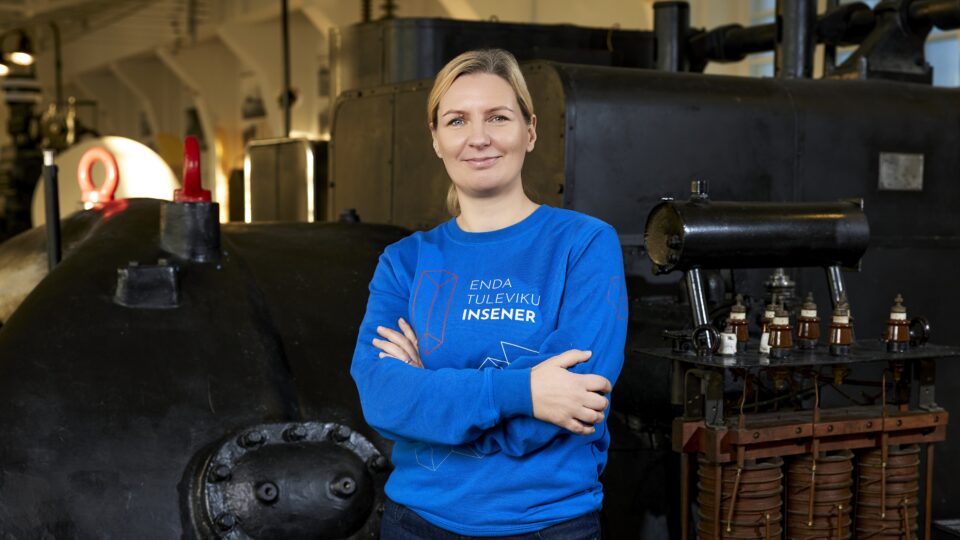
Karolina Kudelina-Zhang. Photo by Kaupo Kikkas.

Karolina Kudelina-Zhang. Photo by Kaupo Kikkas.

A force in promoting engineering

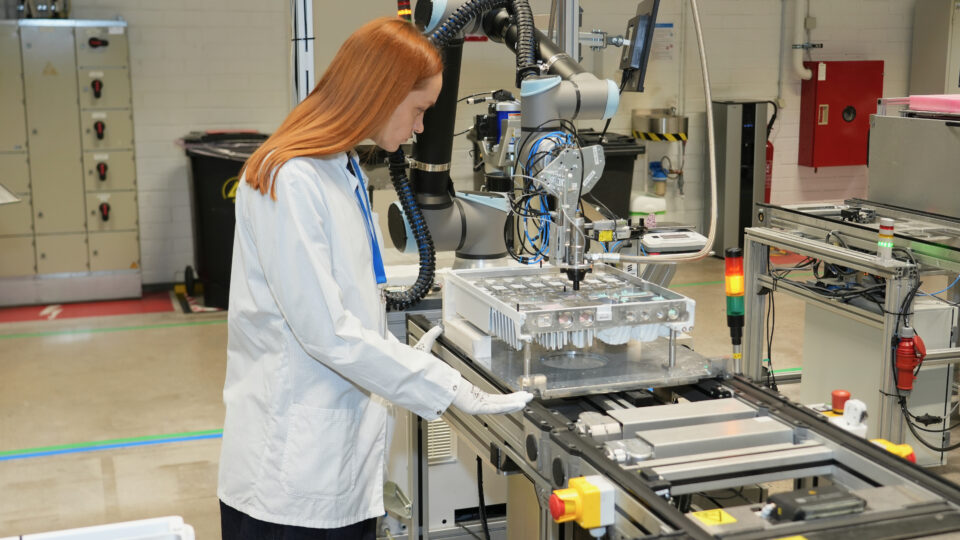
Karolina Kudelina-Zhang is an energy researcher at TalTech’s Virumaa College whose work focuses on artificial intelligence-based condition monitoring of electrical machines and industrial diagnostics. Her aim is to render complex technologies intelligible, dependable and practically useful for engineers and maintenance specialists alike. In 2024, she defended her doctoral thesis, “Artificial Intelligence-Based Approaches to Predicting Electrical Machine Faults” through Vibration Spectrum Analysis.

Her field is the diagnostics of electrical machines, an area of importance across almost every industrial sector. Unexpected failures in electrical machines and drive systems can result in severe financial losses, environmental harm and, in the gravest cases, danger to human life. It is the reduction of precisely these risks that lies at the heart of Kudelina-Zhang’s research.

She began her academic journey at Narva-Jõesuu Secondary School, from which she graduated with honours in 2015. She then read electrical power engineering at undergraduate level at TalTech before continuing with a master’s degree in energy conversion and control systems. In 2020, her master’s thesis won first prize in the engineering and technology category of Estonia’s national student research competition. During her undergraduate years she worked as an electrical engineer at Narva Power Plants; by the time of her postgraduate studies she had joined TalTech itself as an engineer. Since 2024, she has served there as an energy researcher at Virumaa College.

Alongside her research, Kudelina-Zhang has devoted considerable energy to popularising engineering, particularly among girls. She shares her expertise in schools across Harju and Ida-Viru counties, conducts workshops and encourages young people to take a keener interest in the engineering sciences. She has also developed an engineering elective for upper secondary school pupils. In addition, she has mentored young engineers and schoolchildren, taken part in initiatives such as the Young Engineer Programme and Enerhack, and served as chair of IEEE Estonia’s Women in Engineering section. For this work she has also received recognition through the Baltic L’Oréal-UNESCO Women in Science award.
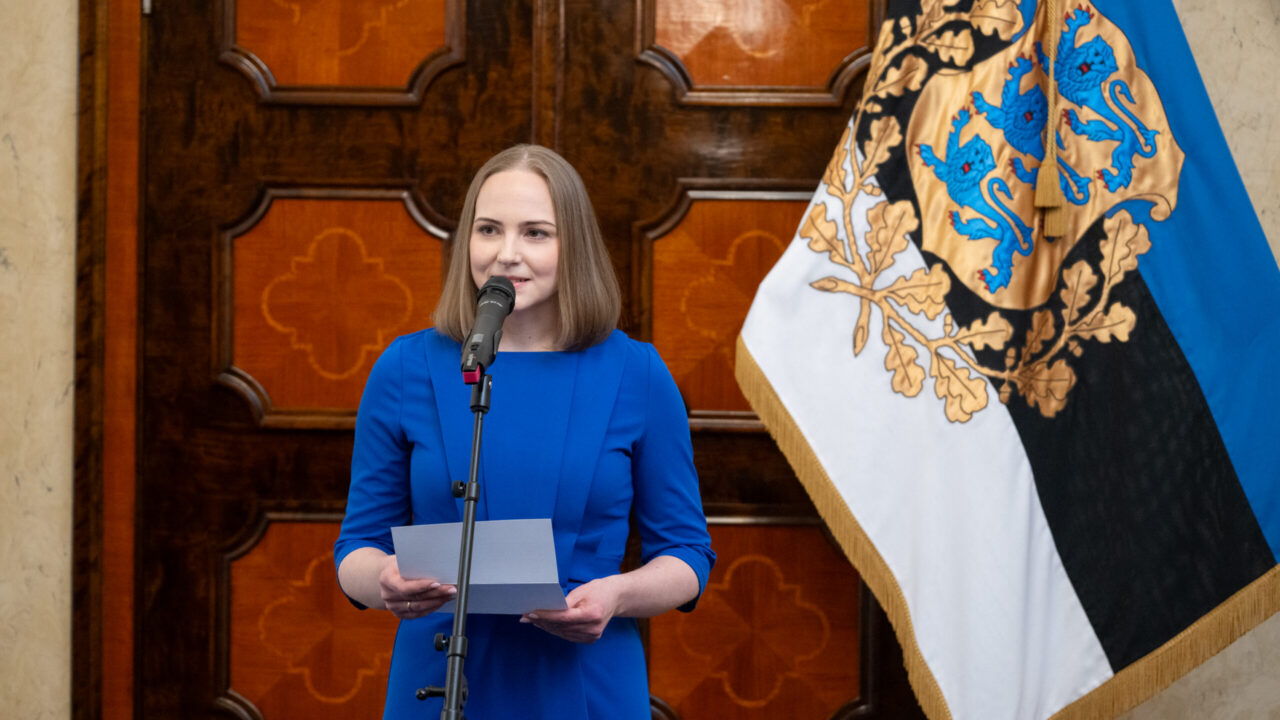
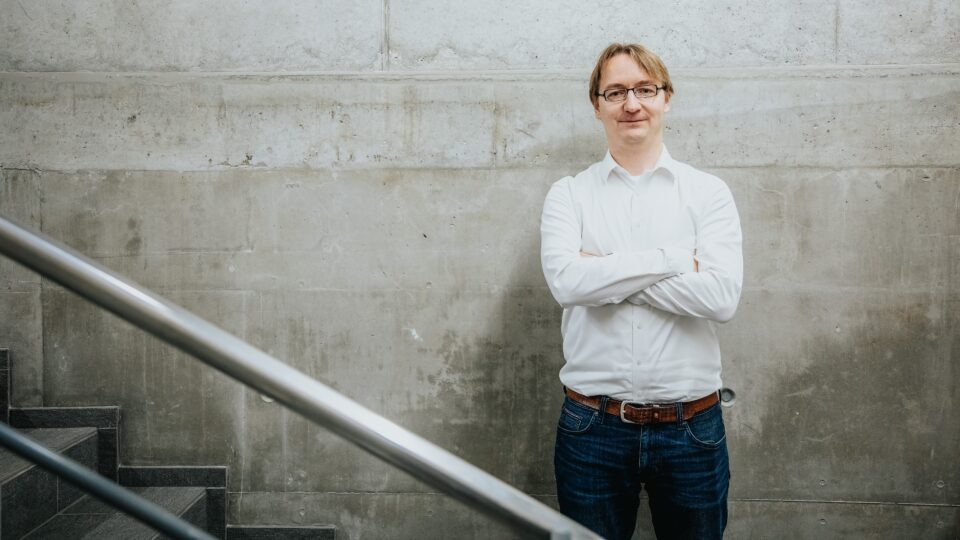
Annika Kaalep receives the Young Engineer Award on 19 March 2026. Photo by Raigo Pajula.

Annika Kaalep receives the Young Engineer Award on 19 March 2026. Photo by Raigo Pajula.

Judged by achievement, not gender

Annika Kaalep works at the North Estonia Medical Centre, where she leads the department responsible for life-supporting equipment and oversees the reliability and development of the hospital’s most critical medical devices. She holds the professional title of Senior Biomedical Engineer as well as a Level 8 chartered qualification in biomedical engineering.

Her own route into the profession also ran through TalTech. At the end of secondary school she found herself torn between physics and medicine, but on discovering the profession of biomedical engineer, it swiftly became clear that here the two disciplines met. She first studied technical physics at undergraduate level before going on to complete a master’s degree in biomedical engineering and medical physics.

Even during her studies, Kaalep undertook an internship at the North Estonia Medical Centre and remained there thereafter. At the core of her daily work lies medical technology of growing sophistication: she must procure and implement equipment, while also resolving problems in an environment where technical reliability is inseparable from both human life and the quality of care.

At the hospital she leads, among other initiatives, the e-ICU project, whose aim is to integrate fully the medical devices used in intensive care units with the hospital’s information system. Beyond her practical engineering work, Kaalep also contributes to the development of Estonia’s professional engineering framework. She has helped draw up professional standards for engineers and participates in the work of the Vocational Council for Engineering, Manufacturing and Processing, thereby helping to shape the national direction of engineering qualifications.

She is likewise committed to fostering the next generation. Kaalep has helped develop the master’s curriculum in medical engineering and medical physics at TalTech’s Institute of Health Technologies, and has worked to align academic study with the practical needs of a modern hospital. In doing so, she has helped create opportunities for students to acquire meaningful and responsible professional experience while still at university. She is also an active member of the board of the Estonian Society for Biomedical Engineering and Medical Physics.

Kaalep has emphasised that engineering is not solely a man’s domain, even if men remain more numerous in the field. In the end, she argues, an engineer is judged by achievement rather than gender. She also regards biomedical engineering as a profession of the future, given the steadily expanding role of technology in medicine and the corresponding rise in demand for engineers.
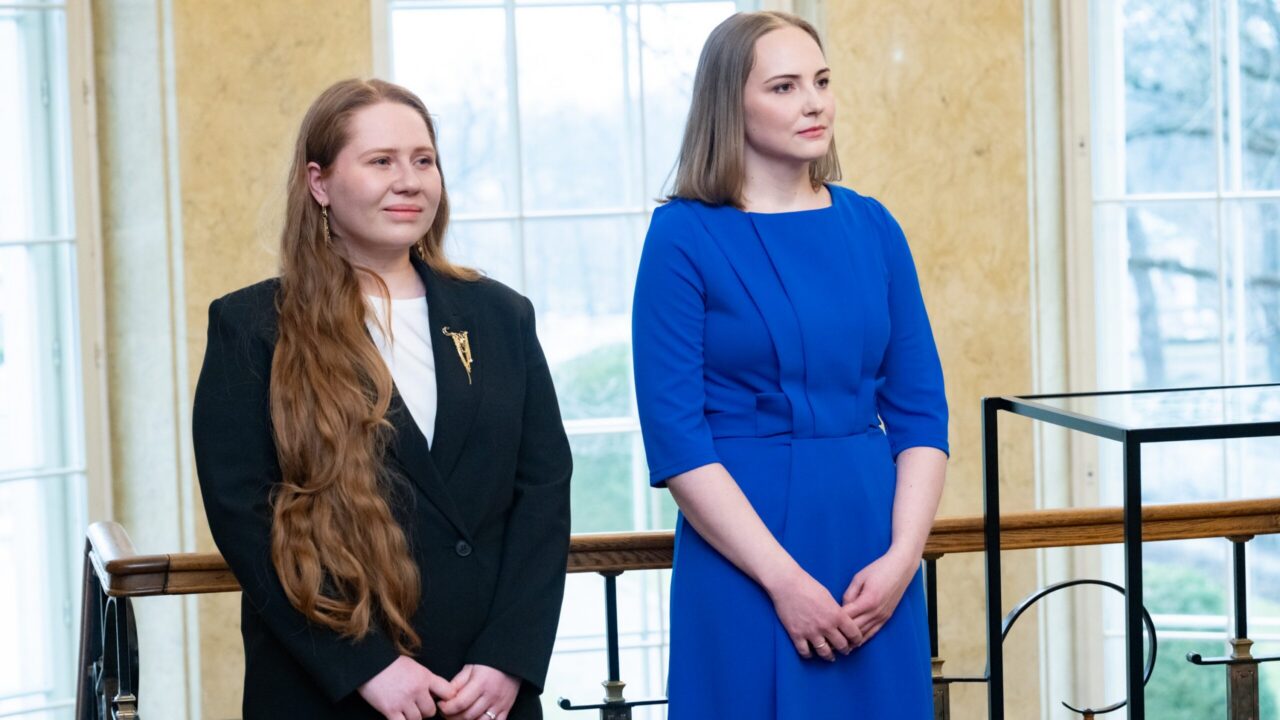
Karolina Kudelina-Zhang (left) and Annika Kaalep (right) received the Young Engineer Award. Photo by Raigo Pajula.

Karolina Kudelina-Zhang (left) and Annika Kaalep (right) received the Young Engineer Award. Photo by Raigo Pajula.

The Young Engineer Award carries a prize of €7,000 and is intended for young engineers who have achieved outstanding results in research, teaching or the promotion of the profession. It is funded by Auve Tech and Väino Kaldoja.

The award was established by President Alar Karis in 2024. Its first recipient was Margus Sammelsaar, who works in the development and production of unmanned aircraft. Last year the same honour was awarded to Tuule Mall Parts, Senior Research Fellow in the near-zero energy buildings research group at TalTech’s Institute of Civil Engineering and Architecture.