
Unlocking peat’s potential

02.12.2025
Unlocking peat’s potential. 02.12.2025. Currently Estonia exports large volumes of peat for horticulture  and the market has remained stable for decades and even growing. Yet the research & development project „Valorization of Estonian Peat“ started from the belief that this familiar resource holds far more potential. Project lead and assistant professor at TalTech division of Quaternary geology Leeli Amon argues that its time we look at peat differently.  „Our research results are really leading towards new ways to look at peat as a potential raw material for the chemical industry,“ she noted. For Amon, the most striking aspect is how unexpected these new possibilities are. As she put it: “Most people can’t even imagine that from the peat – the brown stuff in your flower pot – you can actually make smart material with a large variety of different properties.” Rethinking an ordinary resource To explore peat’s hidden potential, the researchers examined two distinct chemical transformation pathways. The first was to turn peat into a biopolymer – essentially a biodegradable plastic. Researcher at TalTech division of chemistry Estelle Silm explained that by carrying out a grafting reaction with peat and blending it with  plastic, they created a hybrid material with different flexibility, strength and heat-response characteristics than conventional polymers. Although an early idea to make a filter material did not meet the necessary performance requirements, the biopolymer approach itself proved promising. The second direction looked at producing functional carbon nanomaterials from peat. These particles are so small that they cannot be seen with the naked eye, yet they can glow under certain lighting and interact with UV radiation in unique ways.  Albina Mikhraliieva, Marie Curie postdoctoral fellow of Sustainable Chemistry and Engineering research group at the department of Chemistry and Biotechnology is developing her project on designing carbon dots from woody biomass and Estonian peat.  She explained that the innovative method was the research’s distinctive feature, involving the use of peat biomass as the carbon source and a relatively lower-temperature process without organic solvents. This makes the method less energy-intensive and more environmentally friendly. One important aspect, the researchers stressed, is that these technologies do not rely on the highest-quality peat traditionally used in horticulture. Several peat types – especially more decomposed layers – are less valued by the gardening industry, yet they contain exactly the chemical components needed for these new materials. “What strike me the most was that we can use this decomposed peat that is underused now and just waits for someone to valorize it,“ Silm noted. “Most people can’t even imagine that from the peat – the brown stuff in your flower pot – you can actually make smart material with a large variety of different properties.” Surprising properties with real-world potential The experimental results revealed several unexpected strengths. Biopolymer samples based on peat showed potential to act as thermoplastic components and by adjusting the recipe, their behavior could be tuned. Meanwhile, some of the carbon nanomaterials displayed strong UV- absorbing  abilities while remaining almost transparent – a rare and appealing combination. That opens the door to cosmetic applications such as protective films or skin-care additives that shield users from UV radiation. The same optical properties could be used in packaging materials that help food last longer without sacrificing visibility. These breakthroughs are emerging at exactly the right time. The horticultural peat market is competitive and not all peat types are equally valued. Economically, the difference between selling a bag of substrate and producing a gram of advanced nanomaterial is enormous. „Additionally, environmentally, peat-based materials that store carbon for long periods could contribute to Estonia’s climate goals while giving new purpose to so far more neglected decomposed peat and leftover resources in abandoned Soviet-era peatlands,“ Amon explained. „Additionally, environmentally, peat-based materials that store carbon for long periods could contribute to Estonia’s climate goals while giving new purpose to so far more neglected decomposed peat and leftover resources in abandoned Soviet-era peatlands.” Toward scaling and new research directions To move from laboratory success to real-world application, future collaboration with companies will be essential. According to Amon research can demonstrate feasibility, but wider implementation requires pilot facilities and larger-scale testing environments. The groundwork is already being laid for a follow-up project that aims to take the research further. Scientists said that additional research could lead to new discoveries nobody anticipates yet as nanomaterials are highly tunable, even small adjustments can lead to entirely new behaviors. Unexpected properties could emerge simply by experimenting with different combinations, opening the way to innovations that go far beyond the initial goals. For Mikhraliieva, the broader value of the peat valorization research lies in transferring knowledge to society and industry. As she put it: „Without this knowledge companies can’t create the next step for producing something new. But when we can demonstrate that it is possible, it can generate new ideas and new products.” Her words capture the heart of the project. What began as a scientific curiosity may soon reshape how Estonia understands, values and uses one of its most characteristic natural resources – proving that even the humblest material can spark high-tech innovation when examined through the right lens. „Without this knowledge companies can’t create the next step for producing something new. But when we can demonstrate that it is possible, it can generate new ideas and new products.”
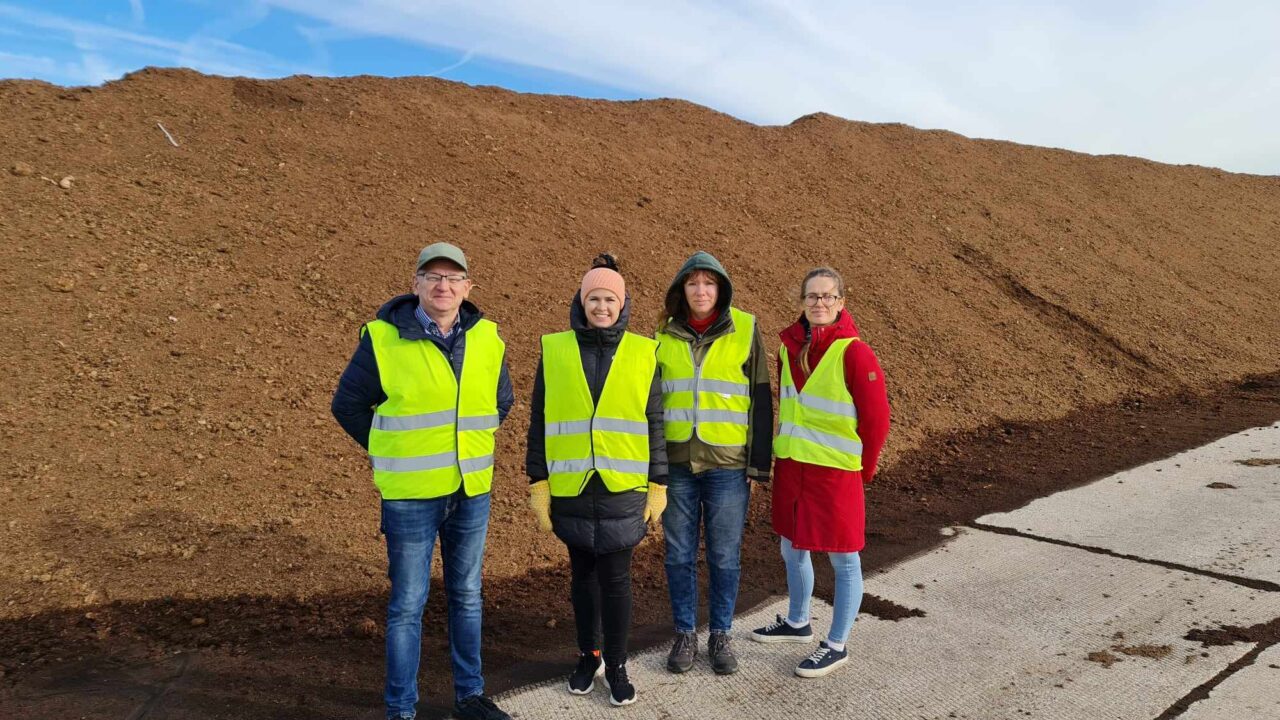
Yevgen Karpichev, Estelle Silm, Leeli Amon and Kristiina Kaldas (from left) at the Tootsi Peat production site. Photo: Private collection

Yevgen Karpichev, Estelle Silm, Leeli Amon and Kristiina Kaldas (from left) at the Tootsi Peat production site. Photo: Private collection

Estonian peat has been historically used as fuel, last decades valorized as a gardening substrate, but new research shows it has the potential to play a key part in UV-blocking coating, protective cosmetics, smart packaging or next-generation bioplastics. By reimagining this familiar material, researchers are revealing possibilities that could reshape how Estonia uses one of its abundant natural resources.

Currently Estonia exports large volumes of peat for horticulture  and the market has remained stable for decades and even growing. Yet the research & development project „Valorization of Estonian Peat“ started from the belief that this familiar resource holds far more potential. Project lead and assistant professor at TalTech division of Quaternary geology Leeli Amon argues that its time we look at peat differently.  „Our research results are really leading towards new ways to look at peat as a potential raw material for the chemical industry,“ she noted.

For Amon, the most striking aspect is how unexpected these new possibilities are. As she put it: “Most people can’t even imagine that from the peat – the brown stuff in your flower pot – you can actually make smart material with a large variety of different properties.”
Rethinking an ordinary resource

To explore peat’s hidden potential, the researchers examined two distinct chemical transformation pathways. The first was to turn peat into a biopolymer – essentially a biodegradable plastic. Researcher at TalTech division of chemistry Estelle Silm explained that by carrying out a grafting reaction with peat and blending it with  plastic, they created a hybrid material with different flexibility, strength and heat-response characteristics than conventional polymers. Although an early idea to make a filter material did not meet the necessary performance requirements, the biopolymer approach itself proved promising.

The second direction looked at producing functional carbon nanomaterials from peat. These particles are so small that they cannot be seen with the naked eye, yet they can glow under certain lighting and interact with UV radiation in unique ways.  Albina Mikhraliieva, Marie Curie postdoctoral fellow of Sustainable Chemistry and Engineering research group at the department of Chemistry and Biotechnology is developing her project on designing carbon dots from woody biomass and Estonian peat.  She explained that the innovative method was the research’s distinctive feature, involving the use of peat biomass as the carbon source and a relatively lower-temperature process without organic solvents. This makes the method less energy-intensive and more environmentally friendly.

One important aspect, the researchers stressed, is that these technologies do not rely on the highest-quality peat traditionally used in horticulture. Several peat types – especially more decomposed layers – are less valued by the gardening industry, yet they contain exactly the chemical components needed for these new materials. “What strike me the most was that we can use this decomposed peat that is underused now and just waits for someone to valorize it,“ Silm noted.

“Most people can’t even imagine that from the peat – the brown stuff in your flower pot – you can actually make smart material with a large variety of different properties.”

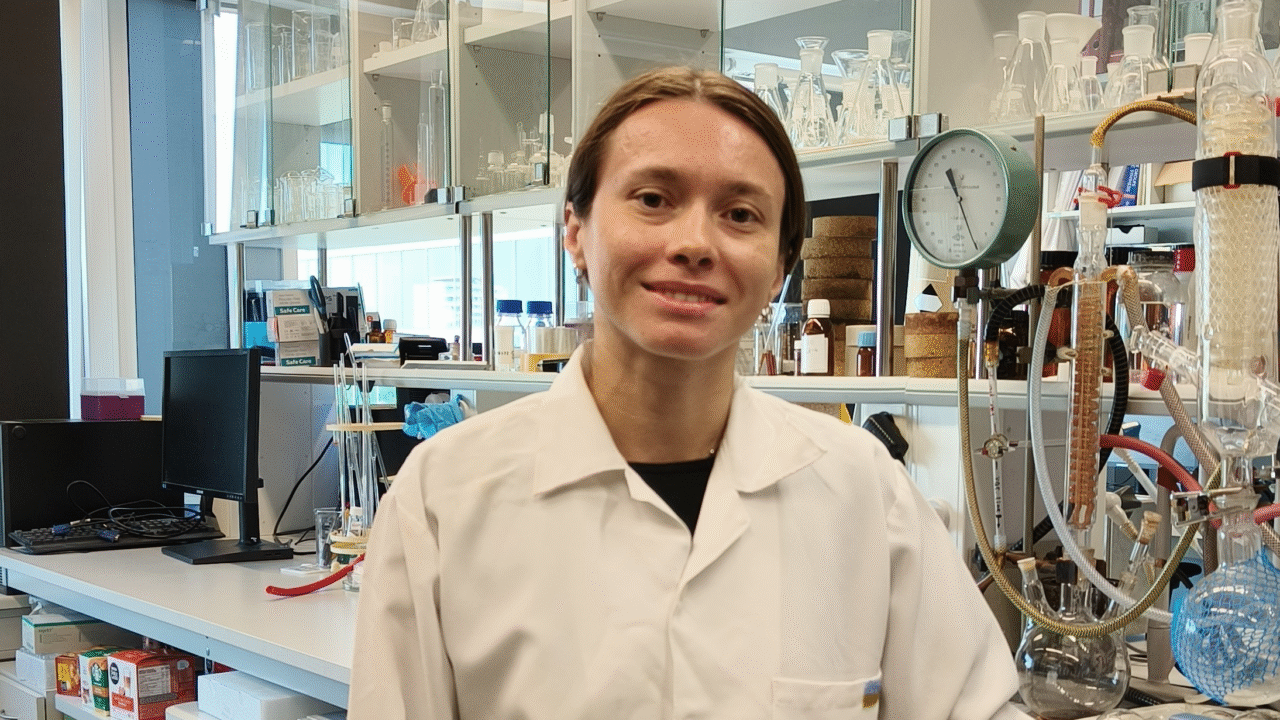
Marie Curie postdoctoral fellow Albina Mikhraliieva is developing a project in TalTech’s Sustainable Chemistry and Engineering research group, aiming to create carbon dots from both wood-based biomass and Estonian peat. Photo: TalTech

Marie Curie postdoctoral fellow Albina Mikhraliieva is developing a project in TalTech’s Sustainable Chemistry and Engineering research group, aiming to create carbon dots from both wood-based biomass and Estonian peat. Photo: TalTech

Surprising properties with real-world potential

The experimental results revealed several unexpected strengths. Biopolymer samples based on peat showed potential to act as thermoplastic components and by adjusting the recipe, their behavior could be tuned. Meanwhile, some of the carbon nanomaterials displayed strong UV- absorbing  abilities while remaining almost transparent – a rare and appealing combination. That opens the door to cosmetic applications such as protective films or skin-care additives that shield users from UV radiation.

The same optical properties could be used in packaging materials that help food last longer without sacrificing visibility.

These breakthroughs are emerging at exactly the right time. The horticultural peat market is competitive and not all peat types are equally valued. Economically, the difference between selling a bag of substrate and producing a gram of advanced nanomaterial is enormous. „Additionally, environmentally, peat-based materials that store carbon for long periods could contribute to Estonia’s climate goals while giving new purpose to so far more neglected decomposed peat and leftover resources in abandoned Soviet-era peatlands,“ Amon explained.

„Additionally, environmentally, peat-based materials that store carbon for long periods could contribute to Estonia’s climate goals while giving new purpose to so far more neglected decomposed peat and leftover resources in abandoned Soviet-era peatlands.”

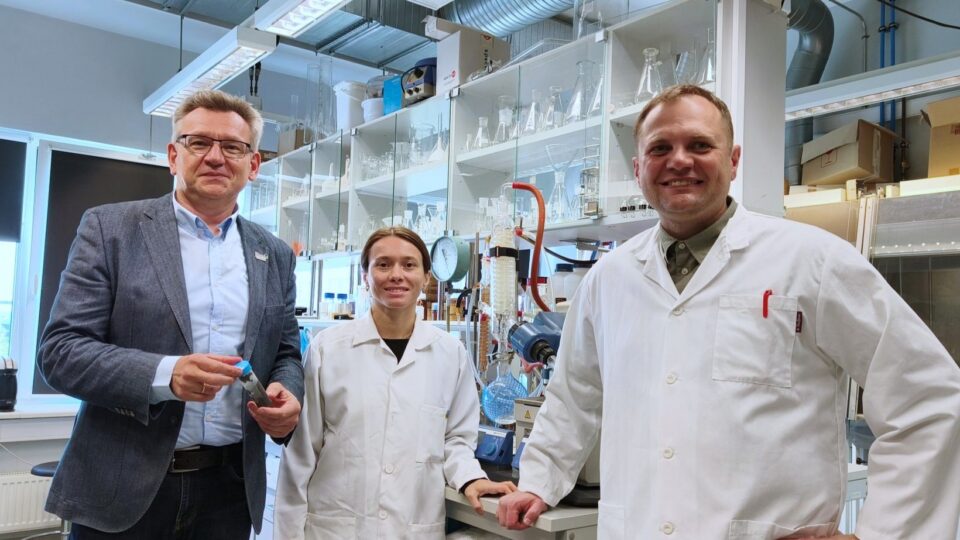
According to Leeli Amon, the new approach would help unlock value from both decomposed peat and the unused Soviet-era peat fields. Photo: TalTech

According to Leeli Amon, the new approach would help unlock value from both decomposed peat and the unused Soviet-era peat fields. Photo: TalTech

Toward scaling and new research directions

To move from laboratory success to real-world application, future collaboration with companies will be essential. According to Amon research can demonstrate feasibility, but wider implementation requires pilot facilities and larger-scale testing environments. The groundwork is already being laid for a follow-up project that aims to take the research further.

Scientists said that additional research could lead to new discoveries nobody anticipates yet as nanomaterials are highly tunable, even small adjustments can lead to entirely new behaviors. Unexpected properties could emerge simply by experimenting with different combinations, opening the way to innovations that go far beyond the initial goals.

For Mikhraliieva, the broader value of the peat valorization research lies in transferring knowledge to society and industry. As she put it: „Without this knowledge companies can’t create the next step for producing something new. But when we can demonstrate that it is possible, it can generate new ideas and new products.”
Her words capture the heart of the project. What began as a scientific curiosity may soon reshape how Estonia understands, values and uses one of its most characteristic natural resources – proving that even the humblest material can spark high-tech innovation when examined through the right lens.

„Without this knowledge companies can’t create the next step for producing something new. But when we can demonstrate that it is possible, it can generate new ideas and new products.”