
Nothing is wasted: how Estonia’s startup ecosystem keeps on moving

04.03.2026
Nothing is wasted: how Estonia’s startup ecosystem keeps on moving. 04.03.2026. In his ETAG-funded research project, Harima studies resource recycling in entrepreneurial ecosystems: the ways resources already inside the system are reused, reshaped and redeployed instead of disappearing after a failure, an exit, or a crisis. For Harima, this isn’t a metaphor borrowed from sustainability talk. It’s a practical mechanism that helps an ecosystem stay resilient when external inflows slow down – and it may help explain why Estonia, despite its small size, has built an outsized reputation for entrepreneurship. Why ecosystems matter more than individual startups Harima notes that the concept of an entrepreneurial ecosystem entered academic discussion roughly 15 years ago. In simple terms, it describes the network of actors and dynamics that together help startups grow and succeed. Entrepreneurs sit in the centre, but they are surrounded by supporting players: venture capital, accelerators and incubators, universities, and public-sector actors that shape the environment for startups. The key is interaction. These actors cannot operate as separate “silos” if the ecosystem is to work. The ecosystem, as Harima defines it, is the shared environment created by their connections – a setting where startups can flourish because capital, competence, ideas and support structures are able to meet each other. In Harima’s current research, the focus shifts from building an ecosystem to maintaining it. “Resource recycling” is not about turning materials into new products, he stresses, but about reusing human capital, financial capital and experience inside the startup community. “Resources that are already present in an ecosystem don’t have an end life. They are recycled into new roles – someone might start as an entrepreneur and later become an investor, a mentor or a supporter of new startups,” Harima explains. Teams that built a product, learned a market and developed networks can move into new roles – joining other startups, founding new ones, or working in support organisations. Even investors learn: a failed venture can still generate insight and relationships that influence smarter decisions later. Successful exits can work in a similar way. Harima points out that entrepreneurs who sell their businesses rarely take the money and disappear. Often, they re-enter the ecosystem as investors, mentors, accelerator builders or community organisers. Resources do not reach an “end of life” – they change form. This recycling becomes especially important during external shocks. If an economic downturn or geopolitical uncertainty reduces new inflows – capital, people, opportunities – then the ecosystem’s survival depends on whether it can keep reusing what it already has. “Resources that are already present in an ecosystem don’t have an end life. They are recycled into new roles – someone might start as an entrepreneur and later become an investor, a mentor or a supporter of new startups.”   The strength  and limits  of a small ecosystem Harima argues that Estonia’s size is not a disadvantage here – it can be a structural strength. „Estonia as a country  is small, but the ecosystem is large and successul, yet at the same time it feels like a community. People know each other, trust each other, and feel that their work is not finished yet.” He adds that ecosystems are rarely one single circle. They often consist of smaller nested communities within the larger startup landscape. Defence tech as a rather young community is one example he highlights: actors in this space – founders, investors, supporters – meet each other regularly, share context, and operate as a tight network. At the same time, Harima flags one major risk to recycling: resource outflow. If startups scale in Estonia but then relocate after raising large foreign rounds – moving operations to hubs like London – resources can leak out instead of looping back in. For a small country that relies on international capital, this is a structural tension: external money is necessary, but it can also pull companies away. Failure as a source of strength Despite these risks, Harima believes Estonia is in a strong position internationally, especially in Europe. He links this to the ecosystem’s history of unicorn-scale success: unicorns concentrate both financial capital and human capital. People who have experienced fast growth inside a unicorn carry rare skills and lessons that can be recycled across the ecosystem. He also highlights Estonia’s comparatively healthy relationship with failure. In some countries, he notes, a failed startup can stigmatise a founder (he contrasts this with his experience of Germany’s more conservative business culture).“In a weak ecosystem, failure can destroy resources. In a strong ecosystem, failure redistributes them.” Looking ahead, Harima points to three forces shaping Estonia’s startup ecosystem: the rapid and unpredictable development of AI, which could fundamentally change both innovation and human capital; the strong rise of defence tech, fuelled by geopolitical pressures and a shift in entrepreneurial focus; and the continued growth of deep tech and AI-driven startups, increasingly supported by public-sector initiatives. Asked to name Estonia’s next unicorn, Harima refuses to speculate – not because he doubts the potential, but because there is too much it. He notes that defence tech in particular shows strong momentum, yet faces unique challenges: long sales cycles, dependence on a limited set of state customers, and complex procurement processes. In Harima’s view, the goal is not to predict the next winner, but to understand why some ecosystems endure. “Ecosystems become sustainable through recycling. They don’t become sustainable by minimising failure, but by maximising what gets reused after failure occurs.” “Ecosystems become sustainable through recycling. They don’t become sustainable by minimising failure, but by maximising what gets reused after failure occurs.”
Jan Harima’s research focuses on resource circulation in entrepreneurial ecosystems – that is, how resources within the system are reused after a startup either succeeds or fails, or when the market is hit by a crisis. Photo: Pexels.

Jan Harima’s research focuses on resource circulation in entrepreneurial ecosystems – that is, how resources within the system are reused after a startup either succeeds or fails, or when the market is hit by a crisis. Photo: Pexels.

Estonia’s startup scene is often described through success stories: big exits, fast-scaling teams, and the hunt for the next unicorn. But the researcher at TalTech Department of Business Administration Entrepreneurship and International Business Unit Jan Harima suggests a different lens – one that focuses less on single wins and more on what happens to people, money and know-how over time.

In his ETAG-funded research project, Harima studies resource recycling in entrepreneurial ecosystems: the ways resources already inside the system are reused, reshaped and redeployed instead of disappearing after a failure, an exit, or a crisis.

For Harima, this isn’t a metaphor borrowed from sustainability talk. It’s a practical mechanism that helps an ecosystem stay resilient when external inflows slow down – and it may help explain why Estonia, despite its small size, has built an outsized reputation for entrepreneurship.

Why ecosystems matter more than individual startups

Harima notes that the concept of an entrepreneurial ecosystem entered academic discussion roughly 15 years ago. In simple terms, it describes the network of actors and dynamics that together help startups grow and succeed. Entrepreneurs sit in the centre, but they are surrounded by supporting players: venture capital, accelerators and incubators, universities, and public-sector actors that shape the environment for startups.

The key is interaction. These actors cannot operate as separate “silos” if the ecosystem is to work. The ecosystem, as Harima defines it, is the shared environment created by their connections – a setting where startups can flourish because capital, competence, ideas and support structures are able to meet each other.

In Harima’s current research, the focus shifts from building an ecosystem to maintaining it. “Resource recycling” is not about turning materials into new products, he stresses, but about reusing human capital, financial capital and experience inside the startup community.

“Resources that are already present in an ecosystem don’t have an end life. They are recycled into new roles – someone might start as an entrepreneur and later become an investor, a mentor or a supporter of new startups,” Harima explains.

Teams that built a product, learned a market and developed networks can move into new roles – joining other startups, founding new ones, or working in support organisations. Even investors learn: a failed venture can still generate insight and relationships that influence smarter decisions later.

Successful exits can work in a similar way. Harima points out that entrepreneurs who sell their businesses rarely take the money and disappear. Often, they re-enter the ecosystem as investors, mentors, accelerator builders or community organisers. Resources do not reach an “end of life” – they change form.

This recycling becomes especially important during external shocks. If an economic downturn or geopolitical uncertainty reduces new inflows – capital, people, opportunities – then the ecosystem’s survival depends on whether it can keep reusing what it already has.

“Resources that are already present in an ecosystem don’t have an end life. They are recycled into new roles – someone might start as an entrepreneur and later become an investor, a mentor or a supporter of new startups.”

 

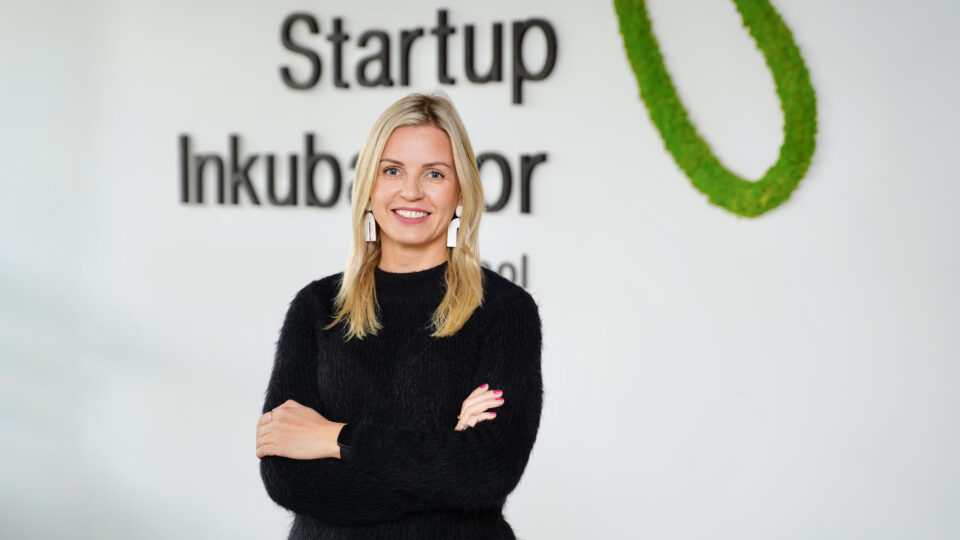
Harima’s current research shifts the focus from building an ecosystem to sustaining it. He conceptualises resource circulation as the reuse of human capital, money and experience within the startup ecosystem. Photo: private collection.

Harima’s current research shifts the focus from building an ecosystem to sustaining it. He conceptualises resource circulation as the reuse of human capital, money and experience within the startup ecosystem. Photo: private collection.

The strength  and limits  of a small ecosystem

Harima argues that Estonia’s size is not a disadvantage here – it can be a structural strength. „Estonia as a country  is small, but the ecosystem is large and successul, yet at the same time it feels like a community. People know each other, trust each other, and feel that their work is not finished yet.”

He adds that ecosystems are rarely one single circle. They often consist of smaller nested communities within the larger startup landscape. Defence tech as a rather young community is one example he highlights: actors in this space – founders, investors, supporters – meet each other regularly, share context, and operate as a tight network.

At the same time, Harima flags one major risk to recycling: resource outflow. If startups scale in Estonia but then relocate after raising large foreign rounds – moving operations to hubs like London – resources can leak out instead of looping back in. For a small country that relies on international capital, this is a structural tension: external money is necessary, but it can also pull companies away.

Failure as a source of strength

Despite these risks, Harima believes Estonia is in a strong position internationally, especially in Europe. He links this to the ecosystem’s history of unicorn-scale success: unicorns concentrate both financial capital and human capital. People who have experienced fast growth inside a unicorn carry rare skills and lessons that can be recycled across the ecosystem.

He also highlights Estonia’s comparatively healthy relationship with failure. In some countries, he notes, a failed startup can stigmatise a founder (he contrasts this with his experience of Germany’s more conservative business culture).“In a weak ecosystem, failure can destroy resources. In a strong ecosystem, failure redistributes them.”

Looking ahead, Harima points to three forces shaping Estonia’s startup ecosystem: the rapid and unpredictable development of AI, which could fundamentally change both innovation and human capital; the strong rise of defence tech, fuelled by geopolitical pressures and a shift in entrepreneurial focus; and the continued growth of deep tech and AI-driven startups, increasingly supported by public-sector initiatives.

Asked to name Estonia’s next unicorn, Harima refuses to speculate – not because he doubts the potential, but because there is too much it. He notes that defence tech in particular shows strong momentum, yet faces unique challenges: long sales cycles, dependence on a limited set of state customers, and complex procurement processes.

In Harima’s view, the goal is not to predict the next winner, but to understand why some ecosystems endure. “Ecosystems become sustainable through recycling. They don’t become sustainable by minimising failure, but by maximising what gets reused after failure occurs.”

“Ecosystems become sustainable through recycling. They don’t become sustainable by minimising failure, but by maximising what gets reused after failure occurs.”