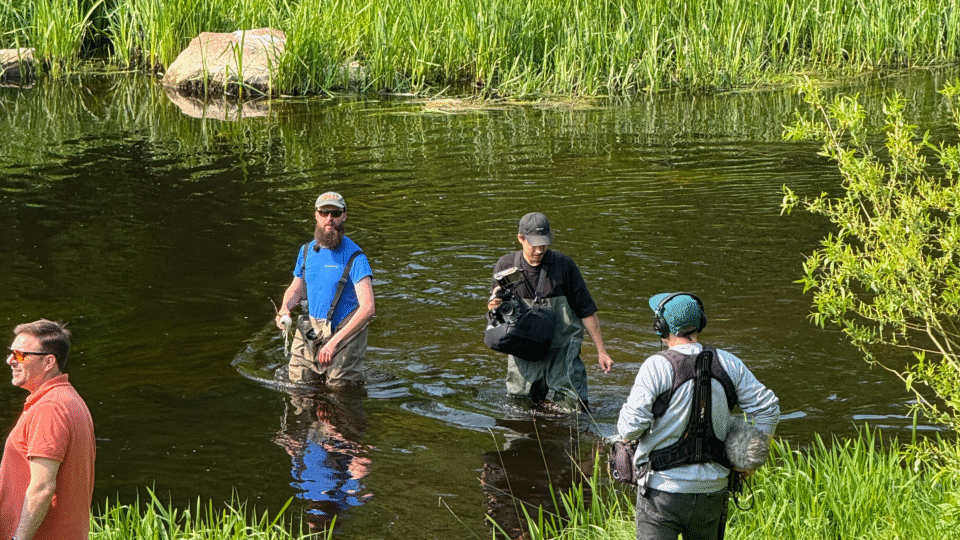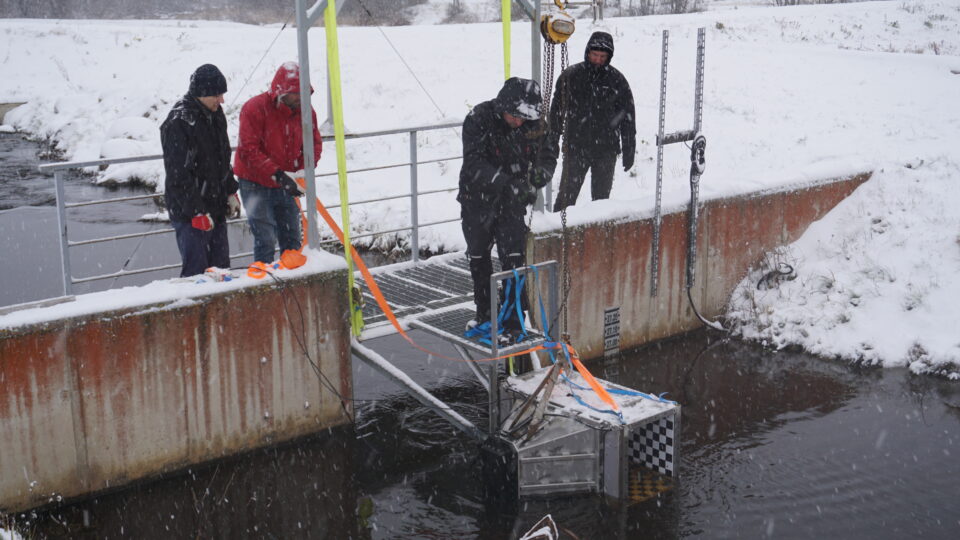
Christian Haas, one of the founders of I AM HYDRO, said the company had been monitoring fish using video for years, but suitable equipment had been difficult to find on the market. Equipment installed at hydropower plants and fish passes had to operate continuously and reliably underwater. Analysing the recordings also needed further development: large volumes of footage were accumulating, and reviewing it took time.
A business partnership that benefits everyone
The company decided to develop its own hardware and involve university researchers in the process. According to Haas, working with a university provides access to the latest AI research and scientific expertise, enabling thorough development of analytical methods. A company the size of I AM HYDRO would find it difficult to build and maintain that research capacity in-house. “A conventional supplier would sell us a finished product. With TalTech, we develop the technology together, which allows us to shape it around the actual requirements of fieldwork,” Haas explained.
The decision was also supported by the long-standing collaboration between Haas and Jeffrey Andre Tuhtan, a professor at TalTech’s Department of Computer Systems. They met at the University of Stuttgart and have known each other for more than 15 years. Collaboration with TalTech began before the current AI projects: in 2016, they started jointly developing the underwater HydroCam camera system for fish monitoring. The first prototype was completed in 2017, and the cameras entered service a year later. The technology developed at TalTech was licensed to I AM HYDRO, which began manufacturing, installing and marketing the systems.
According to Haas, the partnership enables the company to contribute equipment for continuous underwater operation, data collected at monitoring sites, and knowledge of the needs of customers and public authorities. TalTech’s researchers develop methods to analyse those data reliably, allowing operating conditions and user needs to be taken into account from the outset.
Tuhtan believes this division of responsibilities helps commercialise research results without setting up a separate spin-off. The university can focus on research and development, while the company concentrates on customers and sales. “This form of collaboration is cheaper and faster, and makes bringing research to market less risky.”
“A conventional supplier would sell us a finished product. With TalTech, we develop the technology together, which allows us to shape it around the actual requirements of fieldwork.”
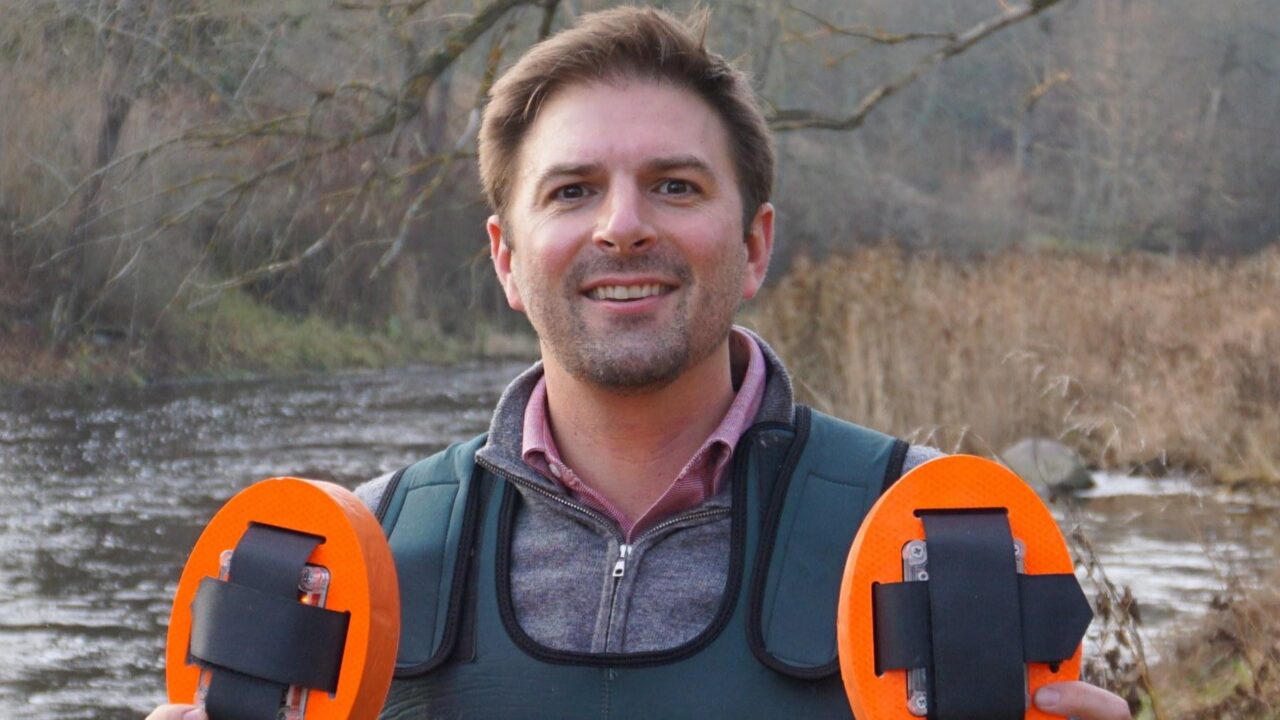
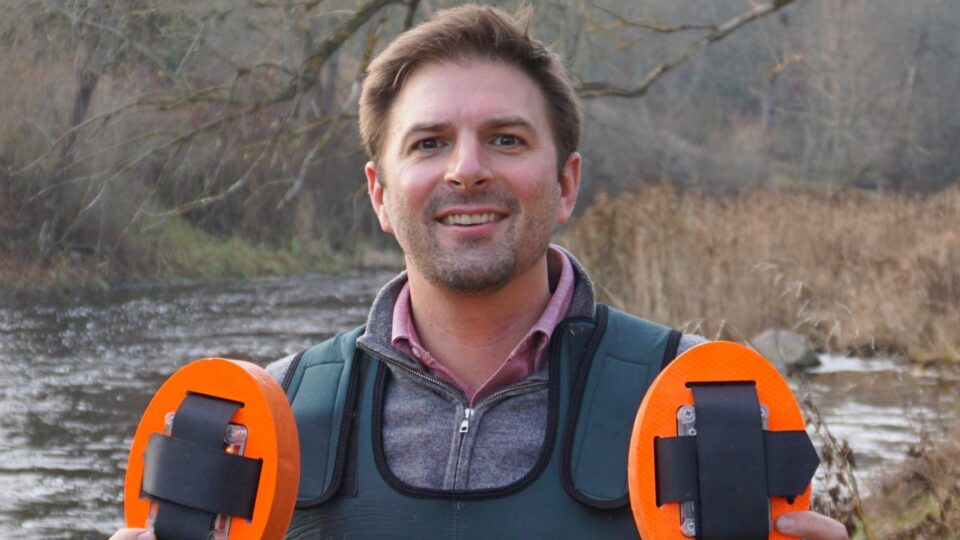
TalTech and I AM HYDRO have a clear division of responsibilities: the university focuses on research and development, while the company handles marketing, customers and sales. According to Tuhtan, this model helps bring research results to market without creating a separate spin-off. Photo: private collection
AI spots fish in the footage
Fish monitoring requires more than a camera recording what happens underwater. Fish must be located in the footage, their species identified, and the data needed by researchers, hydropower plant operators or public authorities compiled. As this is manual work, the result depends heavily on the experience of the person reviewing the recordings.
While HydroCam solved the challenge of collecting underwater footage, the next step was to analyse it automatically. Between 2021 and 2024, TalTech and I AM HYDRO jointly developed an application capable of automatically classifying fish videos. Their most recent project, developing an AI-based fish detection system, ended in June this year. The project gathered user feedback and improved methods for annotating fish in videos and using those examples to further train AI models.
Automatic detection offers the most immediate time saving: the software finds the segments containing fish in hours of recordings. Species identification helps turn that footage into usable data. According to Tuhtan, models that estimate fish size are also available.
Haas said that, at present, only one German federal institute uses the AI solution. The company’s hardware, however, is also used by hydropower plant operators and staff at research institutions and public authorities, whose interest in AI applications is growing.
More than 100 HydroCam cameras are currently in use across Europe, with around 20 more expected to enter service by the end of 2026.
Every river teaches AI something new
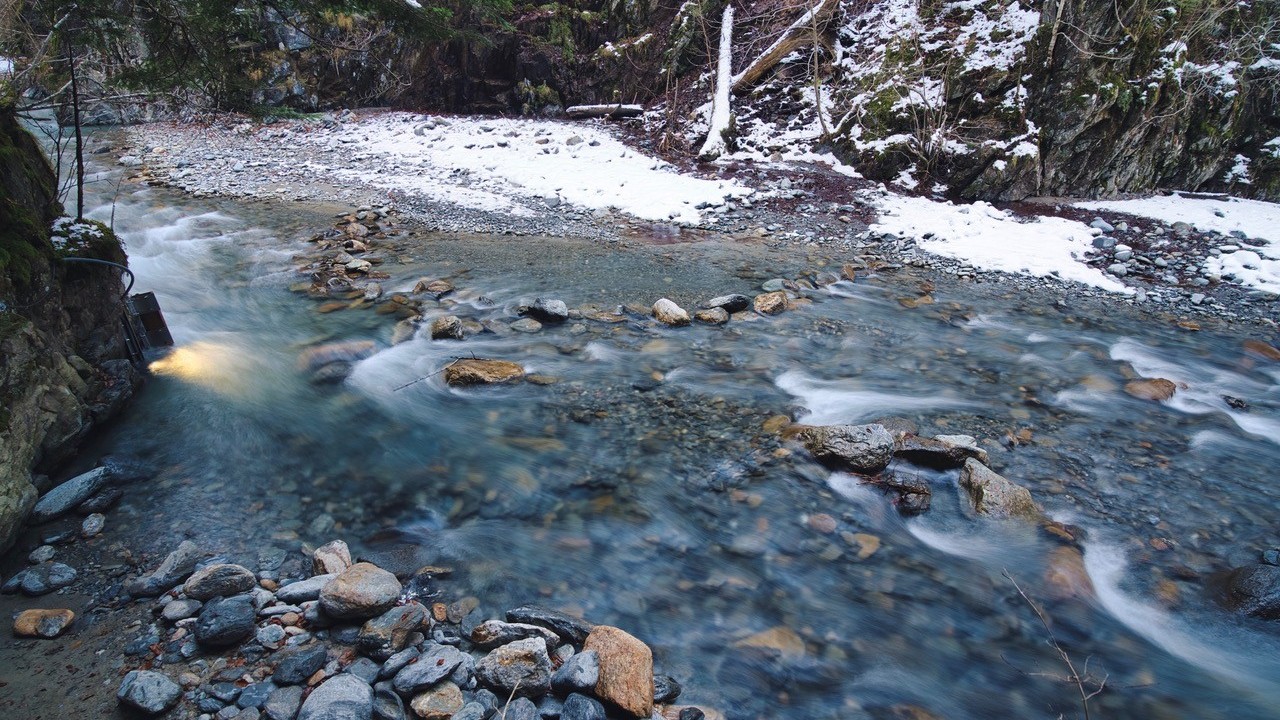
Both lighting and water conditions change underwater, and debris often appears in the frame. A model trained at one monitoring site therefore cannot necessarily be used in the same way elsewhere. “What works well at one monitoring site may produce much poorer results at another,” Tuhtan said.

For now, models still need considerable manual adaptation to each location. Tuhtan said the aim is to automate this work over the coming year. The developers have also filed a patent application covering approaches needed to automate these adjustments.
Users must also be able to modify the system themselves. I AM HYDRO’s customers can retrain the model for their own monitoring site, teaching it new fish species or other categories they need to distinguish. They do not have to contact the company for every change. “Everything runs on a local computer rather than in the cloud, so data handling can be fully transparent,” Haas said.
According to Haas, processing data on site and having a clear overview of how it moves are particularly important for hydropower plants and water supply facilities. The company can identify and develop new uses for these systems and applications.
“This form of collaboration is cheaper and faster, and makes bringing research to market less risky.”
Understanding fish behaviour
The researchers have also begun studying fish behaviour: observing which areas fish like to explore, which they avoid, and which they swim through quickly. “Fish are social animals. The reasons behind their behaviour are very complex, and studying them requires tens of thousands of observations because, unlike a laboratory, the natural environment is constantly changing,” Tuhtan said.
Such observations could help design dams and passages that allow fish to move more smoothly both upstream and downstream. This requires an understanding of the conditions that influence fish movement.
Haas said I AM HYDRO plans to continue developing automatic fish counting solutions with TalTech. The next aim is to use the existing AI applications to analyse images from sonar cameras, which use sound to create images of the underwater environment. The partners also plan to develop automatic eel counters.
According to Tuhtan, the longer-term goal is for the cameras themselves to carry out all the data analysis. Many AI models currently still run on servers. Although calculations can in principle be performed inside the camera, even the latest graphics processors used in outdoor environments lack sufficient processing power. “I believe that, with inventive engineering and hardware modifications, we can achieve practical results in this area too,” Tuhtan said.
Haas believes the collaboration has demonstrated just how much a working solution depends on combining the expertise of researchers and the company. “Neither side could have achieved this result alone,” he said.
“Neither side could have achieved this result alone.”