Trialoog editor
Estonia is well placed in e-health development and has a strong foundation for making better use of health data and technology. Paulin Jürjens, Head of HealthTech at Tehnopol, believes technology can help prevent disease, reduce healthcare professionals’ routine tasks and make care delivery smoother.
Before entering the health technology sector, Jürjens worked as a physiotherapist. It was in that role that he encountered a wider problem in healthcare: much of a specialist’s time can be spent on activities that do not directly concern the patient’s health.
The simplest example is documentation, which Jürjens says takes up a substantial share of healthcare professionals’ working time. Technology already helps reduce this burden, but the available opportunities could be used more widely. “The time freed up can help make working arrangements more efficient, improve access to services and create more opportunities for meaningful work with patients,” he observed.
Jürjens believes health technology can make communication between patients and healthcare professionals, as well as information exchange among healthcare professionals, simpler and more efficient.
As an example of solutions already in use, he highlighted GP practices’ digital communication channels, through which patients can describe their concerns and initial symptoms and, where necessary, add photographs. A doctor or nurse can deal with the enquiry at the first suitable opportunity, without the patient having to wait in a telephone queue for every question.
Technology can also help monitor a patient’s treatment plan or home exercises. Unfortunately, he noted, there is so much health information that patients do not always find it easy to know which sources to trust, where to turn with a concern or what to do next. He believes technology could help patients navigate the healthcare system more easily.
Digital development in healthcare requires choices
Estonia is often highlighted internationally as a digital state, and Jürjens says there is good reason for this in healthcare too. Our strengths include the nationwide Health Information System, e-prescriptions and the Health Portal, where people can view their health data and see who has accessed it. A good example of Estonian e-health working internationally is the cross-border e-prescription, which allows medicines prescribed in Estonia to be purchased, under certain conditions, in other participating European countries.
Jürjens considers people’s trust in the digital state one of Estonia’s major strengths. “Technological development rests on trust. For new solutions to become widely used in everyday healthcare, people need to trust both the technology and the digital state,” he said. Trust is maintained by clarity about how patient data is used, what a solution’s recommendations are based on and how its performance is assessed during use.
The development of new technological solutions also requires healthcare professionals to be willing to use them in their everyday work. Jürjens explained that, alongside digital skills, AI literacy is becoming increasingly important: healthcare professionals must be able to judge what a solution is suitable for, its limitations and when its output needs further checking. This requires training, time and support, as well as opportunities to have a say early in development.
Yet Estonia’s digital reputation should not be taken to mean that its healthcare is already fully digital. Jürjens offered a telling and somewhat surprising example: maternity records in Estonia are still kept on paper. In his view, this clearly illustrates the uneven pace of digital development in healthcare.
It has not been possible to develop every aspect at once, and ultimately everything comes down to priorities and funding. “More cases of cancer are diagnosed in Estonia each year than babies are born. Healthcare therefore inevitably has to decide which problems to address first.”
Jürjens believes health data could be used considerably better. Much valuable information may currently be available as free text or in files, making it difficult to analyse automatically later. “The higher the quality of the data and the better it is structured, the more we can use it to reach new conclusions, support treatment decisions and develop new technologies.”
“Technological development rests on trust. For new solutions to become widely used in everyday healthcare, people need to trust both the technology and the digital state.”

Jürjens believes health technology can make communication between patients and healthcare professionals, as well as information exchange among healthcare professionals, simpler and more efficient. Photo: Pexels
From treatment to prevention
Better use of data would make it possible to move from treating disease towards preventing it. Jürjens says one difficulty with prevention is that its results are hard to measure. When someone receives medical care, it is fairly easy to see which service was paid for. The benefits of preventive action, however, may only become apparent over a long period. “Our healthcare delivery model focuses on treating disease rather than preventing it or maintaining health,” he explained.
It is precisely in prevention that Jürjens sees great potential for technology. New solutions and existing data could help assess more accurately who is at greater risk of disease and who should be invited for further tests or screening. This does not necessarily mean more testing. On the contrary, better risk assessment could help target tests at those who need them most, sparing others unnecessary procedures. Such technologies are already being developed.
Artificial intelligence supports doctors’ work
Jürjens believes AI will increasingly support patient journeys, healthcare professionals’ work, clinical practice and systems. As screening and personalised medicine develop, AI’s ability to assess people’s disease risks and treatment needs using health data will also grow.
He believes technology adoption should start with a specific need: reaching a diagnosis faster, reducing time spent on documentation or supporting a patient’s recovery. It is then possible to assess which solution will help achieve the desired result and how it fits into healthcare professionals’ everyday work.
In his view, AI used in healthcare should focus on a clearly defined problem. The more specific a solution, the more precisely its applicability can be demonstrated. Healthcare is a highly regulated field, and this also applies to the use of AI.
He advises caution, however, with general-purpose chatbots that can be asked virtually anything. Someone seeking an answer to a health question may not know what the response is based on or whether the information is correct.
“Our healthcare delivery model focuses on treating disease rather than preventing it or maintaining health.”
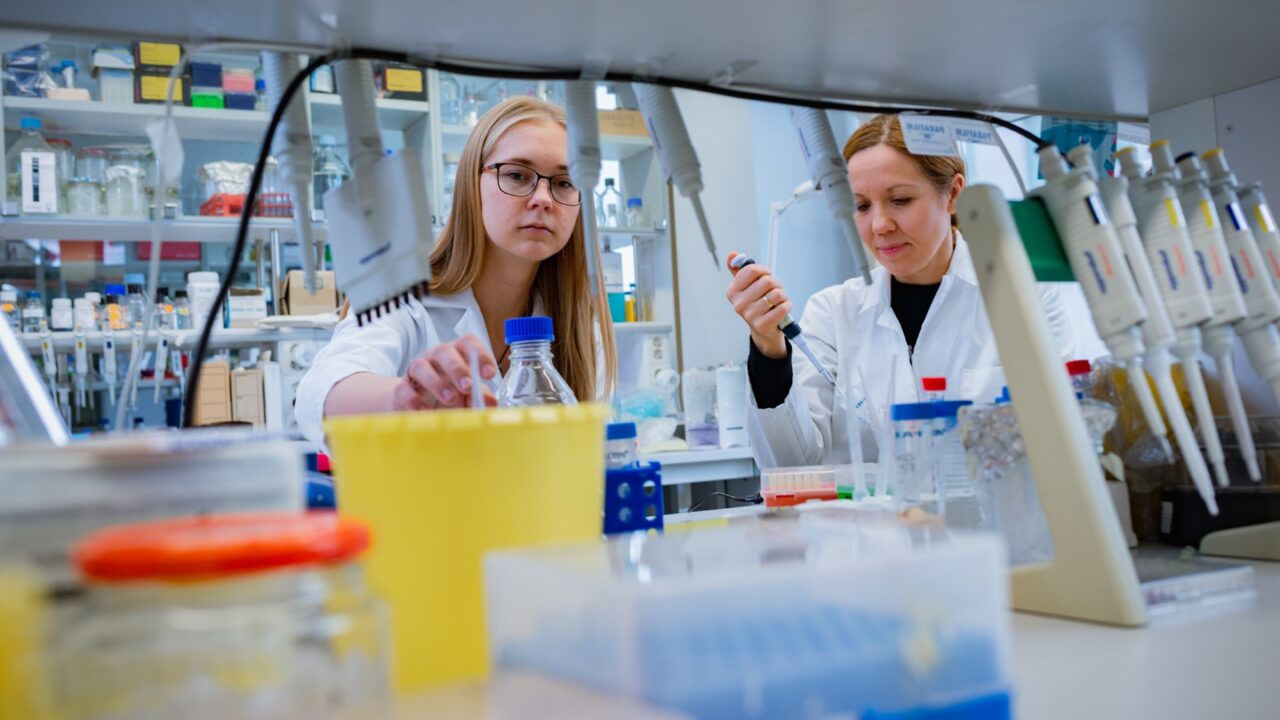
Paulin Jürjens says turning research findings into solutions used in healthcare requires cooperation between entrepreneurs, researchers and healthcare professionals. Photo: TalTech
A good business idea is not enough in health technology
Although Estonia’s start-up sector has achieved international success, Jürjens believes health technology companies face greater-than-average challenges in growing quickly into large, successful businesses. One of the main obstacles is the sector’s strict requirements: the safety and effectiveness of a medical device or another solution used in treatment must be demonstrated. Producing that evidence requires time, money and scientific work.
Cooperation between researchers and entrepreneurs therefore plays a particularly important role in health technology. Jürjens says their starting points often differ: researchers want to understand and explain a problem, while entrepreneurs want to develop a solution with users and a market. Both perspectives are needed to build a viable health technology company. “We have tremendous research potential that could be channelled much more extensively into business and health technology.”
Turning research findings into solutions used in healthcare requires cooperation between entrepreneurs, researchers and healthcare professionals. Jürjens explained that Tehnopol supports health technology companies on this journey and helps bring different stakeholders together so that scientific knowledge meets practical needs during development. The aim is to create solutions that help healthcare professionals make better use of their time and improve patients’ access to care.
“We have tremendous research potential that could be channelled much more extensively into business and health technology.”