Ain Kendra: Estonia’s road construction is held back by the system, not technology

20.10.2026
Ain Kendra: Estonia’s road construction is held back by the system, not technology. 20.10.2026. “Technology has advanced, but the sector as a whole has slowed down considerably over the past decade,” Kendra said, summing up the past ten years. One of the biggest changes has been digitalisation. Large projects increasingly use BIM, or building information modelling, which allows changes to a project to be reflected in drawings and other related data in a single operation. “But BIM is not universal either: for smaller tasks, there is no point using a cannon to shoot sparrows,” Kendra noted. Drones, too, have become increasingly common in construction. They can measure road layers and check the quantities of materials laid. Yet Kendra says current rules often still require conventional verification measurements as well, suggesting that regulations have not kept pace with technological development. Road construction machinery also increasingly works from a digital model. A bulldozer knows the height and gradient of the road’s subgrade, while a roller identifies areas and road layers with insufficient compaction as it works. This provides a picture of the whole rather than individual checkpoints. Although machinery is becoming smarter, Kendra believes uncertain funding is limiting progress in road construction. Road construction needs a longer-term plan Kendra explained that road maintenance was funded from fuel excise revenue until 2015. Since that link was removed, the volume of state-commissioned work has fluctuated sharply. A few years ago, asphalt production fell by as much as half. Some companies sold their equipment, and many people moved into other sectors. “The sector needs stability, not volumes that vary severalfold from year to year,” Kendra said. The planning horizon is also too short. A single road construction contract can last a year and a half or two years, while retaining equipment and staff requires an even longer-term plan. When workloads depend on annual budget decisions, companies struggle to invest and keep people employed. Meanwhile, Estonia will need to build and upgrade several roads belonging to Europe’s core road network in the coming years. Kendra believes it is no longer realistic to meet all the European Union’s requirements for the core roads of the trans-European transport network (TEN-T) by the originally planned deadline of 2030. The technical condition of Estonia’s main road surfaces is nevertheless generally good. “We have managed to keep the main roads in reasonably good condition, although there has not been enough money for municipal roads, which have been neglected,” Kendra said. “Technology has advanced, but the sector as a whole has slowed down considerably over the past decade.” A rigid framework One of Kendra’s sharpest criticisms concerns the public procurement and contracting system. He believes contractors are told in too much detail what to do and how to do it, leaving little room to choose the best way to achieve the desired result. This becomes a problem, for example, when construction reveals that the subgrade differs from what was assumed during design. In some cases, another technology would make sense, but the contract may not allow it. “We need flexibility in the construction process so that decisions about necessary changes can be made on site, provided the quality of the final result remains just as good,” Kendra said. Fear of procurement disputes adds to the rigidity. If a condition is changed after a contract has been signed, an unsuccessful bidder may argue that it would have submitted a different bid had it known. “In the end, it is the lawyer who wins, not the engineer,” Kendra said. A similar problem affects supervision on behalf of the client. Kendra says an experienced engineer should be present on site and authorised to make decisions when necessary. However, contracts awarded on the basis of the lowest price often mean one engineer divides their time between several sites, students are used on site instead, and the client does not trust the engineer and wants to decide every detail personally. Kendra sees alliance contracting as one possible approach: the client, designer and contractor form a joint team from the outset and can adjust solutions together when needed. Data is collected, but difficult to use Road construction generates ever more data, but Kendra believes it is often difficult to use. Previous geological investigation results, for example, may be available in the Transport Administration’s archive, yet designers have to work hard to find them. As a result, new investigations may be carried out at the same location even though the necessary information is already in the archives. “The Land and Spatial Development Board maintains digital engineering geology archives, but information on the Transport Administration’s projects cannot be found there. Road Register information is linked to road chainage, or distance measured in metres along the road. But when a new road section changes the road network, the chainage changes too, so we cannot automatically examine a historical time series,” Kendra explained. He believes better access to previous investigations would reduce duplication and give designers and researchers a clearer picture of which solutions have proved effective in practice. Better data also supports more informed choices during road design. This requires models that account for local materials, weather and traffic loads and help assess how a chosen solution might perform over decades. One of the most important ongoing development projects therefore examines the road life cycle over a much longer period than before. “We need flexibility in the construction process so that decisions about necessary changes can be made on site, provided the quality of the final result remains just as good.” A half-century perspective TalTech is currently developing a new pavement design solution for the Transport Administration that would assess road-related costs — life-cycle costs — over 50 years and take CO₂ emissions into account alongside construction costs. Researchers are examining whether a model used in Sweden and Norway could be adapted to Estonian conditions. The model accounts more precisely for the effects of temperature and moisture on material properties. Kendra says a foreign solution cannot simply be adopted unchanged. Estonia uses a great deal of crushed limestone and stabilised bases, which require separate studies. Traffic has changed too: heavy goods vehicle tyre pressures may exceed those assumed in calculation models, while lane-keeping systems make vehicles follow the same wheel paths more precisely. This can accelerate rutting. Alongside new calculation methods, Kendra believes new materials must be sought for building future roads. Gneiss excavated during construction of the Paldiski energy storage facility, for example, could provide aggregate suitable for road construction. TalTech has also studied slag aggregate produced as an industrial by-product, whose strength properties can exceed those of natural aggregate. Before wider adoption, however, new materials must be tested on real road sections as well as in laboratories. Kendra does not support banning studded tyres, although he believes their use in the Tallinn area could be reduced by at least half. A previous TalTech study found that roughly two-thirds of passenger cars in Tallinn used studded tyres in winter. “Less use of studs would reduce asphalt wear and allow the top layer of the road surface to be replaced less frequently.” Over the next decade, Kendra expects artificial intelligence to play an increasing role in assessing road condition. It is already possible to drive along a road section with cameras and let software identify cracks, potholes and other damage from the video footage. However, he sees a change in prevailing thinking as the sector’s greatest opportunity for progress. More flexible construction management and better use of collected data would help engineers make better-informed decisions and put new solutions into practice. “Less use of studs would reduce asphalt wear and allow the top layer of the road surface to be replaced less frequently.”
Ain Kendra says road construction technology in Estonia has advanced considerably over the past decade, but progress is hampered by unstable funding, rigid procurement and limited investment in research and development. Photo: Oleg Hartshenko

Ain Kendra says road construction technology in Estonia has advanced considerably over the past decade, but progress is hampered by unstable funding, rigid procurement and limited investment in research and development. Photo: Oleg Hartshenko

Technology in Estonia’s road construction sector has advanced rapidly over the past decade, but TalTech road and traffic expert Ain Kendra says unstable funding, rigid procurement and limited research and development funding are holding the sector back.

“Technology has advanced, but the sector as a whole has slowed down considerably over the past decade,” Kendra said, summing up the past ten years.

One of the biggest changes has been digitalisation. Large projects increasingly use BIM, or building information modelling, which allows changes to a project to be reflected in drawings and other related data in a single operation. “But BIM is not universal either: for smaller tasks, there is no point using a cannon to shoot sparrows,” Kendra noted.

Drones, too, have become increasingly common in construction. They can measure road layers and check the quantities of materials laid. Yet Kendra says current rules often still require conventional verification measurements as well, suggesting that regulations have not kept pace with technological development.

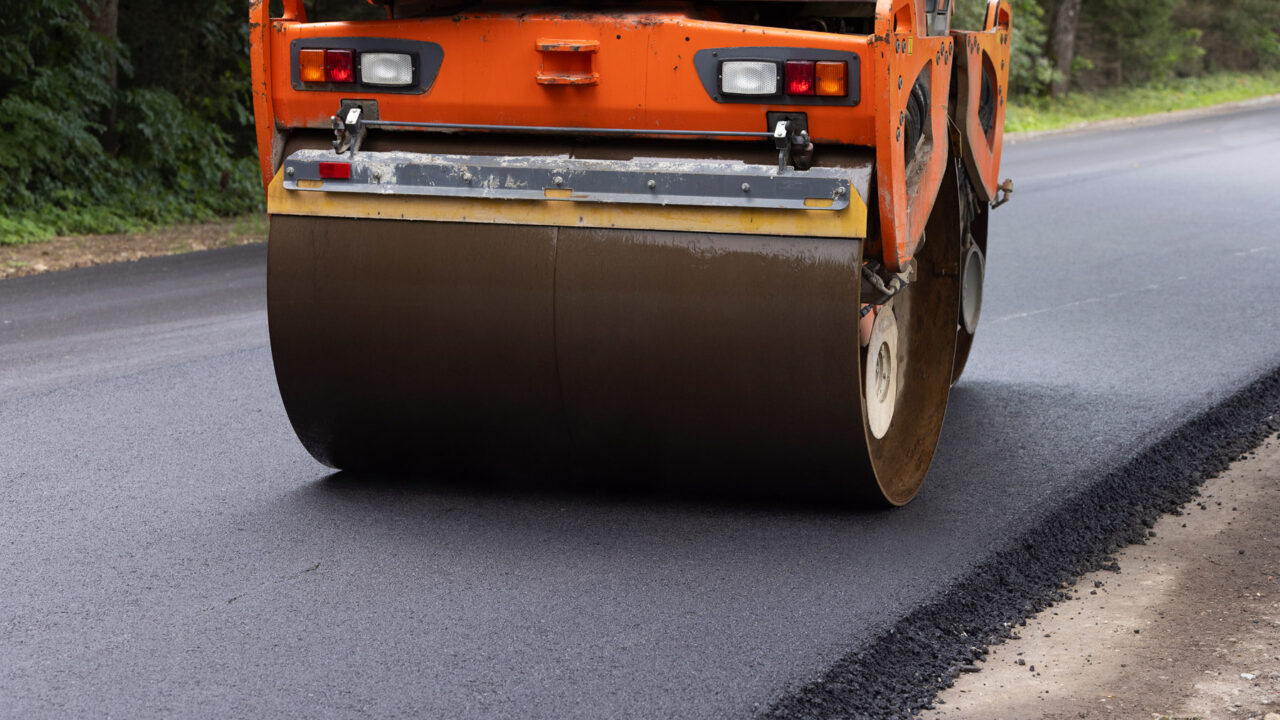
Road construction machinery also increasingly works from a digital model. A bulldozer knows the height and gradient of the road’s subgrade, while a roller identifies areas and road layers with insufficient compaction as it works. This provides a picture of the whole rather than individual checkpoints.

Although machinery is becoming smarter, Kendra believes uncertain funding is limiting progress in road construction.

Road construction needs a longer-term plan

Kendra explained that road maintenance was funded from fuel excise revenue until 2015. Since that link was removed, the volume of state-commissioned work has fluctuated sharply.

A few years ago, asphalt production fell by as much as half. Some companies sold their equipment, and many people moved into other sectors. “The sector needs stability, not volumes that vary severalfold from year to year,” Kendra said.

The planning horizon is also too short. A single road construction contract can last a year and a half or two years, while retaining equipment and staff requires an even longer-term plan. When workloads depend on annual budget decisions, companies struggle to invest and keep people employed.

Meanwhile, Estonia will need to build and upgrade several roads belonging to Europe’s core road network in the coming years. Kendra believes it is no longer realistic to meet all the European Union’s requirements for the core roads of the trans-European transport network (TEN-T) by the originally planned deadline of 2030.

The technical condition of Estonia’s main road surfaces is nevertheless generally good. “We have managed to keep the main roads in reasonably good condition, although there has not been enough money for municipal roads, which have been neglected,” Kendra said.

“Technology has advanced, but the sector as a whole has slowed down considerably over the past decade.”

Kendra believes road construction needs a long-term funding plan that would help companies retain skilled workers and invest in new equipment. Photo: TalTech

Kendra believes road construction needs a long-term funding plan that would help companies retain skilled workers and invest in new equipment. Photo: TalTech

A rigid framework

One of Kendra’s sharpest criticisms concerns the public procurement and contracting system. He believes contractors are told in too much detail what to do and how to do it, leaving little room to choose the best way to achieve the desired result.

This becomes a problem, for example, when construction reveals that the subgrade differs from what was assumed during design. In some cases, another technology would make sense, but the contract may not allow it. “We need flexibility in the construction process so that decisions about necessary changes can be made on site, provided the quality of the final result remains just as good,” Kendra said.

Fear of procurement disputes adds to the rigidity. If a condition is changed after a contract has been signed, an unsuccessful bidder may argue that it would have submitted a different bid had it known. “In the end, it is the lawyer who wins, not the engineer,” Kendra said.

A similar problem affects supervision on behalf of the client. Kendra says an experienced engineer should be present on site and authorised to make decisions when necessary. However, contracts awarded on the basis of the lowest price often mean one engineer divides their time between several sites, students are used on site instead, and the client does not trust the engineer and wants to decide every detail personally. Kendra sees alliance contracting as one possible approach: the client, designer and contractor form a joint team from the outset and can adjust solutions together when needed.

Data is collected, but difficult to use

Road construction generates ever more data, but Kendra believes it is often difficult to use. Previous geological investigation results, for example, may be available in the Transport Administration’s archive, yet designers have to work hard to find them.

As a result, new investigations may be carried out at the same location even though the necessary information is already in the archives. “The Land and Spatial Development Board maintains digital engineering geology archives, but information on the Transport Administration’s projects cannot be found there. Road Register information is linked to road chainage, or distance measured in metres along the road. But when a new road section changes the road network, the chainage changes too, so we cannot automatically examine a historical time series,” Kendra explained.

He believes better access to previous investigations would reduce duplication and give designers and researchers a clearer picture of which solutions have proved effective in practice.

Better data also supports more informed choices during road design. This requires models that account for local materials, weather and traffic loads and help assess how a chosen solution might perform over decades. One of the most important ongoing development projects therefore examines the road life cycle over a much longer period than before.

“We need flexibility in the construction process so that decisions about necessary changes can be made on site, provided the quality of the final result remains just as good.”
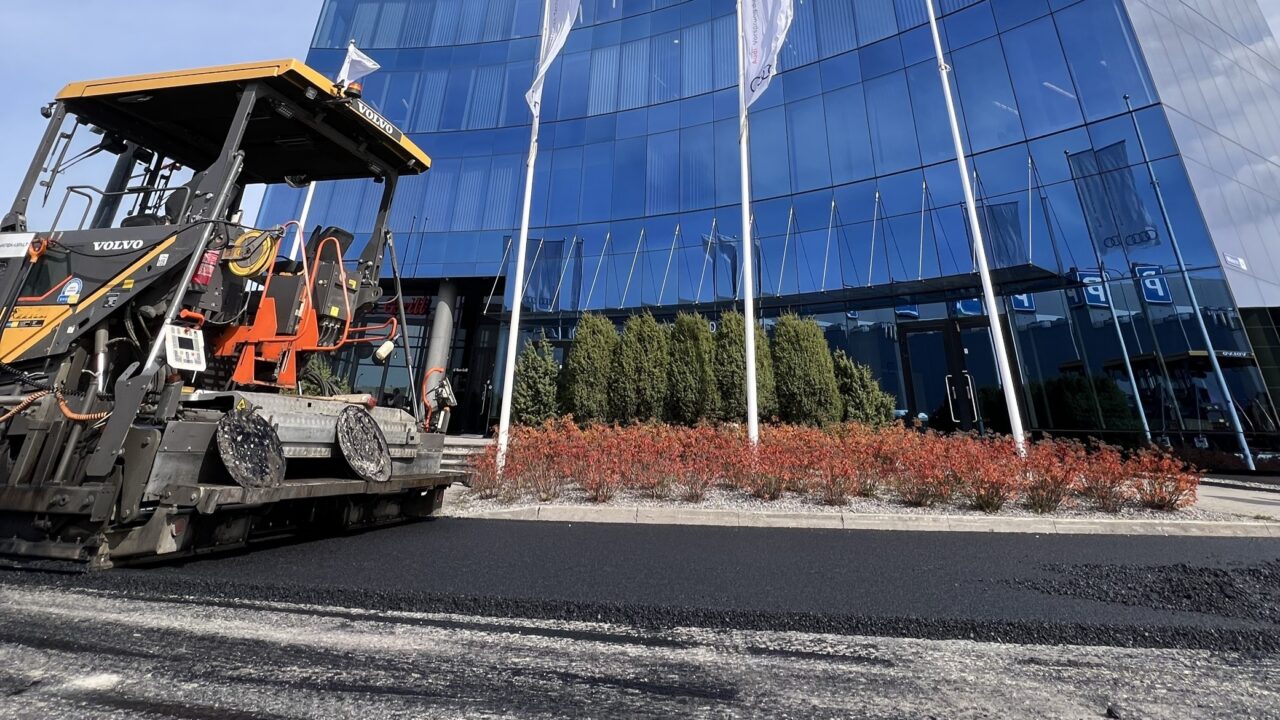
Kendra believes the future of road construction also depends on adopting new materials. The photograph shows Green SURF asphalt mix, developed by KMG, being laid in Rocca al Mare. Some of its bitumen has been replaced with lignin. Photo: KMG

Kendra believes the future of road construction also depends on adopting new materials. The photograph shows Green SURF asphalt mix, developed by KMG, being laid in Rocca al Mare. Some of its bitumen has been replaced with lignin. Photo: KMG

A half-century perspective

TalTech is currently developing a new pavement design solution for the Transport Administration that would assess road-related costs — life-cycle costs — over 50 years and take CO₂ emissions into account alongside construction costs. Researchers are examining whether a model used in Sweden and Norway could be adapted to Estonian conditions. The model accounts more precisely for the effects of temperature and moisture on material properties.

Kendra says a foreign solution cannot simply be adopted unchanged. Estonia uses a great deal of crushed limestone and stabilised bases, which require separate studies. Traffic has changed too: heavy goods vehicle tyre pressures may exceed those assumed in calculation models, while lane-keeping systems make vehicles follow the same wheel paths more precisely. This can accelerate rutting.

Alongside new calculation methods, Kendra believes new materials must be sought for building future roads. Gneiss excavated during construction of the Paldiski energy storage facility, for example, could provide aggregate suitable for road construction. TalTech has also studied slag aggregate produced as an industrial by-product, whose strength properties can exceed those of natural aggregate. Before wider adoption, however, new materials must be tested on real road sections as well as in laboratories.

Kendra does not support banning studded tyres, although he believes their use in the Tallinn area could be reduced by at least half. A previous TalTech study found that roughly two-thirds of passenger cars in Tallinn used studded tyres in winter. “Less use of studs would reduce asphalt wear and allow the top layer of the road surface to be replaced less frequently.”

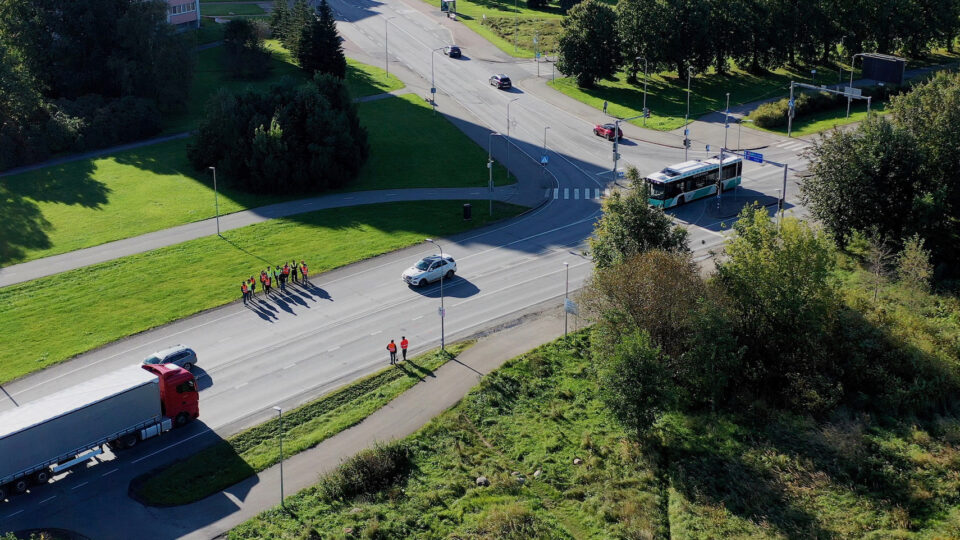
Over the next decade, Kendra expects artificial intelligence to play an increasing role in assessing road condition. It is already possible to drive along a road section with cameras and let software identify cracks, potholes and other damage from the video footage.

However, he sees a change in prevailing thinking as the sector’s greatest opportunity for progress. More flexible construction management and better use of collected data would help engineers make better-informed decisions and put new solutions into practice.

“Less use of studs would reduce asphalt wear and allow the top layer of the road surface to be replaced less frequently.”