Kaleem Arshid is teaching people and robots to work together

06.10.2026
Kaleem Arshid is teaching people and robots to work together. 06.10.2026. Kaleem Arshid, who has lived in Kohtla-Järve for the past few months, comes from a small village on the Pakistan–India border. An interest in computers, technology and their possibilities that began with computer classes as a boy has taken him beyond Pakistan to study and work in China, Italy and Spain. Over the years, his research has moved from wireless networks to drones and, eventually, collaboration between people and robots. From networks to drones “At first glance, my research career may seem to span very different fields, but for me they have always been connected by one question: how can intelligent systems communicate, make decisions and adapt to their environment?” Arshid says of his studies at universities around the world. “I started with wireless networks, where I was interested in how devices communicate, how limited resources can be managed intelligently and how systems can make better decisions in changing environments,” he explains. During his first doctorate, Arshid studied cognitive radio networks, spectrum sensing, resource management and optimisation, and related challenges in depth. “At that time, my main focus was intelligent machine-to-machine communication.” During doctoral studies in Italy and Spain, his research shifted from communication networks towards autonomous systems and drone swarms. “This was a very exciting transition for me because the ideas I had been studying became much more tangible. I was no longer thinking only about how machines communicate, but about how several flying robots can perceive their environment, communicate and coordinate their activities, plan their movements and make decisions independently,” Arshid says. Working with drone swarms eventually led him to another question: if autonomous systems can coordinate their activities with other machines, how can they collaborate with people? This interest in human–machine collaboration brought Arshid to Virumaa College, where he studies human–robot interaction in the context of Industry 5.0. “For me, this is not a completely different research direction, but a natural continuation. I have moved from machine-to-machine communication to coordinating autonomous machines, and now to collaboration between people and intelligent machines,” he explains. “I have moved from machine-to-machine communication to coordinating autonomous machines, and now to collaboration between people and intelligent machines.” Machines as collaborators rather than replacements Arshid is interested in more than simply making robots more autonomous. He wants to make them more intelligent, adaptable, safe and useful to people. “Imagine a future production environment where a person and a robot work side by side. The robot should not simply execute a pre-programmed sequence of actions. It should perceive what is happening around it, understand changes in the environment, recognise the person’s presence and activity, and adapt its behaviour accordingly. At the same time, the person should be able to understand and trust the robot’s actions.” Where discussions once centred on the immense potential of automation, connected systems, robotics and data-driven production, the aim is now to create systems in which humans and machines complement one another and work together, rather than replacing people in the process. “My current research therefore combines several fields I have worked in throughout my career: artificial intelligence, autonomous drones, robotics, sensor technology, optimisation, communication, digital twins and human-centred systems,” Arshid says. He is particularly interested in developing systems that can perceive their environment, make intelligent decisions, learn or adapt to changing conditions, and interact safely with people. “When a robot becomes an intelligent partner, we can give it tasks that would be dangerous or difficult for a person to perform alone,” he adds. “When a robot becomes an intelligent partner, we can give it tasks that would be dangerous or difficult for a person to perform alone.” Enjoying a quieter life in Virumaa These research interests brought Kaleem Arshid to Estonia and Virumaa College. “What attracted me most was Estonia’s reputation as a digital state and its strong technological environment,” he says of finding his way to Kohtla-Järve through LinkedIn. “I saw an opportunity to contribute to robotics, drones, AI and smart manufacturing while working with students and creating new research collaborations.” Estonia has welcomed him warmly, Arshid says, and people have been friendly and respectful. “Although I came from another country, I have never felt treated as an outsider. I have felt welcome and included, almost like a family member. That has been one of the most positive aspects of my experience in Estonia,” he says. Outside work, Arshid enjoys Ida-Virumaa’s slower pace of life. “When I first arrived in Virumaa, I immediately noticed how quiet it was compared with places where I had lived before,” he recalls. Having grown up in a fairly remote rural area himself, Arshid feels comfortable in places with more space and a stronger connection to nature. He especially values the countryside, clean air and proximity to nature. Although Ida-Virumaa is seen within Estonia as an industrial region, he finds it less polluted and more pleasant than his previous surroundings. “I enjoy walking and exploring the area. I have really come to appreciate the quiet lifestyle here,” he says. “In some ways, being surrounded by nature reminds me of where I grew up, although Estonia is of course very different from my home region in Pakistan.” “Although I came from another country, I have never felt treated as an outsider. I have felt welcome and included, almost like a family member.”
Marketing and Communications Specialist at TalTech Virumaa College
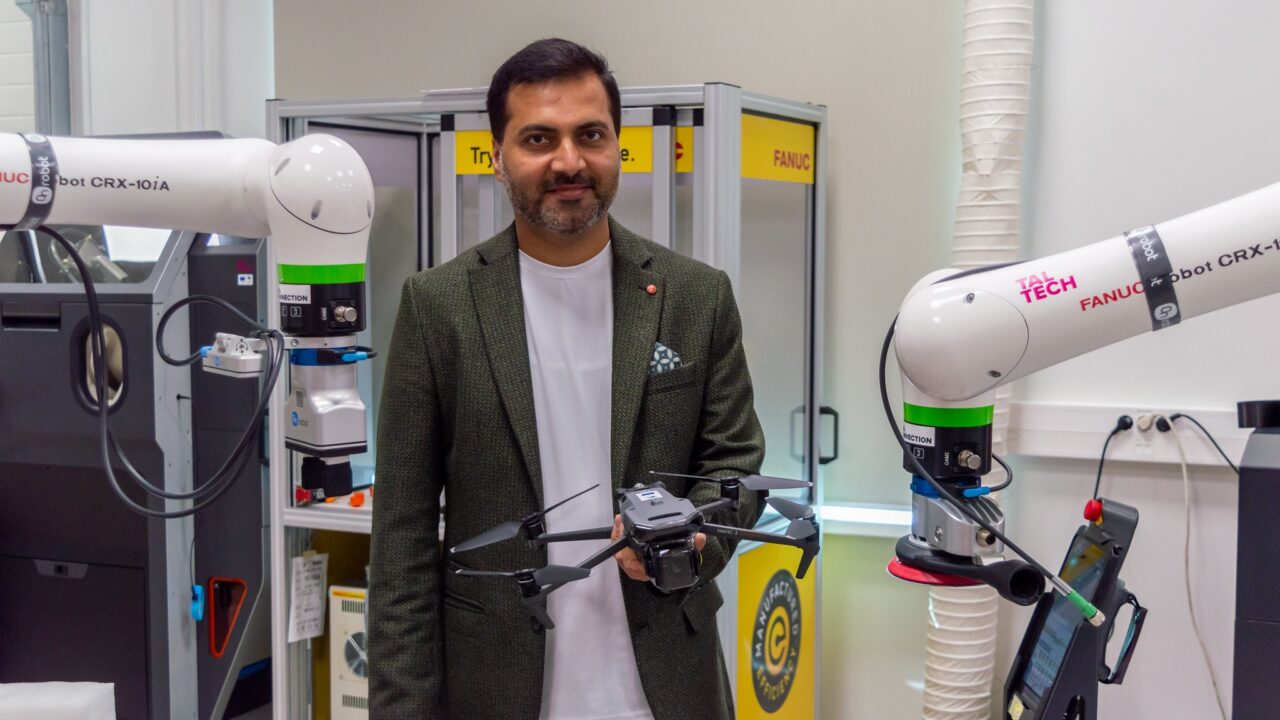
Kaleem Arshid researches human–robot collaboration and autonomous systems at TalTech Virumaa College. Photo: TalTech

Kaleem Arshid researches human–robot collaboration and autonomous systems at TalTech Virumaa College. Photo: TalTech

Pakistani researcher Kaleem Arshid has studied and worked in China, Italy and Spain. For the past few months, he has worked at TalTech’s Virumaa College, researching how people and intelligent machines can act as partners — with robots working alongside people rather than replacing them.

Kaleem Arshid, who has lived in Kohtla-Järve for the past few months, comes from a small village on the Pakistan–India border. An interest in computers, technology and their possibilities that began with computer classes as a boy has taken him beyond Pakistan to study and work in China, Italy and Spain. Over the years, his research has moved from wireless networks to drones and, eventually, collaboration between people and robots.

From networks to drones

“At first glance, my research career may seem to span very different fields, but for me they have always been connected by one question: how can intelligent systems communicate, make decisions and adapt to their environment?” Arshid says of his studies at universities around the world.

“I started with wireless networks, where I was interested in how devices communicate, how limited resources can be managed intelligently and how systems can make better decisions in changing environments,” he explains.

During his first doctorate, Arshid studied cognitive radio networks, spectrum sensing, resource management and optimisation, and related challenges in depth. “At that time, my main focus was intelligent machine-to-machine communication.”

During doctoral studies in Italy and Spain, his research shifted from communication networks towards autonomous systems and drone swarms.

“This was a very exciting transition for me because the ideas I had been studying became much more tangible. I was no longer thinking only about how machines communicate, but about how several flying robots can perceive their environment, communicate and coordinate their activities, plan their movements and make decisions independently,” Arshid says.

Working with drone swarms eventually led him to another question: if autonomous systems can coordinate their activities with other machines, how can they collaborate with people?

This interest in human–machine collaboration brought Arshid to Virumaa College, where he studies human–robot interaction in the context of Industry 5.0.

“For me, this is not a completely different research direction, but a natural continuation. I have moved from machine-to-machine communication to coordinating autonomous machines, and now to collaboration between people and intelligent machines,” he explains.

“I have moved from machine-to-machine communication to coordinating autonomous machines, and now to collaboration between people and intelligent machines.”

Testing robots at TalTech | Photo: TalTech

Testing robots at TalTech | Photo: TalTech

Machines as collaborators rather than replacements

Arshid is interested in more than simply making robots more autonomous. He wants to make them more intelligent, adaptable, safe and useful to people.

“Imagine a future production environment where a person and a robot work side by side. The robot should not simply execute a pre-programmed sequence of actions. It should perceive what is happening around it, understand changes in the environment, recognise the person’s presence and activity, and adapt its behaviour accordingly. At the same time, the person should be able to understand and trust the robot’s actions.”

Where discussions once centred on the immense potential of automation, connected systems, robotics and data-driven production, the aim is now to create systems in which humans and machines complement one another and work together, rather than replacing people in the process.

“My current research therefore combines several fields I have worked in throughout my career: artificial intelligence, autonomous drones, robotics, sensor technology, optimisation, communication, digital twins and human-centred systems,” Arshid says.

He is particularly interested in developing systems that can perceive their environment, make intelligent decisions, learn or adapt to changing conditions, and interact safely with people.

“When a robot becomes an intelligent partner, we can give it tasks that would be dangerous or difficult for a person to perform alone,” he adds.

“When a robot becomes an intelligent partner, we can give it tasks that would be dangerous or difficult for a person to perform alone.”
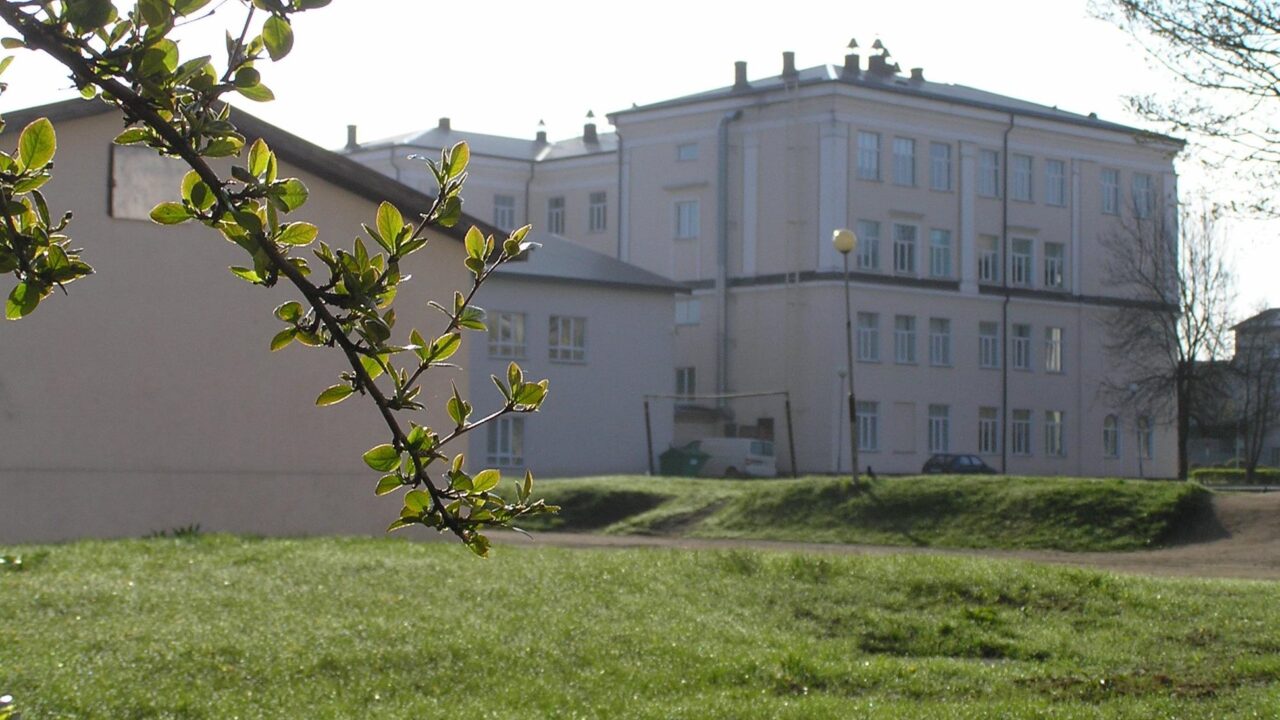
TalTech Virumaa College | Photo: TalTech

TalTech Virumaa College | Photo: TalTech

Enjoying a quieter life in Virumaa

These research interests brought Kaleem Arshid to Estonia and Virumaa College.

“What attracted me most was Estonia’s reputation as a digital state and its strong technological environment,” he says of finding his way to Kohtla-Järve through LinkedIn. “I saw an opportunity to contribute to robotics, drones, AI and smart manufacturing while working with students and creating new research collaborations.”

Estonia has welcomed him warmly, Arshid says, and people have been friendly and respectful.

“Although I came from another country, I have never felt treated as an outsider. I have felt welcome and included, almost like a family member. That has been one of the most positive aspects of my experience in Estonia,” he says.

Outside work, Arshid enjoys Ida-Virumaa’s slower pace of life.

“When I first arrived in Virumaa, I immediately noticed how quiet it was compared with places where I had lived before,” he recalls.

Having grown up in a fairly remote rural area himself, Arshid feels comfortable in places with more space and a stronger connection to nature. He especially values the countryside, clean air and proximity to nature. Although Ida-Virumaa is seen within Estonia as an industrial region, he finds it less polluted and more pleasant than his previous surroundings.

“I enjoy walking and exploring the area. I have really come to appreciate the quiet lifestyle here,” he says. “In some ways, being surrounded by nature reminds me of where I grew up, although Estonia is of course very different from my home region in Pakistan.”

“Although I came from another country, I have never felt treated as an outsider. I have felt welcome and included, almost like a family member.”