A digital doctor will monitor heart attack and stroke patients at home

08.10.2026
A digital doctor will monitor heart attack and stroke patients at home. 08.10.2026. Margus Viigimaa, Professor of Cardiovascular Medicine at TalTech and a cardiologist at the North Estonia Medical Centre, whose research group belongs to TalTech’s Centre of Excellence in Health and Food Technologies, says the problem is not a lack of effective medicines. Rather, patients do not always receive the necessary treatment in time or use it consistently. This is particularly true of cholesterol treatment. For someone who has had a heart attack or ischaemic stroke, the aim is to lower so-called bad cholesterol, or LDL cholesterol, to a very low level. European treatment guidelines recommend an LDL cholesterol level below 1.4 millimoles per litre for patients at very high cardiovascular risk. If another heart attack or stroke occurs despite treatment, the target may be below 1.0. “Lowering bad cholesterol has the greatest effect on preventing another heart attack and other complications,” Viigimaa says. In practice, however, only some patients reach the desired level. One reason, Viigimaa explains, is that many people already have high LDL cholesterol before becoming ill, and standard tablet treatment alone may not be sufficient. Another problem is adherence to treatment. After a heart attack, someone may be taking five or six medicines at once. They receive prescriptions on discharge, but their next detailed consultation may be several months away. “We often see patients visiting their family doctor only when the prescriptions they received from hospital are about to run out,” Viigimaa says. Researchers want the digital doctor to fill precisely this gap. “Lowering bad cholesterol has the greatest effect on preventing another heart attack and other complications.” A doctor who appears on screen every week The solution under development combines information entered by patients, smartwatch data and an AI-based virtual doctor. Patients receive an ordinary smartwatch that monitors activity, heart rate and sleep, among other measures. They tell the system whether they have taken their medication, report their blood pressure and weight, and indicate any side effects or other problems. A digital consultation takes place once a week. An on-screen avatar — currently planned to resemble Viigimaa himself — summarises the previous week and talks to the patient. If a patient has not measured their blood pressure, for example, the digital doctor reminds them. If they have missed medication, it asks why. Patients can also ask questions by speaking. Viigimaa says the system is being designed to be as simple as possible. “Our principle is that the effort required of patients must be minimal. The information they receive in return must be understandable and useful.” Users therefore need not be skilled computer users. Developers are working to enable much of the information to be communicated simply through speech. AI must not change treatment on its own The digital doctor is not intended to replace a real doctor. Viigimaa stresses that the system does not search the open internet for medical advice. Its knowledge and answers are restricted to European treatment guidelines and rules supplied by researchers. “We have put it on rails. It follows the tracks laid down by treatment guidelines,” Viigimaa explains. It may not, for example, independently change patients’ medication or recommend an alternative treatment found online. If a problem requires a change in treatment, the information reaches a study nurse or doctor. The system is also being taught to recognise situations requiring urgent human assistance. If a patient reports severe chest pain, for example, AI must direct them to urgent help rather than engage in a lengthy discussion of possible diagnoses. The system also includes alerts. If someone fails to enter data for several days, does not take medication or reports serious side effects, a study nurse can intervene. A relative may also be contacted if necessary. The researchers’ aim is to delegate as much routine monitoring as possible to AI, Viigimaa says. “The difficulty in medicine is that nowhere has enough doctors or nurses,” he says. “The digital doctor would give patients an assistant who is always there.” “The digital doctor would give patients an assistant who is always there.” The study will involve 200 patients The system is still being developed and tested. The first test patients are expected to use it before the end of the year, with the clinical trial scheduled to begin in January 2027. The researchers aim to recruit 200 people: one hundred who have had a heart attack and one hundred who have had a stroke. Half will use the digital doctor; the other half will receive usual care and form the control group. Both groups will be followed for six months. The main question is simple: do patients monitored by the digital doctor reach their target LDL cholesterol level more often, and do they adhere better to their treatment plans? Users will also be asked whether the system helped them feel more secure after returning home from hospital, whether there was enough communication and whether their questions received clear answers. Patients from both the North Estonia Medical Centre and West Tallinn Central Hospital will participate. The research group includes doctors, doctoral candidates, technology developers and students. Why cholesterol? Viigimaa says LDL cholesterol is one of the most important modifiable risk factors for heart attacks. High LDL levels encourage cholesterol deposits in blood vessel walls and the development of atherosclerosis. A narrowed vessel or blood clot can result in a heart attack or ischaemic stroke. Viigimaa also points out that dietary changes are beneficial but often insufficient when LDL cholesterol is very high. “Diet lowers bad cholesterol by around ten per cent on average,” he says. Much of the body’s cholesterol is produced in the liver, so high-risk patients often need medication. Alongside statins and other tablets, injectable medicines are now used that can lower LDL cholesterol substantially further. Treatment is especially important in the first months after a heart attack, when the risk of another cardiovascular complication is high, Viigimaa says. “Diet lowers bad cholesterol by around ten per cent on average.” In future, the digital doctor could also monitor diabetes and hypertension If the study shows the solution works, its use need not be limited to heart attacks and strokes. Viigimaa sees the greatest potential in monitoring chronic conditions. Hypertension, diabetes and high cholesterol all require people to take medication consistently, monitor their measurements and change their lifestyle where necessary. Doctors cannot speak to every patient every week. A digital assistant could fill this gap. “It does not replace the doctor,” Viigimaa stresses. “It provides information and collects information from the person between appointments.” In the longer term, a similar system could also help people who are not yet ill but want to change their diet, physical activity or other health habits. Viigimaa describes it as a health guide rather than a substitute for a doctor. If the Estonian clinical trial succeeds, the researchers intend to publish the findings internationally. Incorporating AI-based patient monitoring into European treatment guidelines would nevertheless require results from several rigorous randomised trials. Viigimaa believes the direction is clear. Recruiting more doctors and nurses is difficult, while patient numbers and the burden of chronic disease continue to grow. If AI can take over some simpler monitoring and recognise when a person truly needs a doctor, it could become a much more practical healthcare solution than a basic chatbot. “It does not replace the doctor. It provides information and collects information from the person between appointments.” The research is carried out within the TEM-TA105 “Digital Healthcare for a Healthy Society” project and the EstWell Centre of Excellence of Well-Being Sciences projects.
Editor-in-Chief of Trialoog
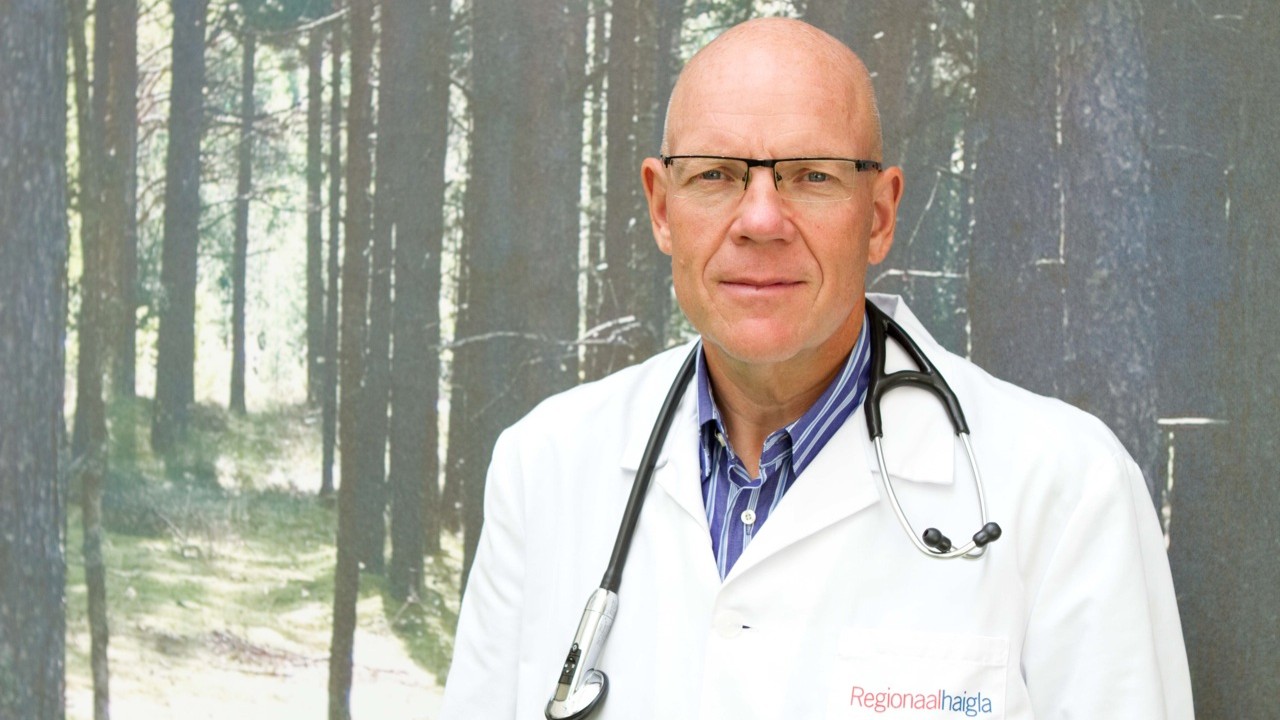
Margus Viigimaa, Professor of Cardiovascular Medicine at TalTech and cardiologist at the North Estonia Medical Centre. Private collection

Margus Viigimaa, Professor of Cardiovascular Medicine at TalTech and cardiologist at the North Estonia Medical Centre. Private collection

After a heart attack or stroke, patients are prescribed medication and sent home. What happens next depends largely on how well they follow their treatment plan and attend check-ups on time. TalTech researchers are now testing an AI-based digital doctor to monitor patients continuously at home, remind them to take medication and flag when a doctor or nurse is needed.

Margus Viigimaa, Professor of Cardiovascular Medicine at TalTech and a cardiologist at the North Estonia Medical Centre, whose research group belongs to TalTech’s Centre of Excellence in Health and Food Technologies, says the problem is not a lack of effective medicines. Rather, patients do not always receive the necessary treatment in time or use it consistently.

This is particularly true of cholesterol treatment.

For someone who has had a heart attack or ischaemic stroke, the aim is to lower so-called bad cholesterol, or LDL cholesterol, to a very low level. European treatment guidelines recommend an LDL cholesterol level below 1.4 millimoles per litre for patients at very high cardiovascular risk. If another heart attack or stroke occurs despite treatment, the target may be below 1.0.

“Lowering bad cholesterol has the greatest effect on preventing another heart attack and other complications,” Viigimaa says.

In practice, however, only some patients reach the desired level.

One reason, Viigimaa explains, is that many people already have high LDL cholesterol before becoming ill, and standard tablet treatment alone may not be sufficient. Another problem is adherence to treatment.

After a heart attack, someone may be taking five or six medicines at once. They receive prescriptions on discharge, but their next detailed consultation may be several months away.

“We often see patients visiting their family doctor only when the prescriptions they received from hospital are about to run out,” Viigimaa says.

Researchers want the digital doctor to fill precisely this gap.

“Lowering bad cholesterol has the greatest effect on preventing another heart attack and other complications.”

Three-dimensional model of a cholesterol molecule. Image: Ben Mills / Wikimedia Commons

Three-dimensional model of a cholesterol molecule. Image: Ben Mills / Wikimedia Commons

A doctor who appears on screen every week

The solution under development combines information entered by patients, smartwatch data and an AI-based virtual doctor.

Patients receive an ordinary smartwatch that monitors activity, heart rate and sleep, among other measures. They tell the system whether they have taken their medication, report their blood pressure and weight, and indicate any side effects or other problems.

A digital consultation takes place once a week.

An on-screen avatar — currently planned to resemble Viigimaa himself — summarises the previous week and talks to the patient.

If a patient has not measured their blood pressure, for example, the digital doctor reminds them. If they have missed medication, it asks why. Patients can also ask questions by speaking.

Viigimaa says the system is being designed to be as simple as possible.

“Our principle is that the effort required of patients must be minimal. The information they receive in return must be understandable and useful.”

Users therefore need not be skilled computer users. Developers are working to enable much of the information to be communicated simply through speech.

AI must not change treatment on its own

The digital doctor is not intended to replace a real doctor.

Viigimaa stresses that the system does not search the open internet for medical advice. Its knowledge and answers are restricted to European treatment guidelines and rules supplied by researchers.

“We have put it on rails. It follows the tracks laid down by treatment guidelines,” Viigimaa explains.

It may not, for example, independently change patients’ medication or recommend an alternative treatment found online.

If a problem requires a change in treatment, the information reaches a study nurse or doctor.

The system is also being taught to recognise situations requiring urgent human assistance. If a patient reports severe chest pain, for example, AI must direct them to urgent help rather than engage in a lengthy discussion of possible diagnoses.

The system also includes alerts. If someone fails to enter data for several days, does not take medication or reports serious side effects, a study nurse can intervene. A relative may also be contacted if necessary.

The researchers’ aim is to delegate as much routine monitoring as possible to AI, Viigimaa says.

“The difficulty in medicine is that nowhere has enough doctors or nurses,” he says. “The digital doctor would give patients an assistant who is always there.”

“The digital doctor would give patients an assistant who is always there.”
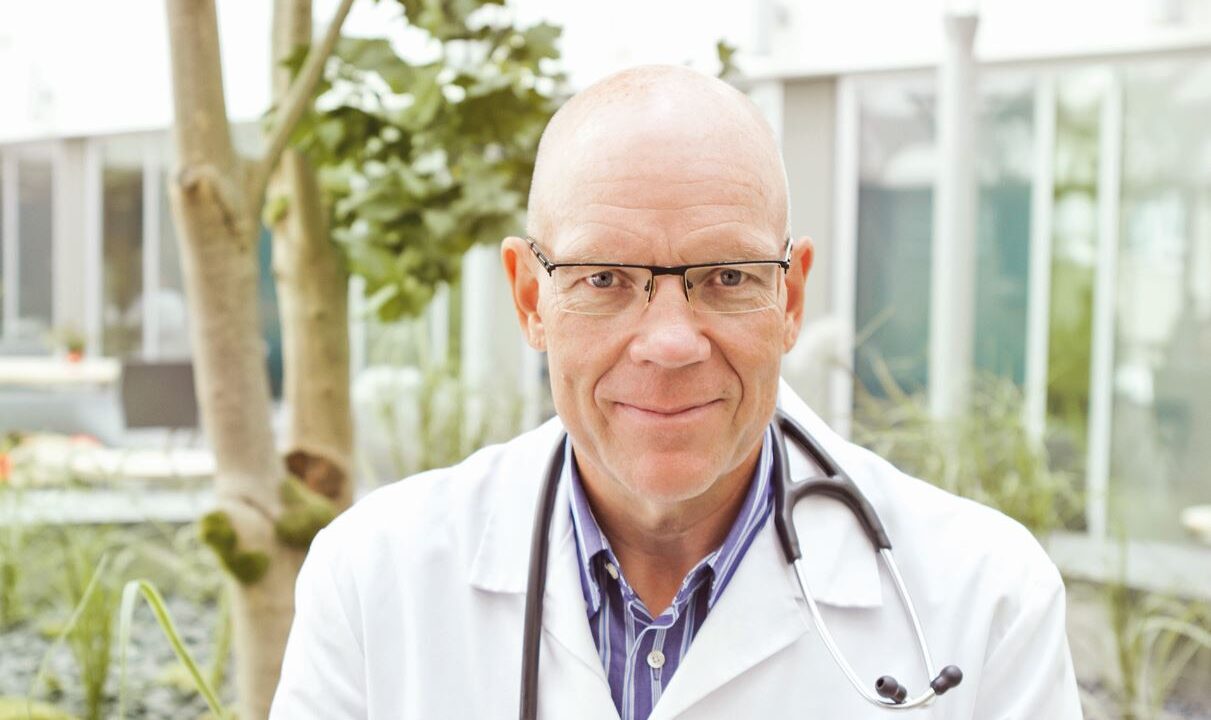
Margus Viigimaa says the digital doctor will not replace a real doctor, but will monitor patients between appointments and raise the alarm when necessary. Private collection

Margus Viigimaa says the digital doctor will not replace a real doctor, but will monitor patients between appointments and raise the alarm when necessary. Private collection

The study will involve 200 patients

The system is still being developed and tested. The first test patients are expected to use it before the end of the year, with the clinical trial scheduled to begin in January 2027.

The researchers aim to recruit 200 people: one hundred who have had a heart attack and one hundred who have had a stroke.

Half will use the digital doctor; the other half will receive usual care and form the control group.

Both groups will be followed for six months.

The main question is simple: do patients monitored by the digital doctor reach their target LDL cholesterol level more often, and do they adhere better to their treatment plans?

Users will also be asked whether the system helped them feel more secure after returning home from hospital, whether there was enough communication and whether their questions received clear answers.

Patients from both the North Estonia Medical Centre and West Tallinn Central Hospital will participate. The research group includes doctors, doctoral candidates, technology developers and students.

Why cholesterol?

Viigimaa says LDL cholesterol is one of the most important modifiable risk factors for heart attacks.

High LDL levels encourage cholesterol deposits in blood vessel walls and the development of atherosclerosis. A narrowed vessel or blood clot can result in a heart attack or ischaemic stroke.

Viigimaa also points out that dietary changes are beneficial but often insufficient when LDL cholesterol is very high.

“Diet lowers bad cholesterol by around ten per cent on average,” he says. Much of the body’s cholesterol is produced in the liver, so high-risk patients often need medication.

Alongside statins and other tablets, injectable medicines are now used that can lower LDL cholesterol substantially further.

Treatment is especially important in the first months after a heart attack, when the risk of another cardiovascular complication is high, Viigimaa says.

“Diet lowers bad cholesterol by around ten per cent on average.”

The North Estonia Medical Centre, whose patients will take part in the digital doctor’s clinical trial. Photo: North Estonia Medical Centre

The North Estonia Medical Centre, whose patients will take part in the digital doctor’s clinical trial. Photo: North Estonia Medical Centre

In future, the digital doctor could also monitor diabetes and hypertension

If the study shows the solution works, its use need not be limited to heart attacks and strokes.

Viigimaa sees the greatest potential in monitoring chronic conditions.

Hypertension, diabetes and high cholesterol all require people to take medication consistently, monitor their measurements and change their lifestyle where necessary. Doctors cannot speak to every patient every week.

A digital assistant could fill this gap.

“It does not replace the doctor,” Viigimaa stresses. “It provides information and collects information from the person between appointments.”

In the longer term, a similar system could also help people who are not yet ill but want to change their diet, physical activity or other health habits.

Viigimaa describes it as a health guide rather than a substitute for a doctor.

If the Estonian clinical trial succeeds, the researchers intend to publish the findings internationally. Incorporating AI-based patient monitoring into European treatment guidelines would nevertheless require results from several rigorous randomised trials.

Viigimaa believes the direction is clear.

Recruiting more doctors and nurses is difficult, while patient numbers and the burden of chronic disease continue to grow. If AI can take over some simpler monitoring and recognise when a person truly needs a doctor, it could become a much more practical healthcare solution than a basic chatbot.

“It does not replace the doctor. It provides information and collects information from the person between appointments.”

The research is carried out within the TEM-TA105 “Digital Healthcare for a Healthy Society” project and the EstWell Centre of Excellence of Well-Being Sciences projects.