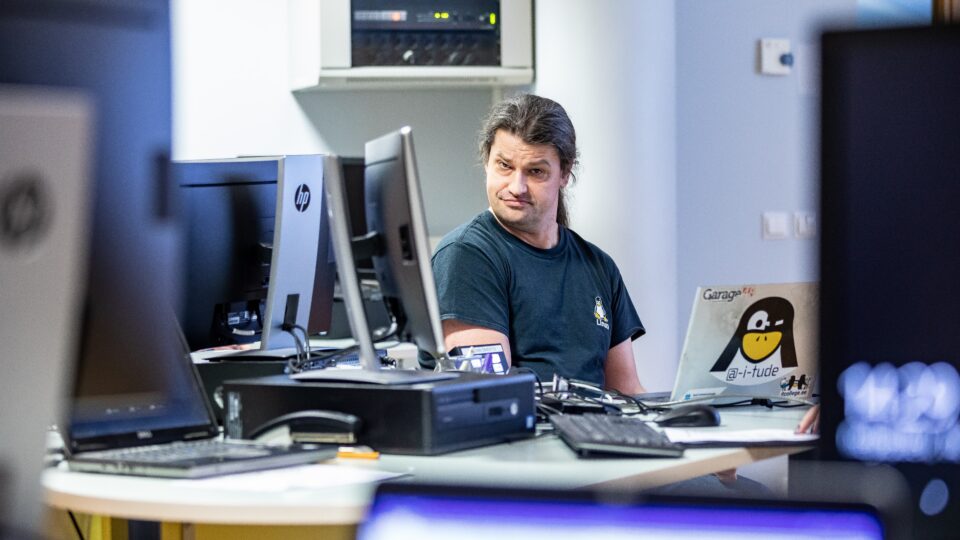

Electrical engineering expert, beekeeper
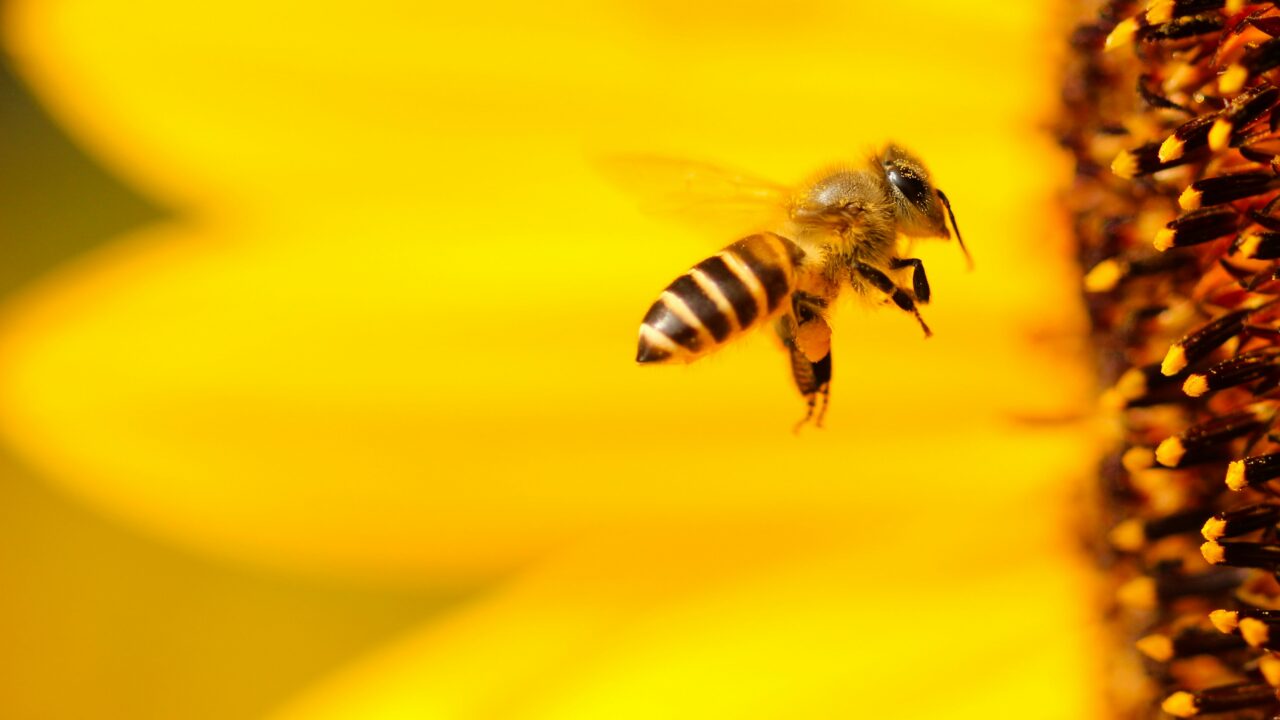
Electrical engineering expert and beekeeper Aleksander Kilk writes that bees play a far greater role than merely producing honey: they preserve biodiversity, support food security and offer people an example of intelligent cooperation. In his view, we ourselves could learn a good deal from a bee colony: how to act collectively, purposefully and in harmony with nature.
A century and a half ago, Carl Robert Jakobson, the Estonian writer, journalist and national awakening figure, wrote that Estonia’s rural people were as industrious as a hive of bees. I am certain he meant this of the whole people of Estonia. One hopes that this appreciative comparison still holds true today in describing all of us, including the TalTech community.
Bees have a remarkable and irreplaceable role to play in our environment and ecosystem. Alongside the so-called honeybees kept in domestic gardens, other bee-like insects – bumblebees and solitary bees – also play an important part. We often notice bees or bumblebees buzzing through the air and bustling among blossoms, but we encounter solitary bees rather rarely, even though several dozen species of them live in Estonia as well.
The bees kept in Estonia’s apiaries make up an enormous population. Around Midsummer, there are more than 50,000 hives, each containing 60,000 to 70,000 bees. Altogether, that amounts to more than 3 billion bees – roughly 2,500 honey-makers for every person in Estonia.
People have often drawn parallels between bees and human activity and emotion. From the poetic line “It flies from flower to flower…”, we can sense how we perceive nature’s calm, balanced and yet industrious rhythm. “It flies towards the beehive…” stirs in us thoughts and feelings that pull us towards home and homeland.
A miraculous elixir of the gods
It would be pleasant to imagine that bees flit from flower to flower simply for the joy of it, compelled by their sense of beauty and aesthetic delight. But the purpose of their flights is entirely practical: to stay alive, they must gather food.
When we say that bees collect honey from flowers, that is only half the truth. Bees gather sweet nectar from blossoms, add various enzymes and other bioactive substances from glands in their bodies, remove excess moisture, and then place the finished liquid into honeycomb cells. That is how honey is created and ripened – a “miraculous elixir of the gods”, as it was reportedly called in ancient Egypt.
Honey gives bees energy, but they also need nourishment, including protein, that helps their bodies develop and function at the cellular level. That is the second reason bees fly from flower to flower: they must gather pollen.
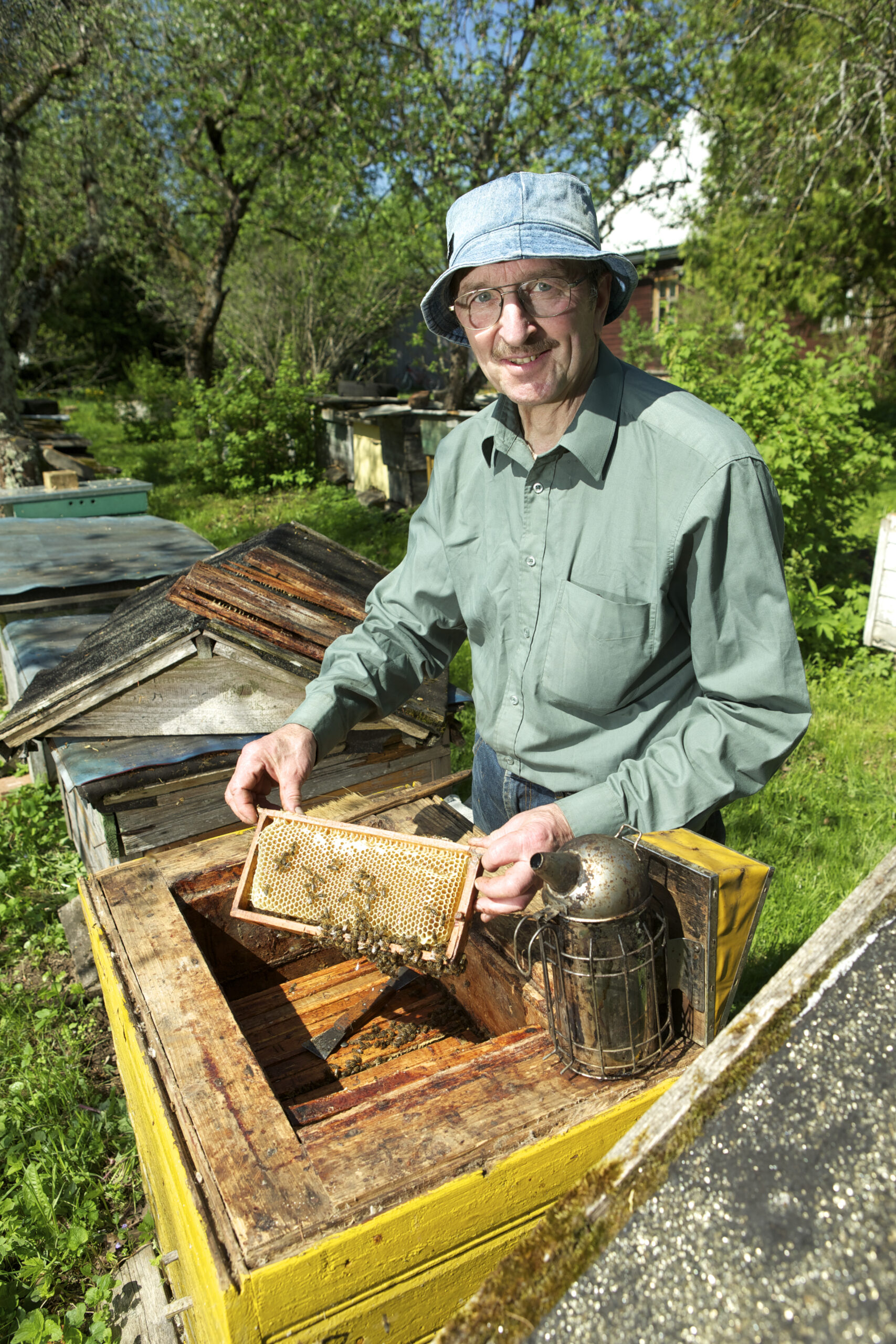
The pollen brought back to the hive is placed in comb cells and covered with a layer of honey, where it becomes bee bread, or perga – the bioactive protein food of bee larvae and adult bees alike. Humans, too, have learned to use bee bread to support their health and strengthen the body.
In connection with bees flying from flower to flower in search of their harvest, an interesting point of coincidence emerges between them and me: the electromagnetic field.
For more than half a century, my university work has been connected with the study of electrical phenomena and electromagnetic fields, and with their application in various devices and in teaching. Bees, too, over millions of years of evolution, have learned to use electric and magnetic fields to their advantage.
The help of the magnetic field
The Earth’s magnetic field helps bees to orient themselves; it enables them to find their way back to the home hive several kilometres away after gathering nectar or pollen.
In addition to the magnetic field, bees use what might be called the colony’s internal advisory system when setting out on foraging flights and returning from them. This gives them information about the direction and distance of rich nectar sources. Scout bees share this information on returning to the hive through the special bee dance they perform on the comb. Through these distinctive, systematic movements, they indicate the recommended flight direction in relation to the sun and the approximate distance of a good foraging site.
The electric field helps bees gather pollen. A bee’s body is covered with hairs. As it flies, these hairs acquire an electric charge through friction with the air – much like the school physics experiment in which an ebonite rod is rubbed with a silk cloth.
When a bee lands on a flower, the electrically charged hairs on its body attract oppositely charged grains of pollen. As the bee takes off again, it begins scraping the pollen from its hairs with the bristles on its legs. It then transfers the pollen to its mouth, moistens it there with nectar or honey it is carrying, and packs the resulting mixture into the so-called pollen baskets formed by the bristles on its hind legs, before transporting the harvest back to the hive.
In addition to the magnetic field, bees also use the colony’s internal advisory system when setting out on foraging flights and returning, receiving information about the direction and distance of rich nectar sources. Scout bees communicate this information on returning from their searches through the special dance they perform on the comb.
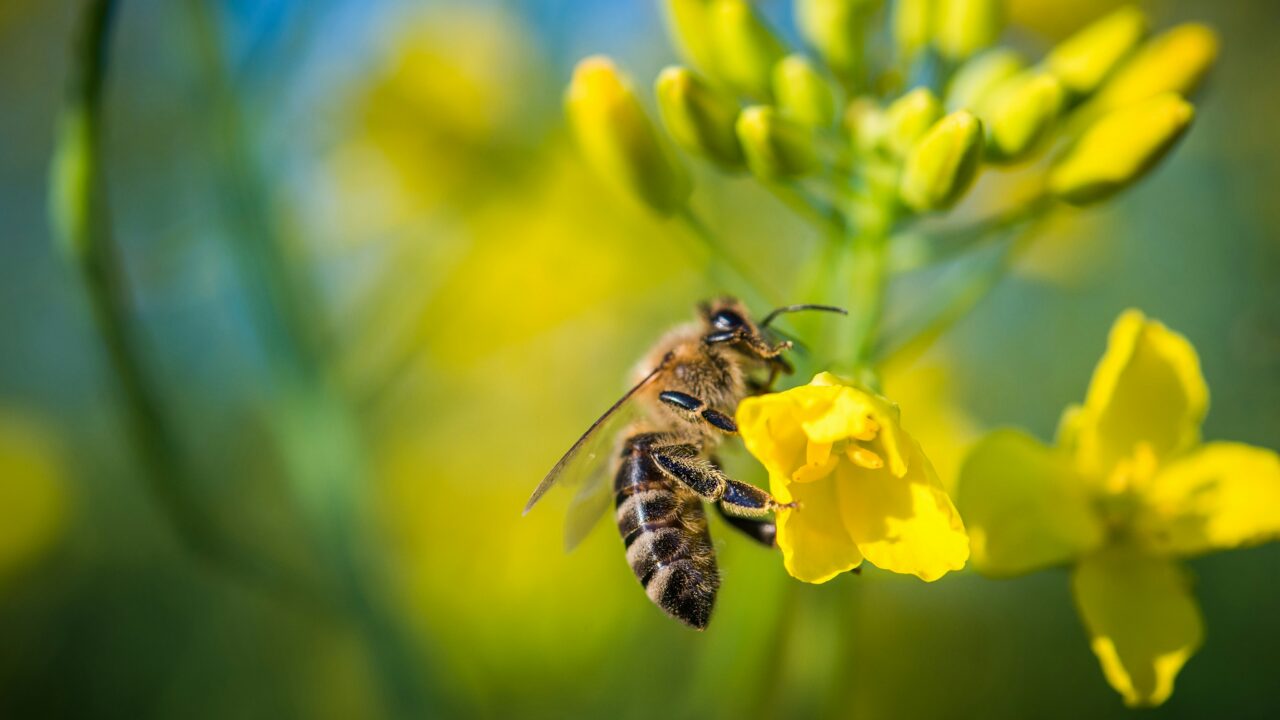
A bee gathering nectar and pollen from a flower. Photo: Getty / Unsplash
In the relationship between plants and bees, a form of cooperation has evolved that serves the interests of both. Flowers provide nectar for the bees, and in return the bees carry pollen from the blossoms of one plant to another – in other words, they pollinate the flowers.
According to scientists, without bees and other insect pollinators, some 85 to 90 per cent of flowering plants would remain unpollinated, placing ecosystems – including agriculture and food production – in serious danger. It is often said that every third mouthful on our table is produced with the help of bees.
Bees serve the interests of the whole of Estonian society
The so-called indirect benefit derived from bees’ pollination work exceeds many times over the value of the honey they collect. Albert Einstein is said to have remarked: “If bees die out, humanity will have only four years left to live.” It is not certain whether he put it exactly like that, but the claim certainly gives one food for thought.
The importance of bees’ pollination work is impossible to overstate. In the state of California alone, there are 300,000 hectares of almond orchards that produce most of the world’s almonds. But to pollinate almond blossom effectively, as many as 1.5 million bee colonies are needed, because without bees it would be possible to obtain only up to 5 per cent of a normal almond harvest.
It is often said that every third mouthful on our table is produced with the help of bees.
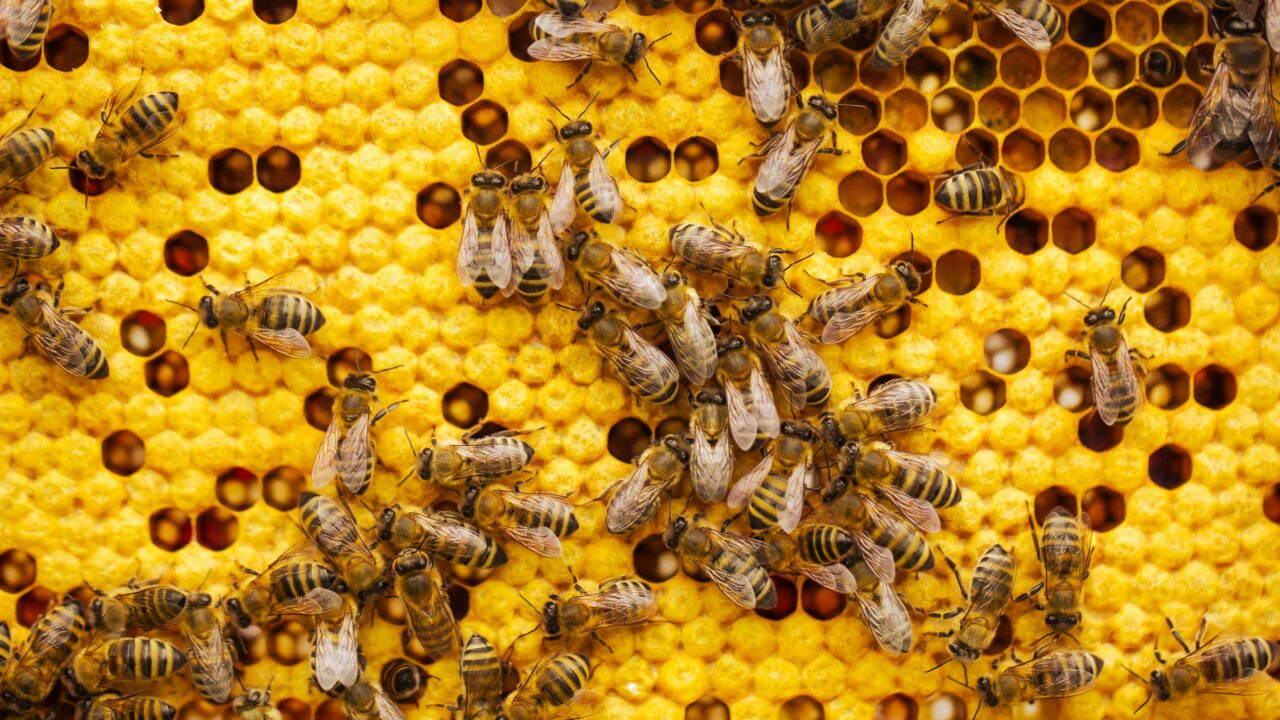
A colony of bees on the honeycomb – their remarkably organised co-operation, division of roles and intelligent activity help sustain biodiversity and support our food supply. Photo: Simon Kadula / Unsplash
In Estonia’s climatic zone, scientists estimate that bees’ ability to pollinate garden and field crops and maintain the balance of natural plant communities yields an indirect benefit ten times greater than the market value of the honey collected.
So if Estonia’s apiaries gather 1,600 tonnes of honey each year, worth more than 16 million euros, then the indirect benefit of bees’ pollination work amounts to at least 160 million euros. In this way, bees serve the interests of the whole of Estonian society – so let us give due recognition to our bees and beekeepers.
Let us bring natural places into the city
Nowadays, many people move from the countryside to cities, where more opportunities and better conditions are thought to exist. Yet in the minds – or perhaps even the genes – of city dwellers there remains a pull towards the emotionally pleasing aspects of living nature. The solution, then, is simple: let us bring nature into the city.
In recent years, community gardens have begun to spring up, among other things – one excellent example is in Tondiraba Park in Lasnamäe, which I often pass on my walks. Worth considering too is the Putukaväil project, which offers all manner of visual and spiritual delight, opportunities for movement and places to pause, stretching from the Kopli freight station and Merimets all the way to the outskirts of Mustamäe and Nõmme.
Alongside this, of course, we should not forget the movement initiated by beekeepers: bees to Tallinn. One of the most attention-grabbing initiatives under this undertaking has been the introduction of bee colonies to the rose garden of the presidential palace and the green area in front of it. Bee colonies also found a home on the roof of the university’s entrepreneurship centre, Mektory.
If Estonia’s apiaries gather 1,600 tonnes of honey each year, worth more than 16 million euros, then the indirect benefit of bees’ pollination work amounts to at least 160 million euros.
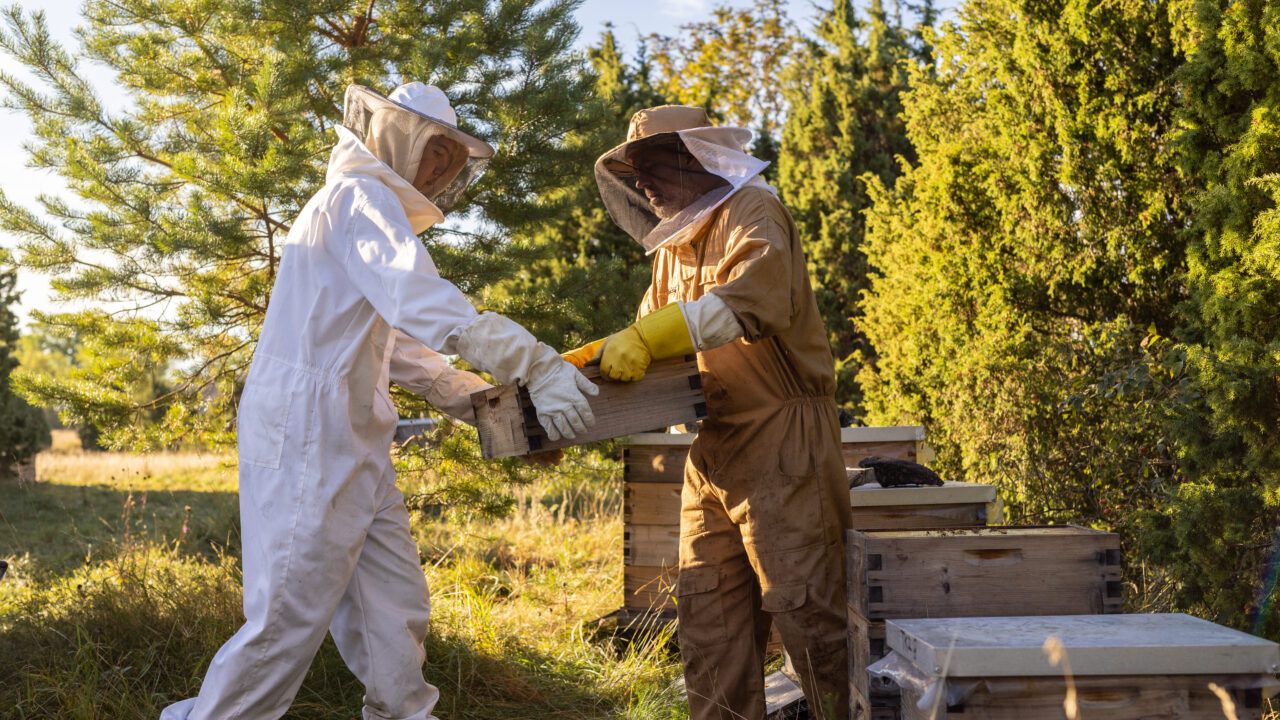
Estonian beekeepers working by their hives. Photo: Renee Altrov
Bees have been by my side since childhood. For my tenth birthday, I was given My First Bee Colony.
Over the years, the number of colonies has grown to several dozen, requiring a fair amount of care and time. Yet that care is, in its own way, also a form of rest, and the time certainly belongs in the category of quality time, because it helps one recover from the exhausting routines of everyday life. At the same time, it means taking responsibility for helping and supporting the bees whenever needed.
Naturally, every beekeeper hopes to receive honey from their colonies – to eat, to share, to give away, and perhaps sometimes to sell. In addition to my family and acquaintances, a number of my colleagues at the University of Technology also eat and praise the delicious Mulgi County nectar collected by my bees.
What deepens the value of the endeavour for me is that, thanks to the bees’ pollination work, the apple and plum trees and berry bushes at my country home and in the neighbouring garden yield a better harvest. I am content.
Humans have much to learn from bees
Yet one of the great rewards of a beekeeper’s life lies in the opportunity to be a curious observer of the secret life of bees. Bees teach the beekeeper calmness; those inclined to fuss and rush are gently re-educated by these little winged creatures in the course of the learning process.
Bees teach the beekeeper calmness; those inclined to fuss and rush are gently re-educated by these little winged creatures in the course of the learning process.
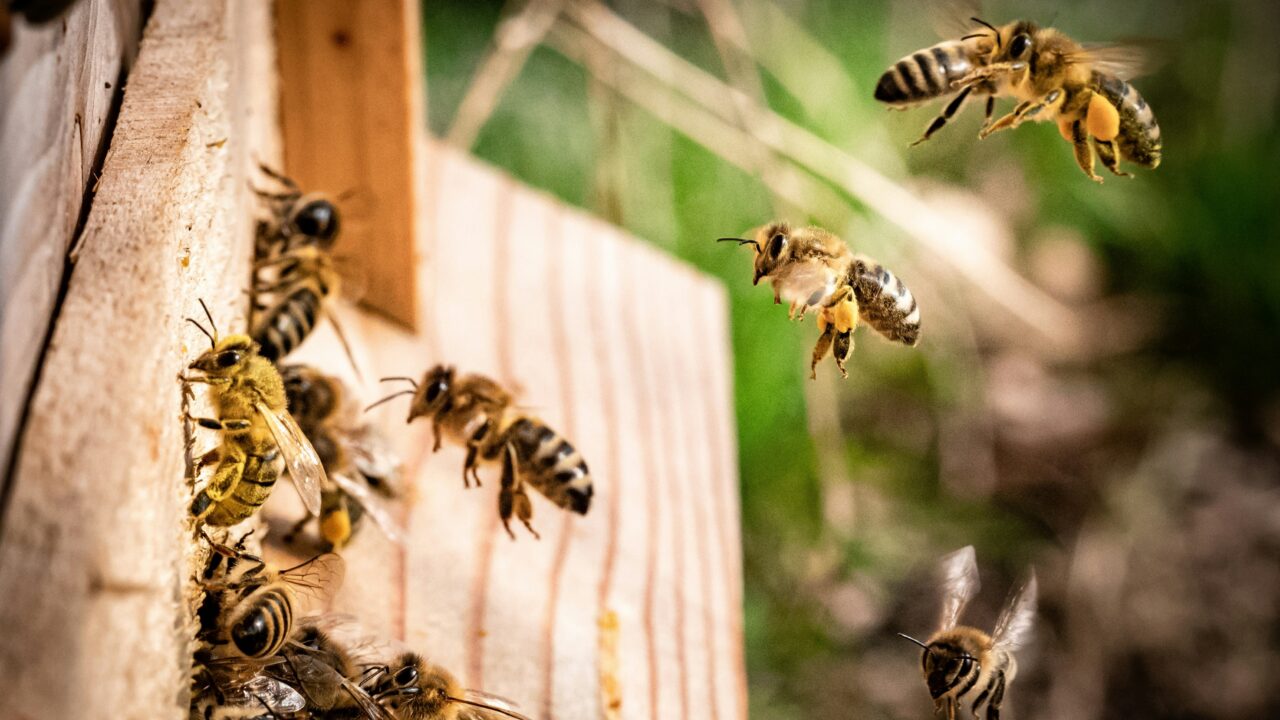
Bees at the hive entrance – this is where their tireless work begins and ends, sustaining both the colony and a great deal of the natural world. Photo: Kai Wenzel / Unsplash
One can read a great deal about the life and habits of bees in wise books and find information across the vastness of the internet, but the best way to learn is at the side of an experienced beekeeper-mentor. Even so, bees possess a wealth of secrets, and they can often surprise even the seasoned beekeeper with their behaviour – so be prepared for lifelong learning.
Humans, too, could learn much from the well-organised division of roles and decision-making processes within a bee colony. Behavioural patterns shaped by the genetic experience of the colony often lead to better outcomes than decisions produced solely by human reasoning.
The Swedish apicultural scientist Professor Ingemar Fries has said: “If human society were able and willing to act as harmoniously and as systematically as a bee colony does, we would avoid many of the contradictions and problems we create for ourselves.”
I wholeheartedly agree. And in tribute to my little flying friends, I would add this in conclusion: “Bees preserve biodiversity and keep our tables supplied with food.”
“If human society were able and willing to act as harmoniously and as systematically as a bee colony does, we would avoid many of the contradictions and problems we create for ourselves.”
In April, the focus of TalTech’s Green Theme Months is biodiversity – where, how and why we can support it.