LinnaSulps – making every swim a safe one

10.04.2026
LinnaSulps – making every swim a safe one. 10.04.2026. The current system relies mainly on sampling and laboratory analysis, which means that information about contamination often becomes available only after people have already been exposed to the water. This time lag is exactly what the ongoing pilot project LinnaSulps, or UrbanDip, led by the FinEst Centre for Smart Cities, aims to reduce. The project, developed in cooperation between Estonia and Ireland, seeks to make bathing water quality monitoring significantly more responsive. According to Ciprian Briciu-Burghina, one of the project’s lead researchers at the centre, the issue is primarily about public health. “Traditional monitoring methods are slow, so people tend to fall ill before the problem is even detected,” he said. However, the impact is not limited to health risks. Clean and reliable bathing sites are also important for cities’ reputation, tourism, and people’s everyday well-being. If a beach or swimming area gains a reputation for being polluted, it directly affects people’s choices. “People’s perceived water quality determines whether they go there and how much time they spend there,” Briciu-Burghina noted. What may initially appear as a technical or environmental issue can therefore become an economic and social one. Not just monitoring, but also predicting LinnaSulps goes beyond the idea that water quality simply needs to be measured more frequently. The ambition is broader: to create a system that integrates different types of data, interprets them rapidly, and helps predict how conditions may change. To achieve this, the project combines in-situ sensors, weather data, and information about how water flows into bathing areas. The result is intended to be a solution that provides near real-time insight into both current water conditions and how they may evolve in the coming hours or days. In practice, this also means testing technologies with varying price levels and capabilities. The goal is not to build a highly expensive and complex system accessible only to a few, but to find ways to combine lower-cost sensors with AI-based data processing. According to Briciu-Burghina, the team is exploring whether more affordable technology, supported by artificial intelligence, can deliver results comparable to those achieved with significantly more expensive equipment. If successful, this would make the solution far more scalable in the future. Importantly, the system is not designed merely to signal a “red light,” but to help understand why water quality changes. Many contamination events are not permanent but are linked to short-term factors such as heavy rainfall or stormwater runoff. According to Peeter Laas, a researcher at the centre, one of the key problems is that traditional monitoring does not capture these short-term peaks effectively. “Sometimes conditions are very good most of the time, but then heavy rain occurs and, two days later, the level of harmful bacteria rises sharply. With the current system, this information often arrives too late,” he explained. “Traditional monitoring methods are slow, so people tend to fall ill before the problem is even detected.” The Anne Canal case: data helps change perceptions The LinnaSulps solution has been piloted since 2025 in three cities: Tartu and, in Ireland, Fingal and Dún Laoghaire-Rathdown. In Estonia, the main test site is the Anne Canal in Tartu, which has historically had a reputation among locals as a swimming spot with poor water quality. According to Laas, one of the more surprising findings of the project has been that at least part of the time, the water quality in the Anne Canal was significantly better than its reputation would suggest. “This helps break stigmas – sometimes a swimming site is not actually as bad as people think,” he said. At the same time, this does not mean that problems do not exist. On the contrary, the project aims to provide a much more precise understanding of when, why, and for how long risks occur. This is also important because the current regulatory framework requires not only detecting contamination but also assessing its origin and duration. This is where another key component of the project comes into play: identifying pollution sources. “When contamination occurs, we can use genetic analysis of bacteria to assess whether it originates from humans, dogs, cattle, or other sources,” Laas explained. Such knowledge enables cities or site managers to respond more accurately, rather than relying on assumptions. From research to market: finding a business model for LinnaSulps Although LinnaSulps originated as a research and development project, there has been a clear intention from the outset to develop it into a practical and marketable solution. The project team openly states that one of its goals is to establish a viable business model by the end of the project—either by licensing the solution to existing companies or by creating a dedicated spin-off company. The most likely model would be service-based: instead of purchasing a complex technical system, a city would subscribe to real-time data, forecasts, and, if needed, additional services such as pollution source identification. According to Briciu-Burghina, a realistic measure of success would be reaching at least one European city as a long-term client within five years, thereby establishing the solution as a reliable and reusable service. While the team is ambitious, they also recognise their limited experience in business, having learned extensively from advisors, investors, and partners. For Laas, the addition of a commercial perspective has been one of the most valuable learning experiences as a researcher. While scientific work tends to focus on making a solution function effectively, the business world requires asking who actually needs the product or service. “You can’t just assume your solution is good – you have to understand who will pay for it and why,” he said. Briciu-Burghina added that cooperation with the public sector can be time-consuming, which is why it is important to explore opportunities in the private sector as well. At the same time, the team hopes that the pilot cities will become strong reference cases—demonstrating to other municipalities that such a solution is both feasible and effective. “You can’t just assume your solution is good – you have to understand who will pay for it and why.”   Comment – Marion Kade, project manager at the Tartu City Government For Tartu City Government, the main motivation for joining the pilot project was the desire to better understand and monitor the water quality of the Anne Canal. It is one of the city’s most popular bathing areas, where water quality can fluctuate and the causes are not always clear. The pilot project provides an opportunity to test new sensor and data solutions that help track changes in water quality more effectively. Currently, bathing water quality is assessed only once a week during the bathing season, meaning that short-term contamination events may go unnoticed or are detected only retrospectively. In addition, the exact source of pollution (whether from humans, birds, animals, or other sources) often remains unknown. Having more detailed information allows for more up-to-date communication with bathers about water conditions. So far, the experience has been positive, as the pilot project has provided the city with valuable additional information about changes in water quality since September 2025. However, the testing period is still ongoing, and final results will be available in autumn 2026, after the bathing season. At present, the city’s goal is to assess how well the solution works under Tartu’s conditions and how practical it is. If it proves to be reliable and useful, the city may consider continuing its use after the pilot project ends, although the final decision will be made once the project is completed.
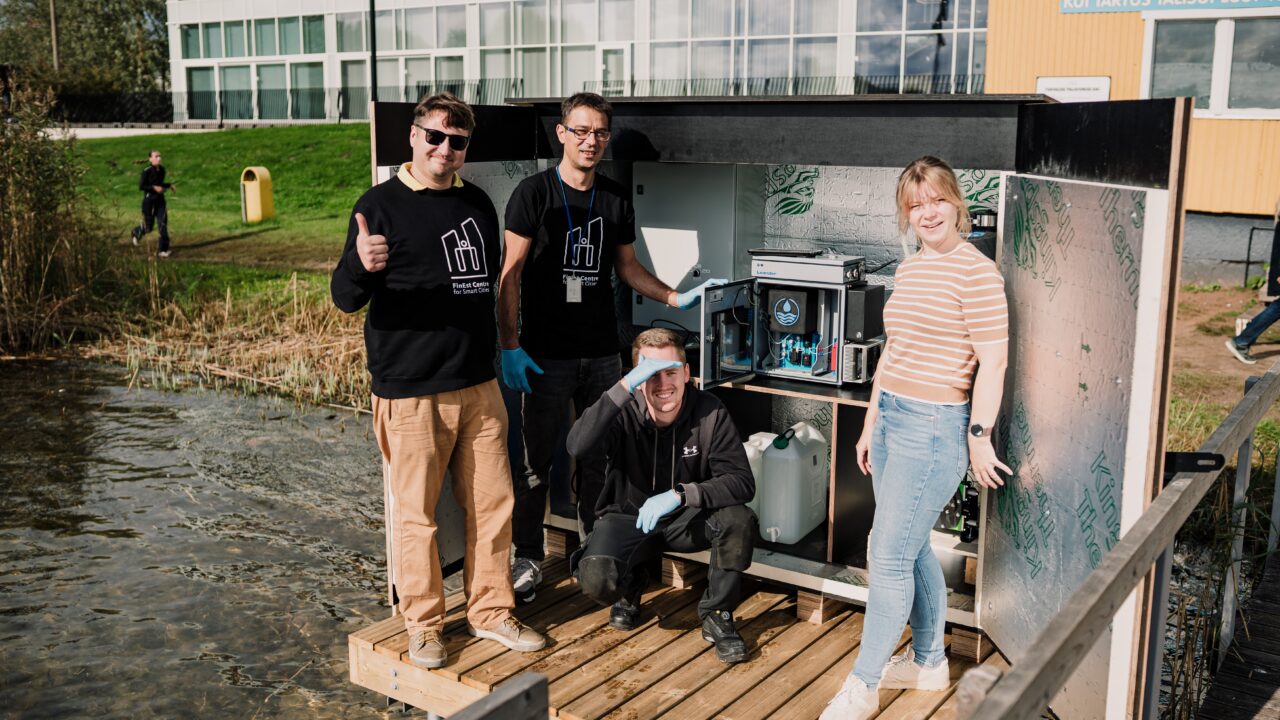
Members of the LinnaSulps team (from left): Peeter Laas, Ciprian Briciu-Burghina, Kris-Robin Sirge, and Marion Kade, Project Manager at the City of Tartu. Photo: Mana Kaasik

Members of the LinnaSulps team (from left): Peeter Laas, Ciprian Briciu-Burghina, Kris-Robin Sirge, and Marion Kade, Project Manager at the City of Tartu. Photo: Mana Kaasik

Ideally, bathing water quality monitoring should provide people with a quick and reliable answer to a very simple question: is it safe to go swimming today or not? In practice, however, this information often reaches people too late.

The current system relies mainly on sampling and laboratory analysis, which means that information about contamination often becomes available only after people have already been exposed to the water.

This time lag is exactly what the ongoing pilot project LinnaSulps, or UrbanDip, led by the FinEst Centre for Smart Cities, aims to reduce. The project, developed in cooperation between Estonia and Ireland, seeks to make bathing water quality monitoring significantly more responsive. According to Ciprian Briciu-Burghina, one of the project’s lead researchers at the centre, the issue is primarily about public health. “Traditional monitoring methods are slow, so people tend to fall ill before the problem is even detected,” he said.

However, the impact is not limited to health risks. Clean and reliable bathing sites are also important for cities’ reputation, tourism, and people’s everyday well-being. If a beach or swimming area gains a reputation for being polluted, it directly affects people’s choices. “People’s perceived water quality determines whether they go there and how much time they spend there,” Briciu-Burghina noted. What may initially appear as a technical or environmental issue can therefore become an economic and social one.

Not just monitoring, but also predicting

LinnaSulps goes beyond the idea that water quality simply needs to be measured more frequently. The ambition is broader: to create a system that integrates different types of data, interprets them rapidly, and helps predict how conditions may change.

To achieve this, the project combines in-situ sensors, weather data, and information about how water flows into bathing areas. The result is intended to be a solution that provides near real-time insight into both current water conditions and how they may evolve in the coming hours or days.

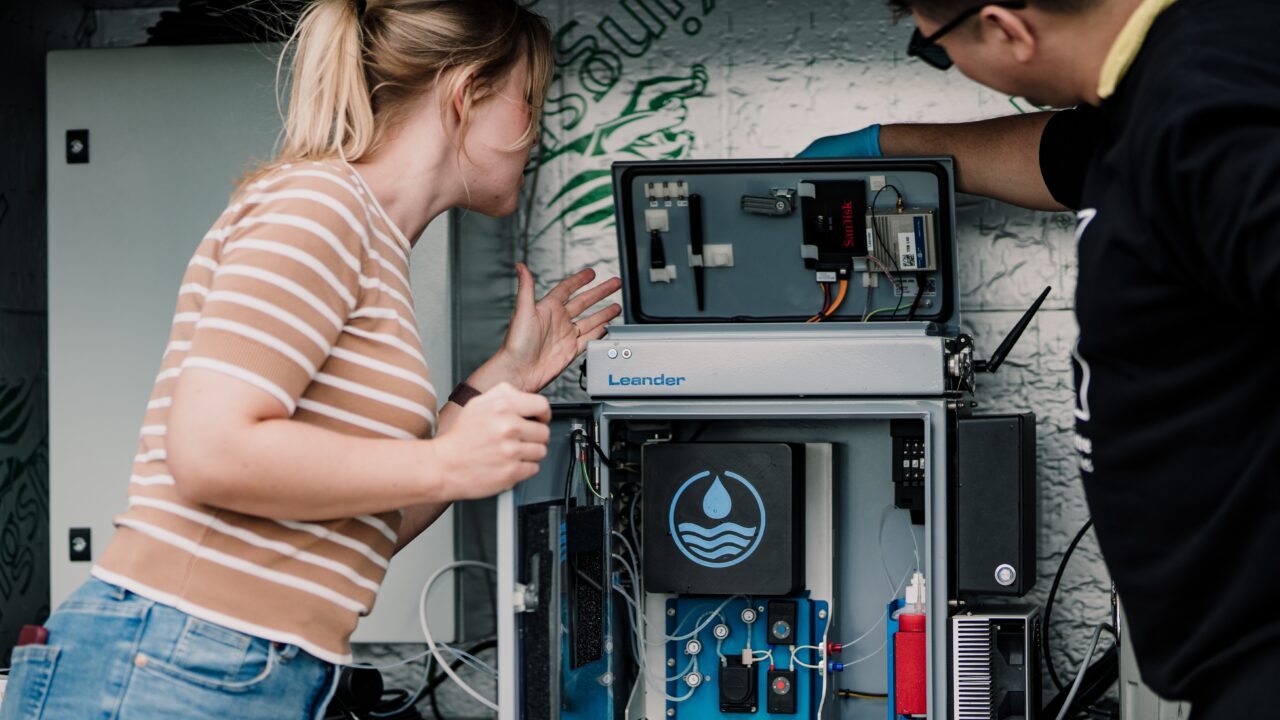
In practice, this also means testing technologies with varying price levels and capabilities. The goal is not to build a highly expensive and complex system accessible only to a few, but to find ways to combine lower-cost sensors with AI-based data processing. According to Briciu-Burghina, the team is exploring whether more affordable technology, supported by artificial intelligence, can deliver results comparable to those achieved with significantly more expensive equipment. If successful, this would make the solution far more scalable in the future.

Importantly, the system is not designed merely to signal a “red light,” but to help understand why water quality changes. Many contamination events are not permanent but are linked to short-term factors such as heavy rainfall or stormwater runoff. According to Peeter Laas, a researcher at the centre, one of the key problems is that traditional monitoring does not capture these short-term peaks effectively. “Sometimes conditions are very good most of the time, but then heavy rain occurs and, two days later, the level of harmful bacteria rises sharply. With the current system, this information often arrives too late,” he explained.

“Traditional monitoring methods are slow, so people tend to fall ill before the problem is even detected.”
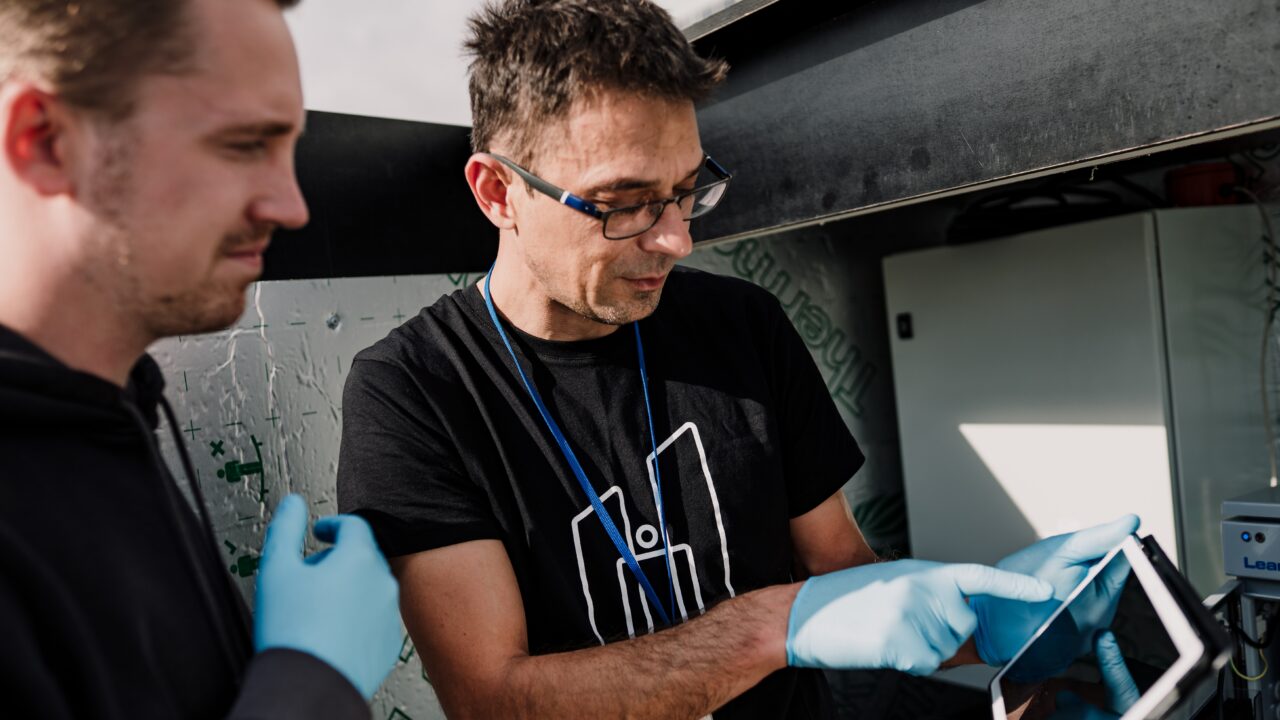
According to Briciu-Burghina (right), the project aims to determine whether more affordable, AI-supported technology can achieve results comparable in value to those obtained with significantly more expensive equipment. If so, this could substantially increase the solution’s capacity and scalability in the future. Photo: Mana Kaasik

According to Briciu-Burghina (right), the project aims to determine whether more affordable, AI-supported technology can achieve results comparable in value to those obtained with significantly more expensive equipment. If so, this could substantially increase the solution’s capacity and scalability in the future. Photo: Mana Kaasik

The Anne Canal case: data helps change perceptions

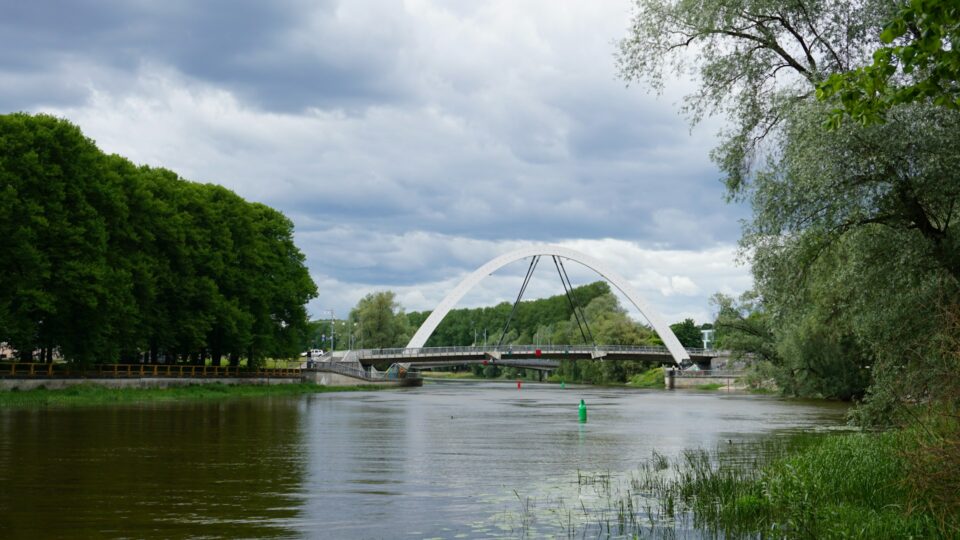
The LinnaSulps solution has been piloted since 2025 in three cities: Tartu and, in Ireland, Fingal and Dún Laoghaire-Rathdown. In Estonia, the main test site is the Anne Canal in Tartu, which has historically had a reputation among locals as a swimming spot with poor water quality.

According to Laas, one of the more surprising findings of the project has been that at least part of the time, the water quality in the Anne Canal was significantly better than its reputation would suggest. “This helps break stigmas – sometimes a swimming site is not actually as bad as people think,” he said.

At the same time, this does not mean that problems do not exist. On the contrary, the project aims to provide a much more precise understanding of when, why, and for how long risks occur. This is also important because the current regulatory framework requires not only detecting contamination but also assessing its origin and duration.

This is where another key component of the project comes into play: identifying pollution sources. “When contamination occurs, we can use genetic analysis of bacteria to assess whether it originates from humans, dogs, cattle, or other sources,” Laas explained.

Such knowledge enables cities or site managers to respond more accurately, rather than relying on assumptions.

From research to market: finding a business model for LinnaSulps

Although LinnaSulps originated as a research and development project, there has been a clear intention from the outset to develop it into a practical and marketable solution. The project team openly states that one of its goals is to establish a viable business model by the end of the project—either by licensing the solution to existing companies or by creating a dedicated spin-off company.

The most likely model would be service-based: instead of purchasing a complex technical system, a city would subscribe to real-time data, forecasts, and, if needed, additional services such as pollution source identification.

According to Briciu-Burghina, a realistic measure of success would be reaching at least one European city as a long-term client within five years, thereby establishing the solution as a reliable and reusable service. While the team is ambitious, they also recognise their limited experience in business, having learned extensively from advisors, investors, and partners.

For Laas, the addition of a commercial perspective has been one of the most valuable learning experiences as a researcher. While scientific work tends to focus on making a solution function effectively, the business world requires asking who actually needs the product or service. “You can’t just assume your solution is good – you have to understand who will pay for it and why,” he said.

Briciu-Burghina added that cooperation with the public sector can be time-consuming, which is why it is important to explore opportunities in the private sector as well. At the same time, the team hopes that the pilot cities will become strong reference cases—demonstrating to other municipalities that such a solution is both feasible and effective.

“You can’t just assume your solution is good – you have to understand who will pay for it and why.”
 

Marion Kade (left), Project Manager at the City of Tartu, noted that the experience with LinnaSulps has so far been positive, as the pilot project has provided the city with valuable additional insights into changes in water quality since September 2025. Photo: Mana Kaasik

Marion Kade (left), Project Manager at the City of Tartu, noted that the experience with LinnaSulps has so far been positive, as the pilot project has provided the city with valuable additional insights into changes in water quality since September 2025. Photo: Mana Kaasik

Comment – Marion Kade, project manager at the Tartu City Government

For Tartu City Government, the main motivation for joining the pilot project was the desire to better understand and monitor the water quality of the Anne Canal. It is one of the city’s most popular bathing areas, where water quality can fluctuate and the causes are not always clear.

The pilot project provides an opportunity to test new sensor and data solutions that help track changes in water quality more effectively. Currently, bathing water quality is assessed only once a week during the bathing season, meaning that short-term contamination events may go unnoticed or are detected only retrospectively. In addition, the exact source of pollution (whether from humans, birds, animals, or other sources) often remains unknown.

Having more detailed information allows for more up-to-date communication with bathers about water conditions.

So far, the experience has been positive, as the pilot project has provided the city with valuable additional information about changes in water quality since September 2025. However, the testing period is still ongoing, and final results will be available in autumn 2026, after the bathing season.

At present, the city’s goal is to assess how well the solution works under Tartu’s conditions and how practical it is. If it proves to be reliable and useful, the city may consider continuing its use after the pilot project ends, although the final decision will be made once the project is completed.