Drone manufacturer: success in the defense industry is a marathon, not a sprint

04.03.2026
Drone manufacturer: success in the defense industry is a marathon, not a sprint. 04.03.2026. “The average sales cycle in the defense sector lasts two years. There is no point in entertaining hopes that things will move faster.” That sentence sums up Voitka’s view of the defense industry: success is driven not by a get-rich-quick mindset, but by patience and the ability to build a sustainable structure. KrattWorks started out in 2018 as a product development company. In the early days, it also offered a drone-based wildfire detection solution: a camera and software system that helped map the fire line. The solution even reached the demo stage with California rescue services, although the order ultimately fell through due to lack of funding. Over the years, the company’s focus shifted more clearly toward the military sector. Today, KrattWorks develops surveillance, targeting, and attack drones, and provides its services both in Estonia and on international markets. The team employs around 70 people, most of them software, mechanical, or electronics engineers, as well as production specialists. A drone market like the crypto boom According to Voitka, today’s drone market resembles the crypto boom. “Right now, there’s much the same feeling in the air as there was when every taxi driver seemed able to give you investment advice on crypto – except that now people are talking about drones.” In his view, many newcomers underestimate the specific nature of the defense market. Building a product does not automatically lead to sales. On top of that, the sector is shaped by two different types of customers with different logics: the procurer and the end user. One looks at the company’s reliability and long-term sustainability, while the other focuses on how well the systems actually perform. KrattWorks’ business model does not simply mean expanding the capacity of a company-owned factory. Voitka described an approach familiar from the automotive and consumer electronics industries: development and design are done in-house, while manufacturing is distributed across different countries through partners. The company maintains its own organic production capacity in order to set up processes and control quality. But when it comes to larger volumes, it does not try to build everything from scratch itself. The logic is simple: if the sales cycle is long and orders come in waves, it makes little sense to keep large production capacity constantly sitting idle. Cooperation with European manufacturing partners makes it possible to scale up quickly when needed, without having to set up a separate factory in every country. “Right now, there’s much the same feeling in the air as there was when every taxi driver seemed able to give you investment advice on crypto – except that now people are talking about drones.” Ukraine as a testbed Russia’s aggression in Ukraine has acted as a kind of litmus test for drone manufacturers, but Voitka does not want to romanticize the experience there. “Figuratively speaking, we have found 101 ways in which our product does not work in Ukraine. Of course, you can always hope that the next version will finally perform well under those conditions.” According to him, there is a clear difference between Western and Ukrainian approaches. “In Ukraine, if necessary, they will put something together with tape and nails – as long as it works. In the West, more emphasis is placed on other parameters as well.” KrattWorks is seeking a balance between these approaches: the product must be refined enough to meet Western expectations, while also robust enough to function in harsh conditions. Voitka also points to a strategic lesson from the Ukrainian experience: “The winner is the one who can produce at scale.” That does not only mean large factories, but also the ability to adapt quickly in order to manufacture software-updatable platforms in high volumes. The goal is to develop drones that do not become obsolete within a year, but can instead be continuously upgraded through software updates. A drone will not liberate Petseri When it comes to drone autonomy, Voitka is realistic. He acknowledges that the technology is already capable of a great deal today – a drone can fly in difficult conditions, carry out predefined tasks, and use smart support systems. But in his view, the decision of whom to act against and when remains with the human being. “I always use the example of a mortar or an artillery gun. Weapons do not kill people on their own – humans still load the shell into the barrel and pull the trigger. It is the same with drones.” KrattWorks also works with drone swarms, but their use likewise requires human involvement. According to Voitka, swarms have above all a practical advantage: when there are only a limited number of competent operators available and drones need to act in several places at once, a swarm solution helps concentrate impact and scale activity. But in his opinion, “holding” territory cannot be delegated to technology – at least not in the way it is sometimes imagined in futuristic scenarios. “No robot holds or liberates territory. We may have tens of thousands of robots, but a drone will not liberate Petseri.” He also emphasized the fragility of technology. “You can send a drone to an area and say that it now controls it. But in reality, some hunter can shoot it down with a rifle at any moment.” Voitka does not believe that science-fiction scenarios will become reality in the near future – scenarios in which the battlefield would somehow start functioning independently and technology would “make decisions” on its own. In his view, the reason lies not only in software or sensors, but in something much more mundane: energy, infrastructure, and reliability. “Today, we are still very much living in the age of the steam locomotive.” By this, he means that even the most modern systems ultimately depend on physical preconditions – electricity, communications networks, manufacturing, and logistics. If infrastructure is disrupted, power is lost, or data communications fail, even the smartest algorithm will not save the situation. “You can send a drone to an area and say that it now controls it. But in reality, some hunter can shoot it down with a rifle at any moment.” The next generation does not emerge in a vacuum Voitka does not believe that Estonia’s drone industry currently has a clearly defined international niche of its own. What he does see as a strength, however, is the flexibility of a small state – cooperation between the government and companies can move faster here than in larger systems. In his view, the weak point is talent development: university procedures are slow, and study content tends to lag behind industry, which means that a large share of graduates still need substantial additional training once they enter the workforce. “Every year, universities produce many fresh engineers, but only a few are able to contribute to a company right away. The rest have to be trained up over a long period through the company’s own efforts.” In a rapidly growing sector, he sees this as a risk in itself. In the TalTech context, he offered a provocative idea: some lecturers could spend six months actually working at KrattWorks. “That way, the next semester’s university teaching would not take place in a vacuum, but would be directly grounded in the needs of industry.” What emerges from Voitka’s thinking is that there is little value in sprinting when it comes to success stories in defense technology. This is a marathon with a long sales cycle, in which early excitement may open doors, but those who endure are the ones able to build lasting technology, resilient production capacity, and an organization made up of resilient people. “Every year, universities produce many fresh engineers, but only a few are able to contribute to a company right away. The rest have to be trained up over a long period through the company’s own efforts.”
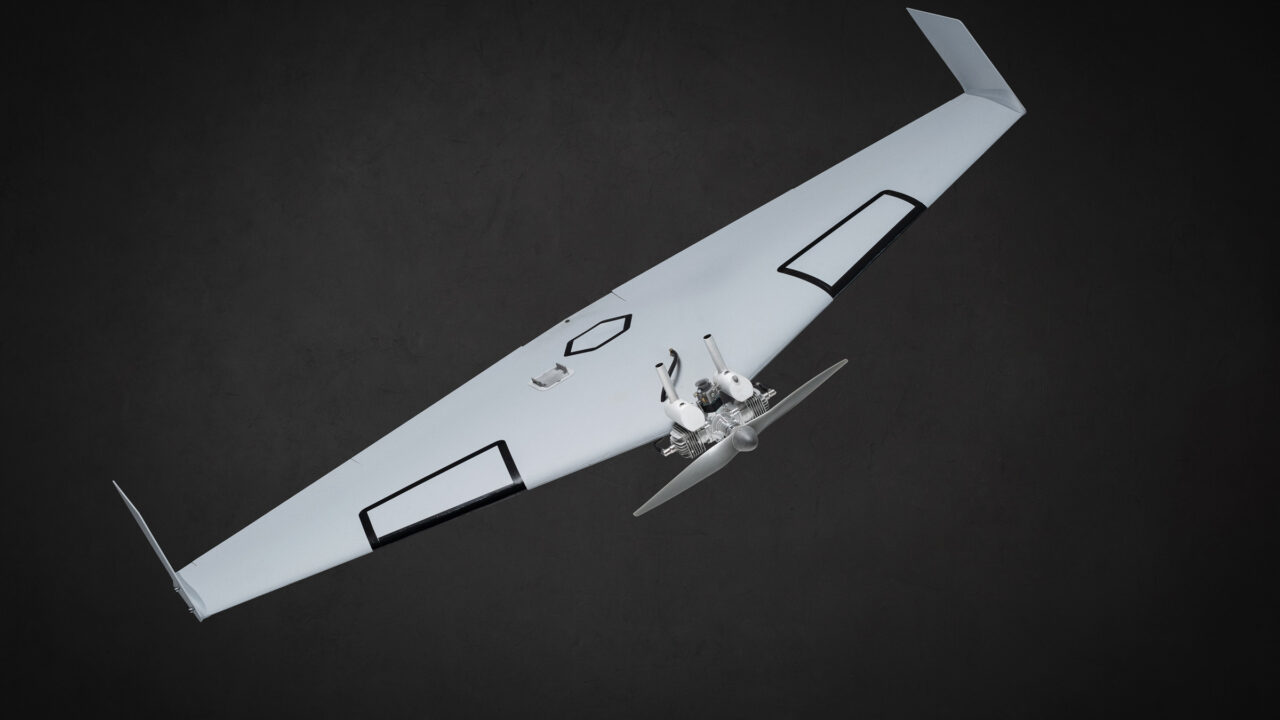
According to Tõnis Voitka, CEO of drone manufacturer KrattWorks OÜ, the course of drone warfare is determined not only by the sophistication of the systems, but also by the speed and scale of drone production, as well as the long-term sustainability of the company producing them. Pictured is KrattWorks’ aerial target drone Dart-R. Photo: KrattWorks.

According to Tõnis Voitka, CEO of drone manufacturer KrattWorks OÜ, the course of drone warfare is determined not only by the sophistication of the systems, but also by the speed and scale of drone production, as well as the long-term sustainability of the company producing them. Pictured is KrattWorks’ aerial target drone Dart-R. Photo: KrattWorks.

When people talk about drones, the focus tends to fall on technology – autonomy, artificial intelligence, and swarms. Tõnis Voitka, CEO of the Estonian defense company KrattWorks and a TalTech alumnus, instead turns a serious eye to manufacturing and business models. In his view, the course of drone warfare is determined not only by the sophistication of the systems, but also by the speed and scale of drone production and the sustainability of the company producing them.

“The average sales cycle in the defense sector lasts two years. There is no point in entertaining hopes that things will move faster.”

That sentence sums up Voitka’s view of the defense industry: success is driven not by a get-rich-quick mindset, but by patience and the ability to build a sustainable structure.

KrattWorks started out in 2018 as a product development company. In the early days, it also offered a drone-based wildfire detection solution: a camera and software system that helped map the fire line. The solution even reached the demo stage with California rescue services, although the order ultimately fell through due to lack of funding.

Over the years, the company’s focus shifted more clearly toward the military sector. Today, KrattWorks develops surveillance, targeting, and attack drones, and provides its services both in Estonia and on international markets. The team employs around 70 people, most of them software, mechanical, or electronics engineers, as well as production specialists.

A drone market like the crypto boom

According to Voitka, today’s drone market resembles the crypto boom. “Right now, there’s much the same feeling in the air as there was when every taxi driver seemed able to give you investment advice on crypto – except that now people are talking about drones.”

In his view, many newcomers underestimate the specific nature of the defense market. Building a product does not automatically lead to sales. On top of that, the sector is shaped by two different types of customers with different logics: the procurer and the end user. One looks at the company’s reliability and long-term sustainability, while the other focuses on how well the systems actually perform.

KrattWorks’ business model does not simply mean expanding the capacity of a company-owned factory. Voitka described an approach familiar from the automotive and consumer electronics industries: development and design are done in-house, while manufacturing is distributed across different countries through partners.

The company maintains its own organic production capacity in order to set up processes and control quality. But when it comes to larger volumes, it does not try to build everything from scratch itself. The logic is simple: if the sales cycle is long and orders come in waves, it makes little sense to keep large production capacity constantly sitting idle.

Cooperation with European manufacturing partners makes it possible to scale up quickly when needed, without having to set up a separate factory in every country.

“Right now, there’s much the same feeling in the air as there was when every taxi driver seemed able to give you investment advice on crypto – except that now people are talking about drones.”

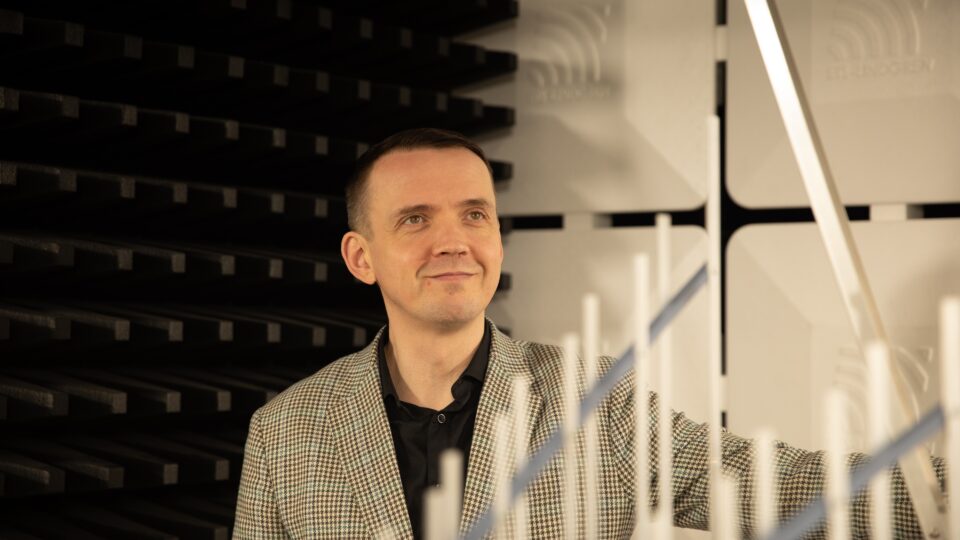
According to Tõnis Voitka, many new entrants underestimate the specific nature of the defense market. Building a product does not automatically lead to sales. In addition, the sector is shaped by two different types of customers with different logics: the procurer and the end user. One looks at the company’s reliability and long-term sustainability, while the other focuses on how well the systems actually perform. Photo: private collection.

According to Tõnis Voitka, many new entrants underestimate the specific nature of the defense market. Building a product does not automatically lead to sales. In addition, the sector is shaped by two different types of customers with different logics: the procurer and the end user. One looks at the company’s reliability and long-term sustainability, while the other focuses on how well the systems actually perform. Photo: private collection.

Ukraine as a testbed

Russia’s aggression in Ukraine has acted as a kind of litmus test for drone manufacturers, but Voitka does not want to romanticize the experience there. “Figuratively speaking, we have found 101 ways in which our product does not work in Ukraine. Of course, you can always hope that the next version will finally perform well under those conditions.”

According to him, there is a clear difference between Western and Ukrainian approaches. “In Ukraine, if necessary, they will put something together with tape and nails – as long as it works. In the West, more emphasis is placed on other parameters as well.”

KrattWorks is seeking a balance between these approaches: the product must be refined enough to meet Western expectations, while also robust enough to function in harsh conditions.

Voitka also points to a strategic lesson from the Ukrainian experience: “The winner is the one who can produce at scale.”

That does not only mean large factories, but also the ability to adapt quickly in order to manufacture software-updatable platforms in high volumes. The goal is to develop drones that do not become obsolete within a year, but can instead be continuously upgraded through software updates.

A drone will not liberate Petseri

When it comes to drone autonomy, Voitka is realistic. He acknowledges that the technology is already capable of a great deal today – a drone can fly in difficult conditions, carry out predefined tasks, and use smart support systems. But in his view, the decision of whom to act against and when remains with the human being. “I always use the example of a mortar or an artillery gun. Weapons do not kill people on their own – humans still load the shell into the barrel and pull the trigger. It is the same with drones.”

KrattWorks also works with drone swarms, but their use likewise requires human involvement. According to Voitka, swarms have above all a practical advantage: when there are only a limited number of competent operators available and drones need to act in several places at once, a swarm solution helps concentrate impact and scale activity.

But in his opinion, “holding” territory cannot be delegated to technology – at least not in the way it is sometimes imagined in futuristic scenarios. “No robot holds or liberates territory. We may have tens of thousands of robots, but a drone will not liberate Petseri.”

He also emphasized the fragility of technology. “You can send a drone to an area and say that it now controls it. But in reality, some hunter can shoot it down with a rifle at any moment.”
Voitka does not believe that science-fiction scenarios will become reality in the near future – scenarios in which the battlefield would somehow start functioning independently and technology would “make decisions” on its own. In his view, the reason lies not only in software or sensors, but in something much more mundane: energy, infrastructure, and reliability. “Today, we are still very much living in the age of the steam locomotive.”

By this, he means that even the most modern systems ultimately depend on physical preconditions – electricity, communications networks, manufacturing, and logistics. If infrastructure is disrupted, power is lost, or data communications fail, even the smartest algorithm will not save the situation.

“You can send a drone to an area and say that it now controls it. But in reality, some hunter can shoot it down with a rifle at any moment.”

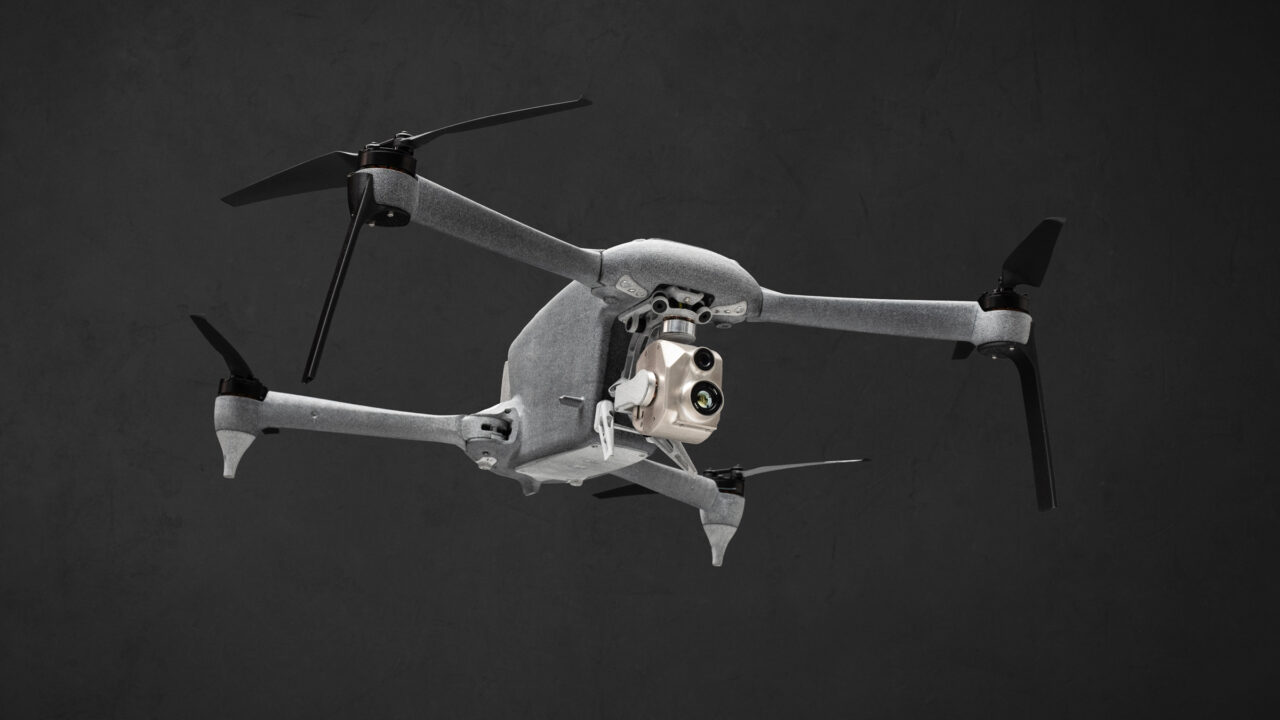
When it comes to drone autonomy, Voitka is realistic. He acknowledged that the technology is already capable of a great deal today – a drone can fly in difficult conditions, carry out predefined tasks, and use smart support systems. But in his view, the decision of whom to act against and when remains with the human being. Pictured is KrattWorks’ Ghost Dragon – a tactical ISR drone equipped with thermal and visual cameras, as well as jam-resistant radio communications. Photo: KrattWorks.

When it comes to drone autonomy, Voitka is realistic. He acknowledged that the technology is already capable of a great deal today – a drone can fly in difficult conditions, carry out predefined tasks, and use smart support systems. But in his view, the decision of whom to act against and when remains with the human being. Pictured is KrattWorks’ Ghost Dragon – a tactical ISR drone equipped with thermal and visual cameras, as well as jam-resistant radio communications. Photo: KrattWorks.

The next generation does not emerge in a vacuum

Voitka does not believe that Estonia’s drone industry currently has a clearly defined international niche of its own. What he does see as a strength, however, is the flexibility of a small state – cooperation between the government and companies can move faster here than in larger systems. In his view, the weak point is talent development: university procedures are slow, and study content tends to lag behind industry, which means that a large share of graduates still need substantial additional training once they enter the workforce.

“Every year, universities produce many fresh engineers, but only a few are able to contribute to a company right away. The rest have to be trained up over a long period through the company’s own efforts.” In a rapidly growing sector, he sees this as a risk in itself.
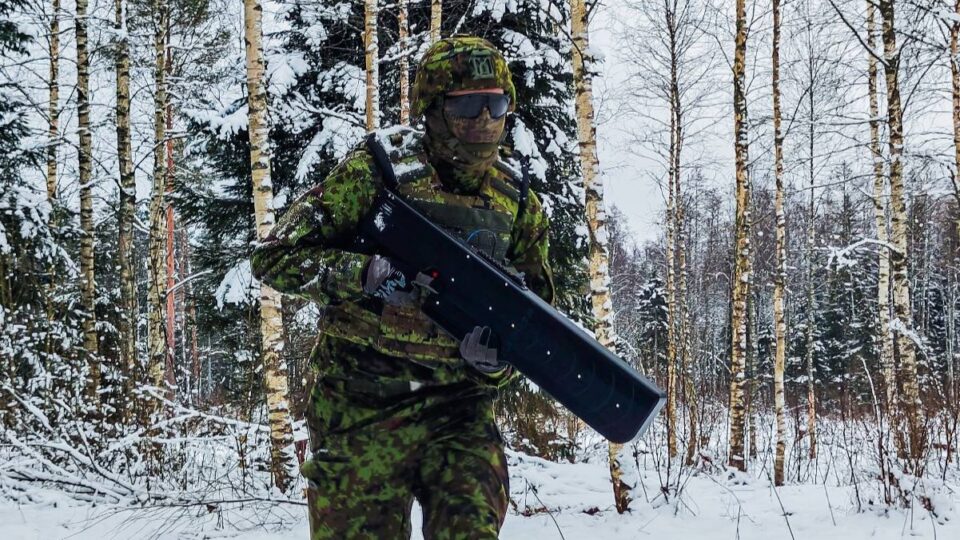
In the TalTech context, he offered a provocative idea: some lecturers could spend six months actually working at KrattWorks. “That way, the next semester’s university teaching would not take place in a vacuum, but would be directly grounded in the needs of industry.”

What emerges from Voitka’s thinking is that there is little value in sprinting when it comes to success stories in defense technology. This is a marathon with a long sales cycle, in which early excitement may open doors, but those who endure are the ones able to build lasting technology, resilient production capacity, and an organization made up of resilient people.

“Every year, universities produce many fresh engineers, but only a few are able to contribute to a company right away. The rest have to be trained up over a long period through the company’s own efforts.”