
Professor of Macroeconomics, Department of Economic Analysis and Finance
Rail Baltica was meant to connect the Baltic states to Europe’s rail network by 2026, but it has ended up at a very different station: the timetable has slipped, the budget is ballooning, and the project is being pared back step by step into a “simplified” version. Karsten Staehr examines why this megaproject has drifted onto a course of predictable failure.
Rail Baltica has recently made the news again – and not in a positive light. The project is behind schedule, significantly over budget, and is being cut back. The plan to link the Baltic states to the European rail network increasingly appears doomed to failure. Policymakers are paralysed and fresh ideas are in short supply. How did we get to this point, and what can we learn from others?
What is Rail Baltica?
Rail Baltica’s history is long and complicated. The background, the decisions taken and the technical details can be found on Wikipedia. According to the plans, Rail Baltica will start in Tallinn, continue via Riga and Kaunas, and then connect to the Polish railways – and thus to the wider European rail network. The project forms part of several transport corridors intended to facilitate the movement of people and goods within the European Union.
Rail Baltica was designed with two distinctive features. It would be a high-speed railway with two tracks and no level crossings. This would ensure fast services and reduce technical disruptions and accidents. The railway would use the standard European gauge rather than the broader gauge dating back to the Russian Empire, which has so far been used in the Baltic states. This means trains could run all the way from Tallinn to Warsaw or Berlin without interruption.
The expected journey time for passengers from Tallinn to Riga would be just under two hours, and to Vilnius under four. The route would also allow freight services, although freight trains do not usually travel very fast. In most cases, the stations would be located outside city centres, meaning onward connections would typically require local transport.
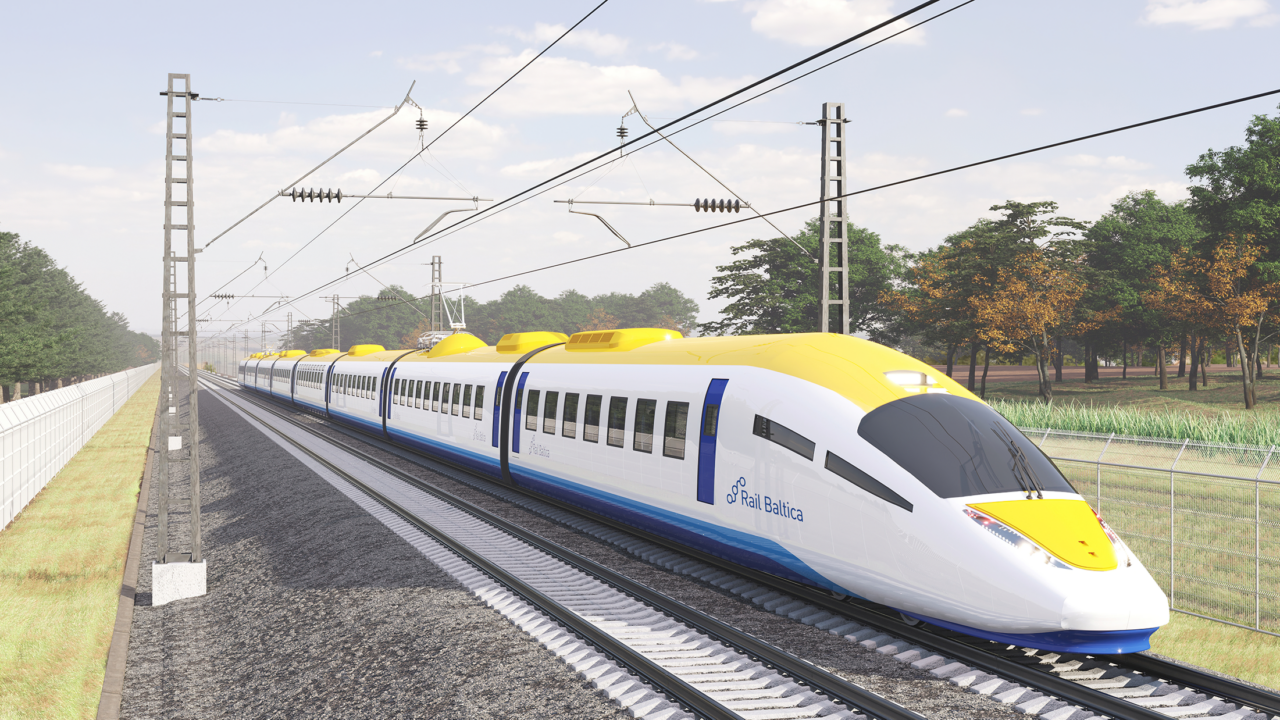
Rail Baltica train concept: a European-standard-gauge high-speed connection enabling the Baltic states to quite literally write themselves into Europe by rail. Photo: Rail Baltica.
The decision – and the money
The railway was planned long ago, and various engineering and consultancy firms have been asked to produce numerous assessments of the project’s technical, environmental and economic aspects. Many of these reports can be consulted on the website of the intergovernmental consortium leading the project.
An early study conducted in 2007 indicated that the project was feasible and could bring significant benefits to the Baltic states and to Europe more broadly. An initial agreement between the Baltic states and the European Commission was signed in 2011, after which detailed design and planning could begin.
Detailed plans, including cost and revenue estimates, were completed by 2017. That same year, the parliaments of the three Baltic states ratified the intergovernmental agreement. The cost estimate at the time was €5.8 billion – already significantly higher than earlier projections. Funding was to come from various European Union programmes and from the governments of the three Baltic states. The expected completion date was set for 2026.
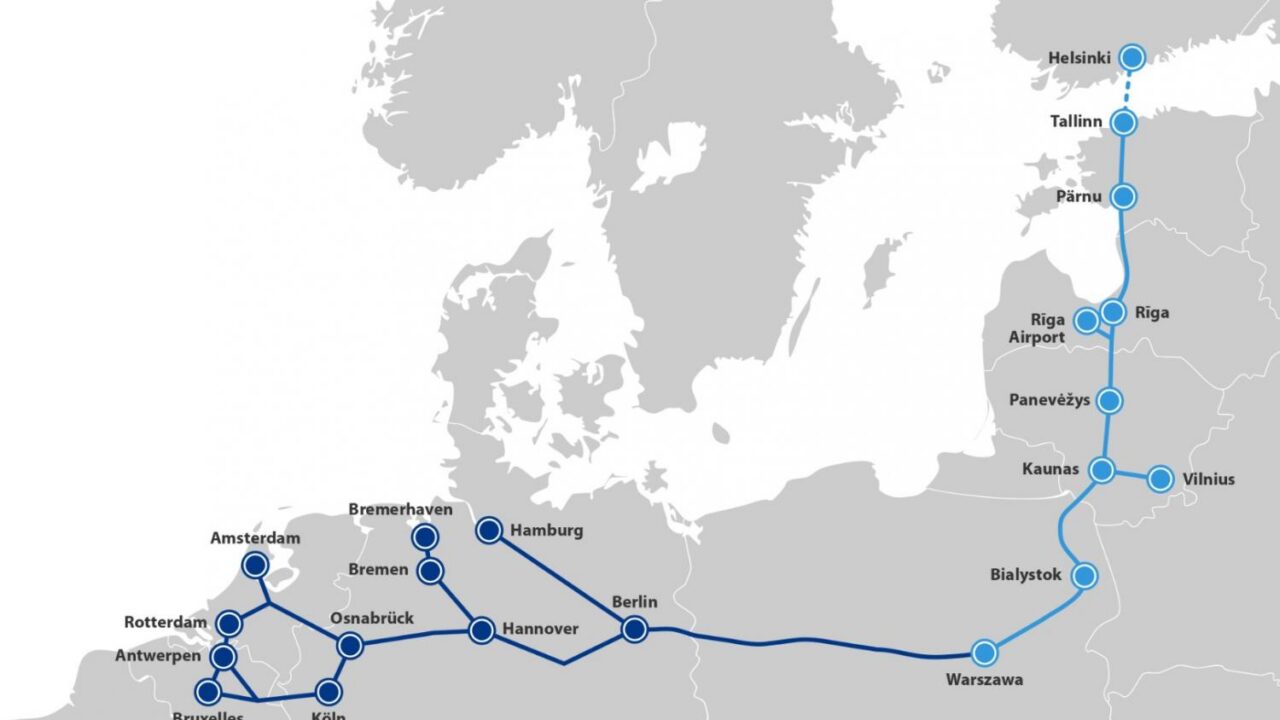
Map of the planned Rail Baltica main corridor: Helsinki–Tallinn–Pärnu–Riga–Kaunas–Warsaw and onward to the hubs of Central Europe – a strategic connection set to reshape the logistics map.
A troubled journey
Problems soon emerged – too many to list here – but disputes arose even over the exact route; technical issues followed; costs began to rise sharply; and progress was slow. While some progress has been visible in Estonia and Lithuania, Latvia’s section of the project has fallen far behind the others. It soon became clear that Rail Baltica could not open in 2026 as originally planned; the opening date has been postponed several times.
Continued delays and rising costs ultimately led to a fundamental rethink of the project. By 2025, it was decided to split the project into two phases. For the first phase, the target opening was set for 2030, although the corridor from Tallinn to the Polish border will, in places, have only a single track. In addition, fewer bridges and viaducts will be built along the route, and station facilities will be reduced.
The expected cost of the simplified first phase is €15.3 billion. A single track means the system is more vulnerable to technical problems and disruptions. The second phase is intended to add a second track along the entire corridor and upgrade the project more broadly. The completion date for the second phase has not yet been set, but it is unlikely to happen before 2035.
According to current estimates, the total cost of the two phases is around €23.6 billion. As a useful benchmark, the European Court of Auditors notes in a recent report that €23.6 billion is a highly uncertain estimate, pointing to likely further cost increases. Let us brace ourselves for even larger sums.
In short, the figures associated with Rail Baltica are astronomical. To put that in perspective, €23.6 billion is more than twice the Estonian government’s annual expenditure – including spending on pensions, healthcare, defence and infrastructure.
According to current estimates, the total cost of the two phases is around €23.6 billion. As a useful benchmark, the European Court of Auditors notes in a recent report that €23.6 billion is a highly uncertain estimate, pointing to likely further cost increases.
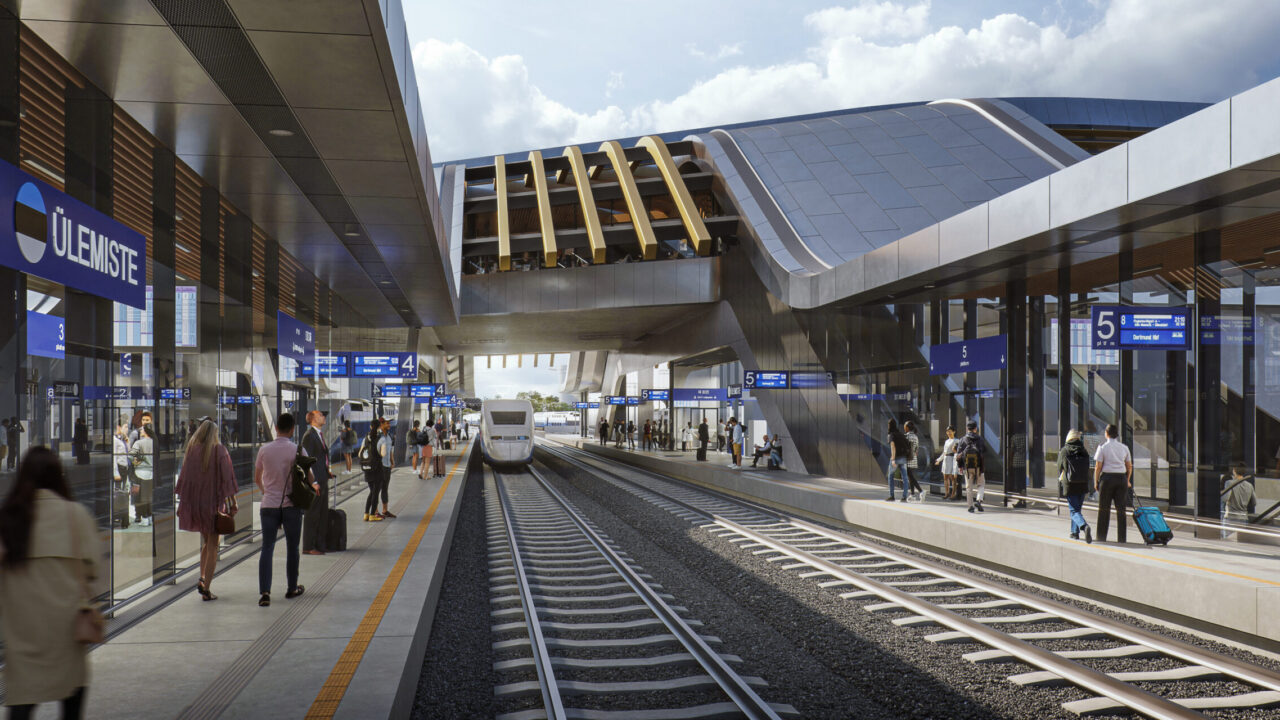
The future Rail Baltica terminal at Ülemiste in Tallinn – a visual of the new high-speed rail hub where trains, city transport and the airport link converge. Photo: Mainor Ülemiste.
Megaprojects
Rail Baltica is the first megaproject undertaken by the Baltic states since regaining independence in 1991. Megaprojects are, by their nature, extremely large, costly and complex undertakings, usually with price tags running into the billions of euros.
Are Rail Baltica’s problems unique among megaprojects? Not at all. There is an endless list of construction and engineering projects that have failed due to delayed schedules, blown budgets, or outcomes smaller than promised – including the Channel Tunnel between England and France, Denmark’s Great Belt Bridge, the new Olkiluoto nuclear reactor in Finland, and the HS2 high-speed rail line between London and Birmingham.
These failures are often attributed to accidents or bad luck – but is that always true? Professor Bent Flyvbjerg of the University of Oxford, one of the world’s leading experts on megaprojects and why they fail, has studied a vast number of megaprojects and found that they almost invariably exceed their budgets, run late, and deliver less benefit than expected. Of all megaprojects, only one per cent are completed on time, within budget, and with the promised benefits. Rail Baltica can therefore be seen as yet another entry in the endless catalogue of failed megaprojects.
Professor Flyvbjerg argues that it is useful to distinguish between the direct causes of cost overruns, delays and lost revenues, and the underlying root causes. The direct causes may stem from changed specifications, technical problems and inflation – but if these drivers were random, there should also be many megaprojects that finish early and cost less than expected. That never happens. Flyvbjerg concludes that megaproject failures can be explained by two root causes, which he calls optimism bias and strategic misrepresentation – both of which emerge during planning and decision-making.
Optimism bias refers to the human tendency to assess future success and upcoming opportunities too positively. For years, the author of this article has welcomed the New Year by promising himself and the world that he will lose ten kilos by Christmas. It is sincere and honest – yet also highly optimistic, helping one to forget the problems and temptations ahead. Optimism bias is probably widespread among engineers, planners and politicians, because the prospect of a new, shiny and awe-inspiring megaproject can very easily sweep people along.
Of all megaprojects, only one per cent are completed on time, within budget, and with the promised benefits. Rail Baltica can therefore be seen as yet another entry in the endless catalogue of failed megaprojects.
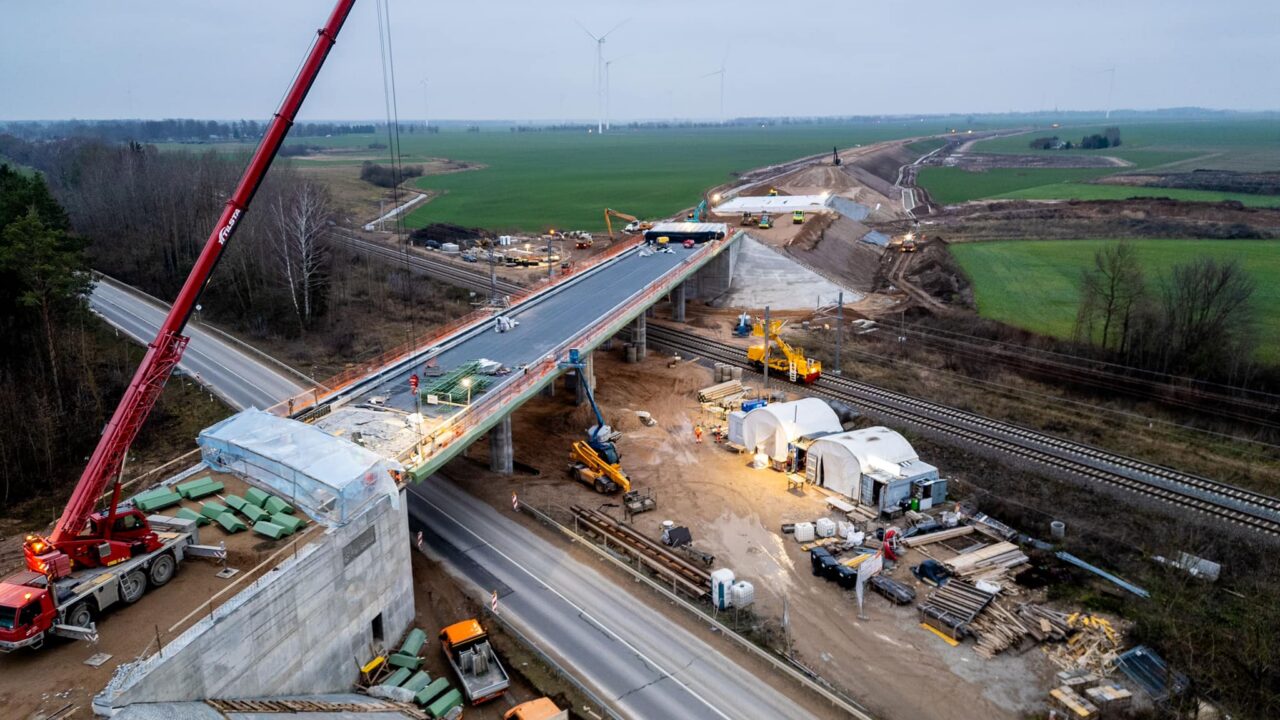
Rail Baltica on the construction landscape: a viaduct and infrastructure links taking shape – the megaproject rising step by step “from the ground up”. Photo: Rail Baltica.
The second root cause – strategic misrepresentation – is more troubling. Many individuals and institutions may want a megaproject to go ahead at any cost, regardless of the true balance of costs and benefits. That self-interested perspective increases the likelihood that problems are deliberately brushed aside, costs are kept low, and benefits are exaggerated. It also provides an incentive to downplay the project’s risks and uncertainty. Strategic misrepresentation makes the megaproject appear highly attractive at an early stage, and it almost certainly secures approval despite the problems that lie ahead.
One might ask whether such issues also arise in smaller projects – but the comparison is not quite fair. Megaprojects are inherently unique and typically involve technologies and solutions not previously tried. They are so large and complex that no single person can understand or assess the whole. They also often involve many stakeholders – Rail Baltica being a prime example, with the interests and perspectives of three governments and the European Union intertwined.
Another lesson from failed megaprojects is that they are hard to change once under way. If a small project – say, building a new kindergarten – runs over budget, the number of rooms can be reduced without major consequences, or the playground can be made smaller. Experience shows that megaproject costs are very difficult to cut, because reductions in one area often trigger the need for broader changes. In the end, the planned cuts delay the project but often save little money. The repeated cutbacks to the UK’s HS2 project seem to confirm this.
Experience shows that megaproject costs are very difficult to cut, because reductions in one area often trigger the need for broader changes. In the end, the planned cuts delay the project but often save little money.
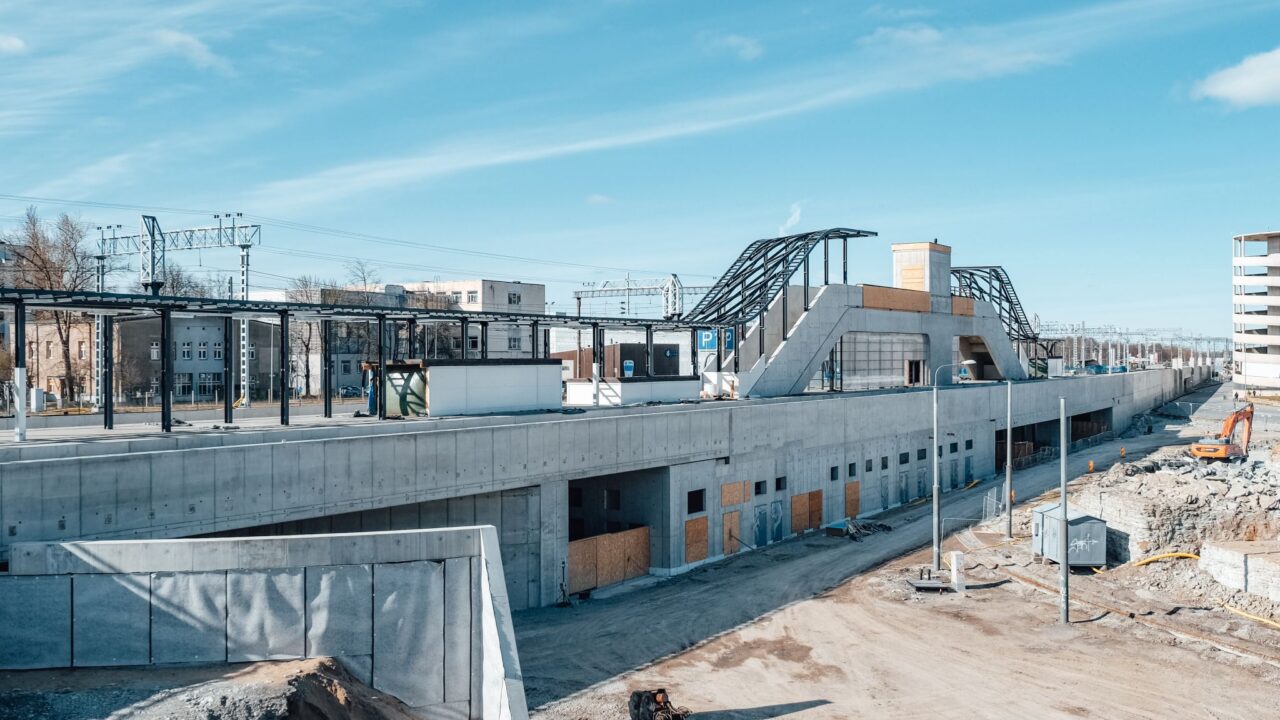
Construction of the Ülemiste railway station and platform area: concrete, steel and rising connecting corridors – the future crossroads of passenger flows is already taking shape. Photo: Rail Baltica
But what about Rail Baltica?
Flyvbjerg’s findings are highly relevant to Rail Baltica. By now, it is clear that Rail Baltica represents yet another megaproject that has failed due to delays and massive cost overruns.
It is also clear that the preparatory analyses carried out before the decision to proceed were highly optimistic and did not take into account many technical difficulties, the complexity of the planning process, the differing objectives of the Baltic states, and much else besides. It is difficult to determine the original sources of optimism about costs and timelines, but hopefully future academic studies will examine them in detail.
It is also clear that the preparatory analyses carried out before the decision to proceed were highly optimistic and did not take into account many technical difficulties, the complexity of the planning process, the differing objectives of the Baltic states, and much else besides.
But what about the benefits? The main benefits will only become clear once the railway is completed and passenger numbers and freight volumes are known. A large share of the expected benefit is supposed to come from shorter journey times and reduced pollution, as people and freight shift away from road transport and instead use Rail Baltica trains. Much depends on how much traffic is actually diverted to the new railway.
There are also reasons to worry about the benefits. High-speed railways are typically built in populous, densely settled areas. The Baltic states, however, have low population density. According to the European Commission, the population of the three Baltic states will fall by 2100 from around 6.2 million today to 4.3 million.
In other words, the railway may not have enough customers. Freight is unlikely to play a major role – at least not in the Estonian and Latvian sections – because the manufacturing sectors of these countries are not particularly large. The computer code of Estonian IT companies can be exported without an expensive railway. Finally, Rail Baltica might be used to transport military equipment, but railways are vulnerable to attack in the event of conflict.
High-speed railways are typically built in populous, densely settled areas. The Baltic states, however, have low population density. According to the European Commission, the population of the three Baltic states will fall by 2100 from around 6.2 million today to 4.3 million.
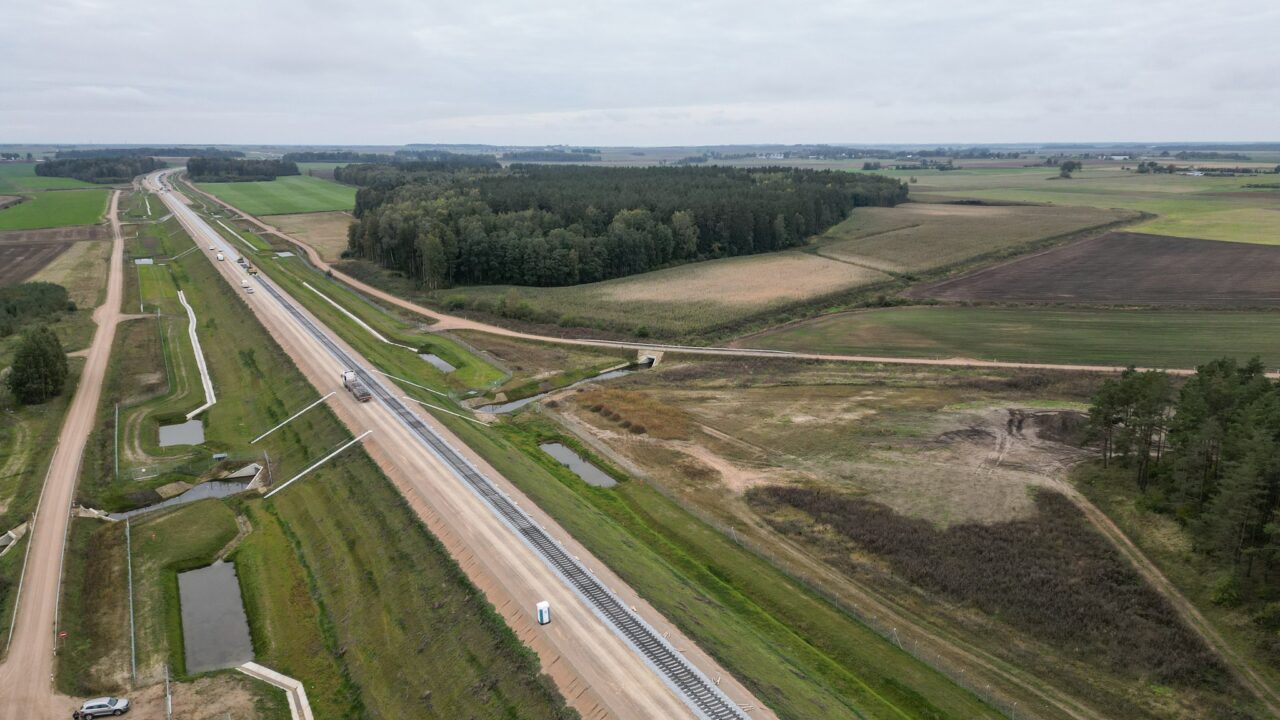
The Rail Baltica route’s embankments and earthworks seen from above – a straight corridor cutting through the landscape, its prepared trackbed awaiting the rails. Photo: Rail Baltica
What to do?
By early 2026, Rail Baltica is already on the list of failed megaprojects. The new railway is over budget, behind schedule, and will probably deliver less benefit and connectivity than promised.
It is worrying how little attention is being paid to the unfolding collapse. The European Union and the Baltic governments are trapped: construction has begun in several places, and abandoning the project seems impossible. Instead, the project is being scaled back and modified, additional funding is being allocated, and delays are being accepted.
So what can be done? Bent Flyvbjerg recommends that megaprojects should be assessed and analysed by external parties with no direct or indirect connection to the project. It is essential to avoid conflicts of interest and ensure that pressure from interest groups does not influence decisions on whether to proceed. The European Court of Auditors’ latest report shows that there is still considerable uncertainty surrounding Rail Baltica, and this must be addressed.
It is also important that a thorough public debate takes place in all three Baltic states, ideally led by parliament, ministries, universities and civil society organisations. With a project of this scale and cost, major decisions cannot be taken without public engagement. It is, of course, a separate question whether taxpayers are willing to throw good money after bad.
Megaprojects are inherently risky. They usually run late, exceed budgets and fail to deliver the promised benefits. All of this applies to Rail Baltica too. Ultimately, updated analyses, political judgements and public debate may generate ideas that save money and time – and perhaps even rescue the Rail Baltica project in the end. But it is important to understand that such renewed, careful scrutiny may still lead to abandoning the project altogether.
With a project of this scale and cost, major decisions cannot be taken without public engagement. It is, of course, a separate question whether taxpayers are willing to throw good money after bad.