Bridging AI, soft skills, and industry reality

08.01.2026
Bridging AI, soft skills, and industry reality. 08.01.2026. To bring education closer to these realities, TalTech IT College organised an Industry–Academia Roundtable within the Erasmus+ DITEC project, bringing employers and educators to the same table. Rakić explains that the roundtable did not emerge from a single problem, but from a broader pattern he has observed in recent years. As AI tools become more capable, expectations toward graduates rise faster than curricula can realistically change. This gap prompted the DITEC team to look for a format that would allow industry experience to directly shape educational content. “Within the DITEC project, we identified a strong need to create structured dialogue between employers and educators – not as a one-off consultation, but as a co-creation process.” To support that goal, the event was designed as a hands-on working session rather than a traditional seminar. After short introductions on current trends, participants worked in groups to explore real organisational challenges. Each attendee then formulated a case study based on their own company’s experience and presented it in a concise one-minute pitch. According to Rakić, this format helped surface issues that rarely appear in formal feedback surveys or curriculum discussions. When problems are not only technical Looking across the case studies, Rakić notes that companies from very different sectors described strikingly similar problems. Whether in finance, legal technology, transportation, automotive engineering, mental health startups or IT services, many challenges emerged at the organisational rather than technological level. “Across sectors, challenges related to communication breakdowns, late involvement of key roles and unresolved interpersonal conflicts kept coming up.” These issues, Rakić explains, often become visible only once projects are already under pressure. One illustrative case came from a large financial systems company where security testers were repeatedly brought into development cycles too late. Junior developers hesitated to initiate early collaboration, while project managers feared delays if additional roles were involved. The case highlighted how uncertainty around responsibility and communication can undermine technically sound projects. “Across sectors, challenges related to communication breakdowns, late involvement of key roles and unresolved interpersonal conflicts kept coming up.” Soft skills and responsible AI as core expectations When the discussion turned to skills gaps among early-career IT professionals, Rakić recalls that industry representatives were surprisingly aligned. Rather than pointing to missing programming languages or frameworks, they emphasised shortcomings in communication, teamwork and decision-making under uncertainty. “Participants stressed that these deficits often overshadow technical weaknesses and directly affect project success.” From Rakić’s perspective, this highlights a structural mismatch. Universities still tend to reward individual technical output, while companies expect graduates to collaborate across roles, interpret incomplete requirements and communicate risks clearly. This gap becomes even more visible in AI-supported environments, where decisions are rarely purely technical. Responsible AI competences were therefore seen as essential. Rakić notes that companies increasingly expect junior developers to understand AI limitations, such as hallucination risks and biased data, and to take responsibility for ethical and legal implications when AI tools are used in production. “Participants stressed that these deficits often overshadow technical weaknesses and directly affect project success.” Turning industry insight into learning practice According to Rakić, one of the most tangible outcomes of the roundtable was the collection of seven concrete case studies rooted in real company challenges. These will be integrated into the ongoing DITEC Design Thinking course, alongside cases developed by project partners in Germany and Cyprus. “The case studies generated at the roundtable will directly feed into DITEC micro-courses through scenario-based learning and human–AI collaboration simulations.” Rather than relying on lectures, the planned micro-courses will place students in realistic situations that require role awareness, ethical judgement and coordination with AI systems. The learning design includes conflict-resolution tasks and responsible-AI validation workflows, mirroring the kinds of decisions junior professionals increasingly face. Rakić emphasises that some of these courses will be piloted not only at TalTech but also within partner companies, allowing direct feedback from real working environments. In his view, such collaboration has wider societal value as well. “When universities and companies co-design competence frameworks, society gains graduates who are not only employable – but ethically grounded, adaptable, and socially responsible.” “When universities and companies co-design competence frameworks, society gains graduates who are not only employable – but ethically grounded, adaptable, and socially responsible.”  
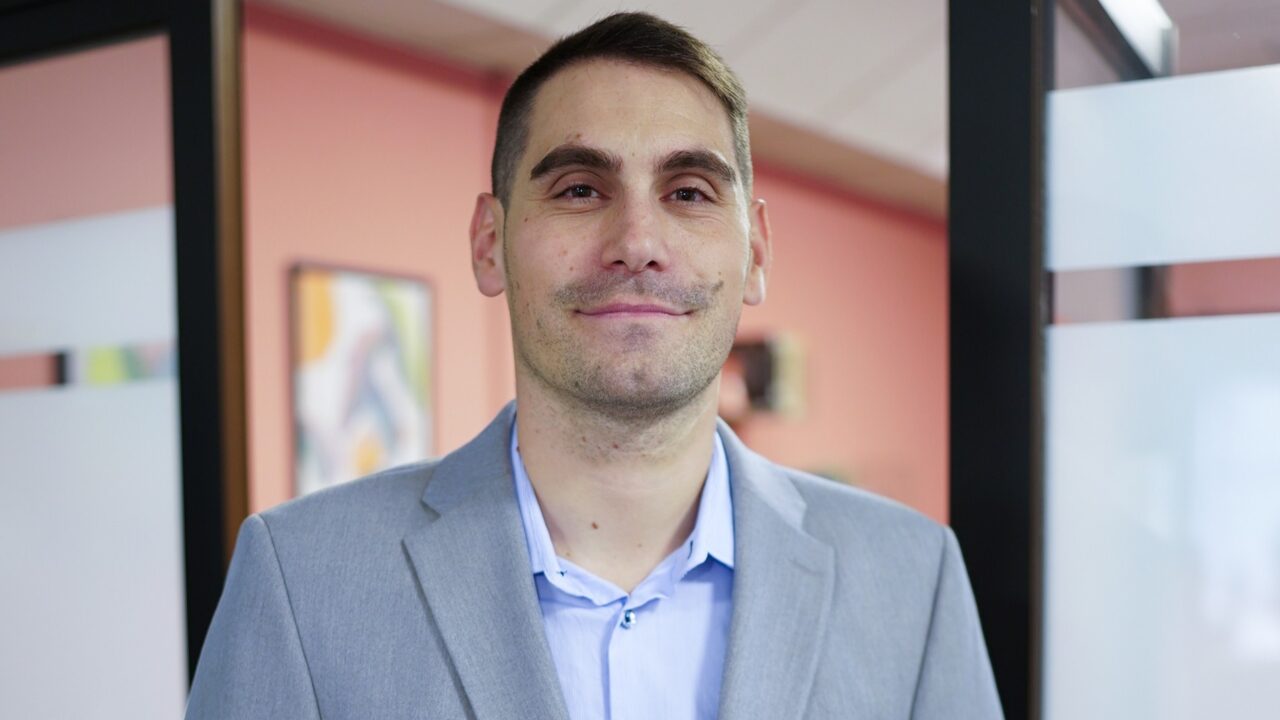
The idea for the roundtable did not stem from one specific problem, Rakić said, but from a broader pattern observed in recent years. The rapidly growing capabilities of AI tools have raised expectations for graduates faster than curricula can be adapted. Foto: Private Collection

The idea for the roundtable did not stem from one specific problem, Rakić said, but from a broader pattern observed in recent years. The rapidly growing capabilities of AI tools have raised expectations for graduates faster than curricula can be adapted. Foto: Private Collection

Artificial intelligence is transforming how IT work is done, but according to Slavko Rakić, Research Professor at TalTech IT College, the most difficult challenges companies face today are often not technical at all. While universities focus heavily on tools and technologies, everyday work increasingly depends on communication, responsibility and ethical judgement.

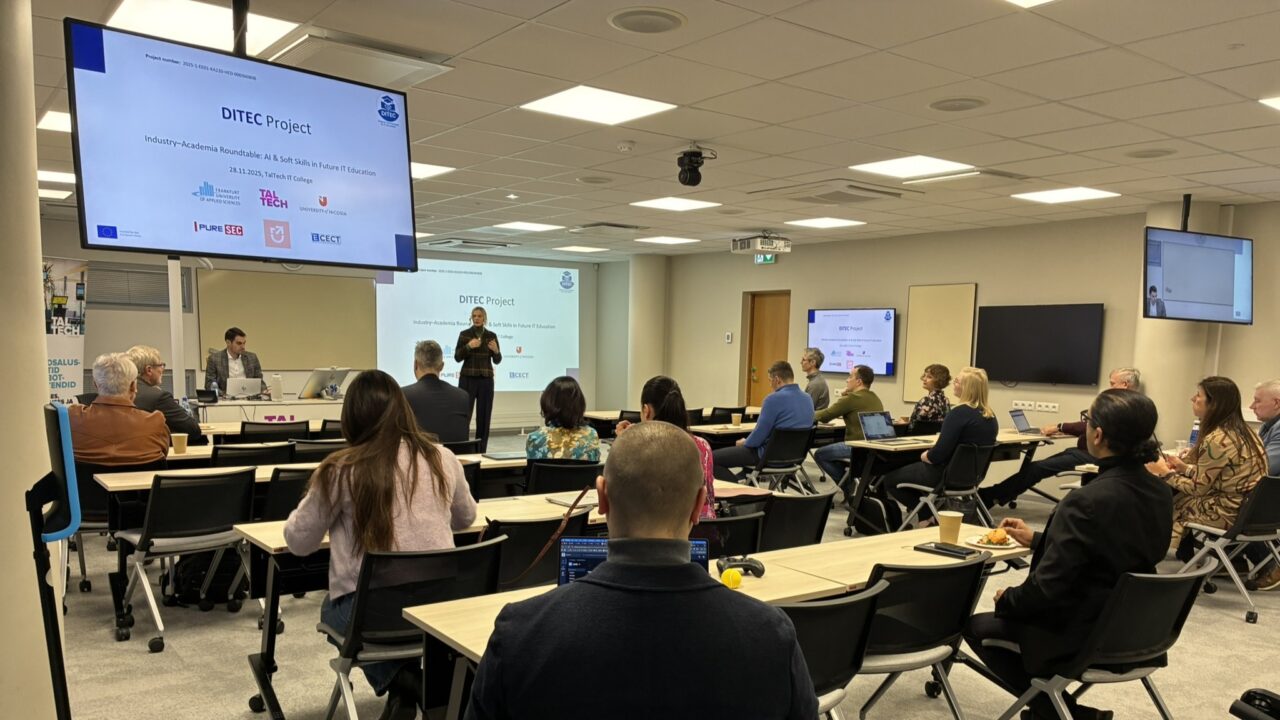
To bring education closer to these realities, TalTech IT College organised an Industry–Academia Roundtable within the Erasmus+ DITEC project, bringing employers and educators to the same table.

Rakić explains that the roundtable did not emerge from a single problem, but from a broader pattern he has observed in recent years. As AI tools become more capable, expectations toward graduates rise faster than curricula can realistically change. This gap prompted the DITEC team to look for a format that would allow industry experience to directly shape educational content.

“Within the DITEC project, we identified a strong need to create structured dialogue between employers and educators – not as a one-off consultation, but as a co-creation process.”

To support that goal, the event was designed as a hands-on working session rather than a traditional seminar. After short introductions on current trends, participants worked in groups to explore real organisational challenges. Each attendee then formulated a case study based on their own company’s experience and presented it in a concise one-minute pitch. According to Rakić, this format helped surface issues that rarely appear in formal feedback surveys or curriculum discussions.

When problems are not only technical

Looking across the case studies, Rakić notes that companies from very different sectors described strikingly similar problems. Whether in finance, legal technology, transportation, automotive engineering, mental health startups or IT services, many challenges emerged at the organisational rather than technological level. “Across sectors, challenges related to communication breakdowns, late involvement of key roles and unresolved interpersonal conflicts kept coming up.”
These issues, Rakić explains, often become visible only once projects are already under pressure. One illustrative case came from a large financial systems company where security testers were repeatedly brought into development cycles too late. Junior developers hesitated to initiate early collaboration, while project managers feared delays if additional roles were involved. The case highlighted how uncertainty around responsibility and communication can undermine technically sound projects.

“Across sectors, challenges related to communication breakdowns, late involvement of key roles and unresolved interpersonal conflicts kept coming up.”

Rakić noted that many experience-based examples from different sectors described similar concerns. Whether it was finance, law, transport technology, the automotive industry, mental-wellbeing-focused start-ups, or IT services – many of the bottlenecks were not technological but organisational. Photo: Private collection

Rakić noted that many experience-based examples from different sectors described similar concerns. Whether it was finance, law, transport technology, the automotive industry, mental-wellbeing-focused start-ups, or IT services – many of the bottlenecks were not technological but organisational. Photo: Private collection

Soft skills and responsible AI as core expectations

When the discussion turned to skills gaps among early-career IT professionals, Rakić recalls that industry representatives were surprisingly aligned. Rather than pointing to missing programming languages or frameworks, they emphasised shortcomings in communication, teamwork and decision-making under uncertainty. “Participants stressed that these deficits often overshadow technical weaknesses and directly affect project success.”

From Rakić’s perspective, this highlights a structural mismatch. Universities still tend to reward individual technical output, while companies expect graduates to collaborate across roles, interpret incomplete requirements and communicate risks clearly. This gap becomes even more visible in AI-supported environments, where decisions are rarely purely technical.

Responsible AI competences were therefore seen as essential. Rakić notes that companies increasingly expect junior developers to understand AI limitations, such as hallucination risks and biased data, and to take responsibility for ethical and legal implications when AI tools are used in production.

“Participants stressed that these deficits often overshadow technical weaknesses and directly affect project success.”

When the discussion turned to the skill gaps of early-career IT specialists, an unexpected consensus emerged among labour-market representatives, Rakić said. The shortcomings were not seen in specific programming languages or frameworks, but rather in communication skills, teamwork, and decision-making ability. | Photo: Rasmus Jurkatam

When the discussion turned to the skill gaps of early-career IT specialists, an unexpected consensus emerged among labour-market representatives, Rakić said. The shortcomings were not seen in specific programming languages or frameworks, but rather in communication skills, teamwork, and decision-making ability. | Photo: Rasmus Jurkatam

Turning industry insight into learning practice

According to Rakić, one of the most tangible outcomes of the roundtable was the collection of seven concrete case studies rooted in real company challenges. These will be integrated into the ongoing DITEC Design Thinking course, alongside cases developed by project partners in Germany and Cyprus.

“The case studies generated at the roundtable will directly feed into DITEC micro-courses through scenario-based learning and human–AI collaboration simulations.”

Rather than relying on lectures, the planned micro-courses will place students in realistic situations that require role awareness, ethical judgement and coordination with AI systems. The learning design includes conflict-resolution tasks and responsible-AI validation workflows, mirroring the kinds of decisions junior professionals increasingly face.

Rakić emphasises that some of these courses will be piloted not only at TalTech but also within partner companies, allowing direct feedback from real working environments. In his view, such collaboration has wider societal value as well. “When universities and companies co-design competence frameworks, society gains graduates who are not only employable – but ethically grounded, adaptable, and socially responsible.”

“When universities and companies co-design competence frameworks, society gains graduates who are not only employable – but ethically grounded, adaptable, and socially responsible.”